Sugar Cookie Icing

sugar cookie icingEveryone loves sugar cookies…except me. Don’t get me wrong, I’ll certainly eat them, but they’re not my favorite. I’d much rather have a peanut butter cookie with a Hershey’s Kiss on it, or a pumpkin chocolate chip, or a molasses cookie. Sugar cookies are popular though, because they’re so easy to customize.

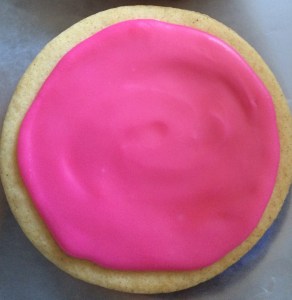
This is the first time I worked with this icing, which I found over at Sally’s Baking Addiction; it looked much easier to work with than royal icing, and it certainly was. This icing works well with a technique similar to piping and flooding,where you outline your cookie to make a border, then fill in the center – the only difference was that I didn’t use a thinner version of the icing when I flooded the center.

The recipe below is adapted from Sally’s to make enough icing for about 3 dozen cookies. It’s important to note that this icing needs about 24 hours to harden completely; I put iced cookies in single layers in various containers while the icing set.

Ingredients

  • 4 1/2 cups powdered sugar, sifted
  • 3 teaspoons light corn syrup
  • 1 1/2 teaspoons vanilla extract
  • About 6-7 tablespoons room temperature water
  • Food coloring, for tinting

Preparation

In a large mixing bowl, combine sifted powdered sugar, corn syrup, and vanilla.

Add 2 tablespoons water and stir; icing will be very thick and paste-like, so continue to add water 1 tablespoon at a time until you reach a thick drizzling consistency; if you drizzle some of the icing with your spoon, it should hold for just a moment before melting back into the rest.

If tinting, divide icing into bowls and tint with desired colors. I tinted mine pink, orange, light green, and purple.

Place icing in a pastry bag fitted with a large plain tip and pipe a border around the outside of your cookie, then fill in the center using circular motions or swirls to cover most of the center. Using a small offset spatula, gently spread the icing in the center so it reaches the border and makes a smooth layer.

Store cookies in containers, in a single layer, for 24 hours to be sure the icing hardens completely. Once the icing is fully set, you can store the cookies between sheets of waxed paper.


Orange Cream Frosting

orange cream cupcakeOrange cream always makes me think of summer. It’s the middle of winter right now and we’re just digging out from a snowstorm, but how else would we appreciate the summer without the winter?

This frosting originally appeared with orange cream cupcakes and would yield enough for 2 dozen miniature cupcakes or at least 1 dozen regular-sized cupcakes. You could very easily double the recipe for 2 dozen cupcakes or a two-layer, 8-inch round cake.

Ingredients

  • 4 tablespoons butter, softened
  • 2 cups powdered sugar
  • 1/2 teaspoon orange extract*
  • 3/4 teaspoon vanilla extract
  • About 3 tablespoons orange juice
  • Yellow liquid food coloring
  • Red liquid food coloring

*Substitute orange juice if you don’t have orange extract.

Preparation

In a mixing bowl, beat butter on low speed for about 1 minute. Add 1 cup powdered sugar, orange extract, and vanilla; beat on low speed until well-combined. Add second cup powdered sugar and 1 tablespoon orange juice and beat until well-combined. Add additional orange juice, 1/2 tablespoon at a time, to reach a smooth (but not runny) consistency.

With your mixer running on low, add about 3-4 drops of yellow liquid food coloring, followed by 1 drop of red. Beat on medium speed until color is well-distributed, scraping the sides of the bowl as necessary, to achieve a pale orange color.

Honey Cream Cheese Frosting

honey cupcakesLet’s take a moment to thank the bees of the world for making honey. I love that there are so many varieties, and that honey from bees in Maryland will taste different than honey from bees in Pennsylvania. My favorite honey can be found at the market at Soergel Orchards in Wexford, just north of Pittsburgh; they stock locally-made wildflower honey that is excellent for baking.

I first made this frosting for honey cupcakes a few years ago at Rosh Hoshannah, but you certainly don’t have to reserve this recipe for the Jewish New Year. It would go very well on spice cake, or just a regular vanilla cake. The recipe below will frost at least 2 dozen cupcakes or 1 dozen cupcakes and a single-layer 8-inch round.

Ingredients

  • 8 ounces cream cheese, softened
  • 4 tablespoons butter, softened
  • 1/3 cup honey
  • 1 teaspoon vanilla extract
  • 3 1/2 cups powdered sugar

Preparation

In a mixing bowl, beat cream cheese and butter until well-combined and fluffy. Add honey and vanilla extract and beat until very well-combined. Add powdered sugar, one half-cup at a time, beating well after each addition.

Note: various web sources claim that you can store cream cheese frosting in the fridge for a few weeks, but I’d use it quickly, within a week at least.

Cinnamon Cream Cheese Frosting

cinnamon roll cupcakesCinnamon is among my favorite spices, and when you add it to cream cheese frosting, something magical happens. Besides cinnamon roll cupcakes, you could use this delightful frosting for spice cake, gingerbread, or an orange spice cake (note to self: find recipe for orange spice cake).

Cream cheese frosting is easy to work with, but it does need to be refrigerated once it’s made to keep from spoiling. Unlike buttercream, which you can store at room temperature, the sugar to butter ratio in cream cheese frosting isn’t high enough to prevent bacteria growth. You can bring your treats to room temperature before serving them if you like, but this frosting is also delicious when it’s cold.

Ingredients

  • 8 ounces cream cheese, at room temperature
  • 8 tablespoons butter, at room temperature
  • 4 cups powdered sugar
  • 2 teaspoons vanilla
  • 1 1/2  teaspoons cinnamon

Preparation

In a mixing bowl, beat cream cheese and butter until smooth. Add powdered sugar, one cup at a time, mixing well after each addition. Add vanilla and cinnamon and beat well, scraping the sides of the bowl often.

Marshmallow Creme Frosting

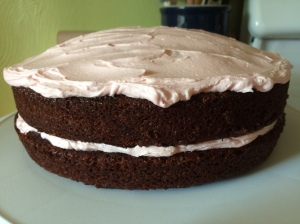
cherry cola cakeI love old cookbooks, especially the kind that feature recipes from church picnics and community potluck suppers. My Aunt Liz has a few amazing ones, and I bet somewhere in there, we’d find a recipe like this.

Marshmallow creme frosting packs a serious wallop of sugar, and while this is going to sound counter-intuitive, I need you to trust me: if at first taste it’s too sweet, add a bit more powdered sugar. I don’t know why, but it mellows out the flavor a great deal.

This frosting originally appeared on the cherry cola cake pictured on the left. I tinted that frosting pink, but you could certainly leave it plain or choose another color depending on what you’re baking. This recipe made enough to frost the top and middle of a two-layer 8-inch round cake; to frost the whole cake, I’d increase the ingredients by half.

Ingredients

  • 12 tablespoons butter, softened
  • 1 cup powdered sugar
  • 1 7-ounce jar marshmallow creme

Preparation

Beat butter and powdered sugar until completely combined.

Add marshmallow creme and beat until well-combined.

Butter Pecan Frosting

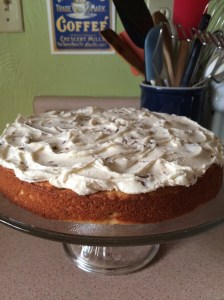
butterpecancakeThis frosting will change your life. Seriously, folks – it’s among the most delicious I’ve ever made.

Originally featured on this butter pecan cake and cupcakes, this frosting would pair very well with a vanilla cake or cupcakes and offers an old-fashioned, go-visiting-on-Sunday kind of flavor. I suspect my grandmothers would have loved it.

The batch below can frost a three-layer cake or at least three dozen cupcakes, but you could cut it in half for a smaller batch.

Ingredients

For the butter pecans

  • 1/2 cup chopped pecans
  • 1 tablespoon salted butter

For the frosting

  • 1 cup unsalted butter, at room temperature
  • pinch of salt
  • 3 – 3 1/2 cups powdered sugar
  • 1 teaspoon vanilla extract

Preparation

For the butter pecans:

Preheat oven to 350 degrees. Line a rimmed baking sheet with foil, extending the foil over all four sides.

Place pecans and butter onto the baking sheet; bake for about 8-9 minutes, stirring frequently, until pecans are toasted and fragrant. Be careful not to burn them – pecans can burn easily after several minutes in the oven.

Remove pecans from the baking sheet and place on a platter to cool completely before using. Chop to medium-fine pieces.

For the frosting:

In a mixing bowl, beat butter on medium speed for about 1 minute.

Add 3 cups of powdered sugar and beat on low speed until the sugar is completely incorporated into the butter. I cover my mixer with a towel to prevent a sugar storm.

Add vanilla and beat until combined; check your consistency and if it is too thin, add another 1/2 cup of powdered sugar. Stir in butter pecans.

Chocolate Ganache

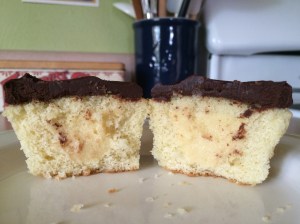
bostoncreamcupcakesEvery baker should have a good recipe for chocolate ganache. This one uses bittersweet chocolate, an essential ingredient for the right flavor profile of a Boston cream pie (or as pictured here, Boston cream cupcakes). You could substitute other types of chocolate depending on what you’re making; semisweet chocolate and milk chocolate will yield a much milder flavor and would be good for things like chocolate cake or peanut butter cupcakes.

Heavy cream is a must for ganache-making, and if you have some left over you can always whip it up (literally) for topping, or use it to make pastry cream.

Ingredients

  • 3/4 cup heavy cream
  • 1/4 cup light corn syrup
  • 8 ounces bittersweet chocolate, finely chopped
  • 1/2 teaspoon vanilla extract

Preparation

In a medium saucepan, combine heavy cream, corn syrup, chocolate, and vanilla over medium heat, stirring constantly until the chocolate melts and the mixture is smooth.

Remove from heat and allow to cool, stirring occasionally, until the mixture reaches room temperature; mixture will thicken and become glossy.

Spread over cooled cake or cupcakes.

Almond Buttercream

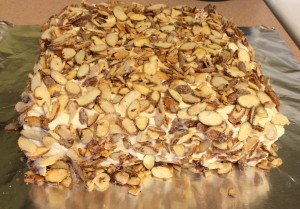
burnt almond torteAlmond buttercream is a great go-to frosting because it pairs well with a range of other flavors, from chocolate or vanilla to lemon or orange. The recipe below plays a big role in burnt almond torte, which you see here on the left.

If you don’t have heavy cream, you can substitute regular milk to thin your frosting and help make it fluffy. Remember, always add liquids sparingly, especially when working with frostings. You can always add more, but you can never take it away.

This recipe can enerously gfrost one single-layer 8 x 8 square, 8-inch round, or about 18 cupcakes. You can easily double it for a two-layer cake, sheet cake, or two dozen cupcakes.

Ingredients

  • 8 tablespoons butter, softened
  • 1/4 teaspoon salt
  • 2 1/4 cups powdered sugar, sifted
  • 1 tablespoon vanilla extract
  • 1 tablespoon almond extract
  • 1 tablespoon heavy cream

Preparation

In a mixing bowl, beat butter for about 1 minute, then add salt and beat another minute.

Add powdered sugar and beat on low speed until all of the sugar is fully incorporated into the butter; this will take a few minutes.

Add vanilla extract and almond extract, beating well to combine.

Add heavy cream and beat for about 2 minutes until fluffy.

Vanilla Almond Buttercream

caramel cupcakes

Buttercream frosting is a go-to resource for bakers. It’s easy to make and adapt for different flavor combinations. The key to successful buttercream, in my opinion, is to soften your butter just enough; you don’t want it to be too soft, because you risk a runny consistency, or too hard, which will prevent the powdered sugar from incorporating properly. I once read that the proper consistency of softened butter for buttercream is like ice cream; you can indent it with your finger, but not smash it altogether.

This buttercream was inspired by a vanilla caramel candy and would pair well with almost any cupcake or cake, from caramel to chocolate. As you’re preparing it, taste as you go to make sure that the vanilla and almond flavors are well-balanced.

Vanilla Almond Buttercream

Ingredients

  • 8 tablespoons butter, at room temperature
  • 1/8 teaspoon salt
  • 2 cups powdered sugar, sifted
  • 1 to 1 1/2 tablespoons vanilla extract
  • 1/2 to 3/4 tablespoon almond extract

Preparation

In a mixing bowl, beat butter for about 1 minute, then add salt and beat another minute.

Add powdered sugar and beat on low speed until all of the sugar is fully incorporated into the butter; this will take a few minutes.

Add vanilla extract and almond extract, beating well to combine. Taste; add more extract if desired.

Frost cake or cupcakes and store at room temperature

Lemon Curd II

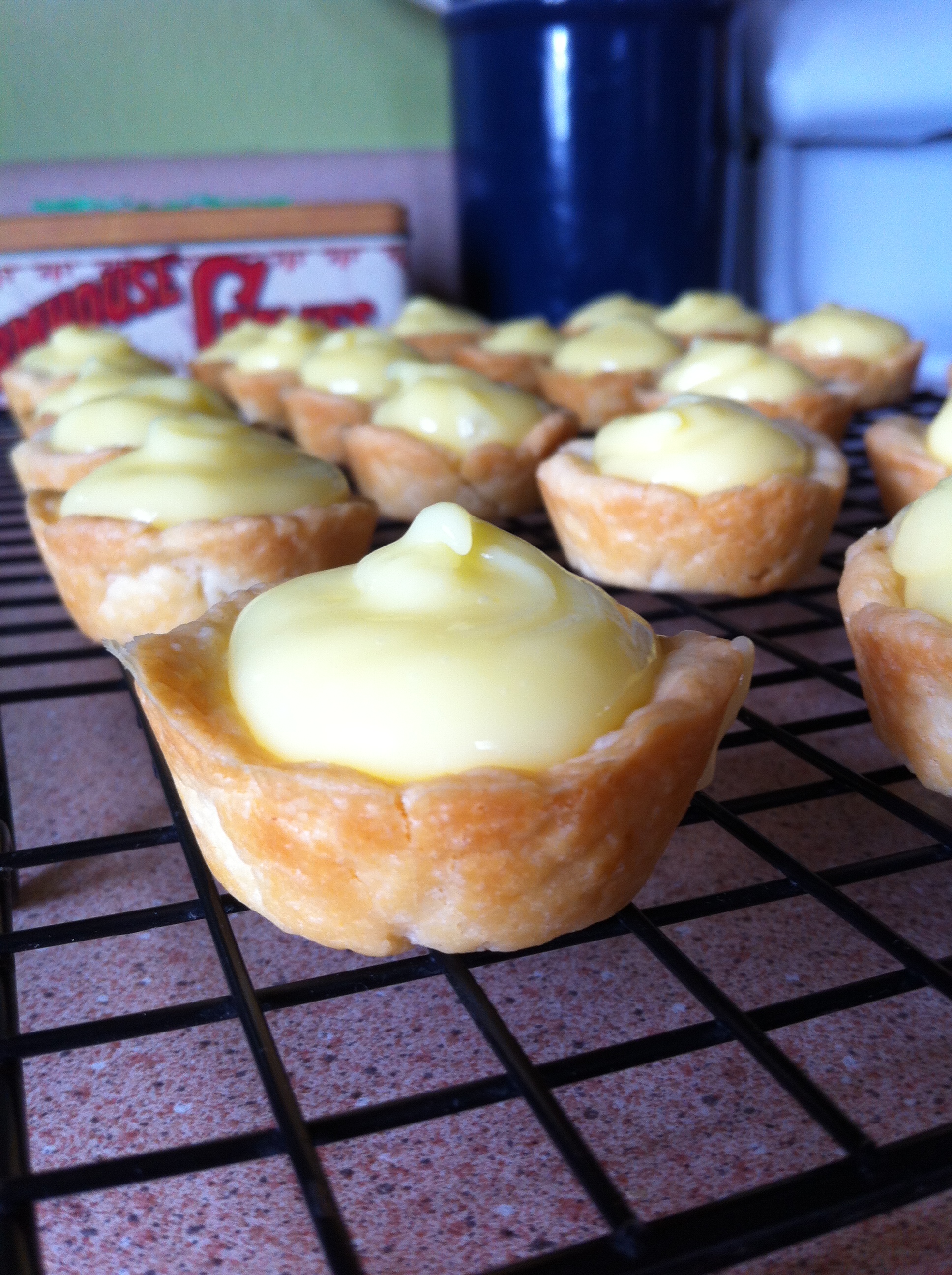
meyer lemon tartletsAs I’ve mentioned before, making lemon curd makes me feel like a superwoman. A few months ago, I learned how to temper eggs, and ever since I’ve felt a profound sense of accomplishment. First, I conquered vanilla cream pie, my first successful egg-tempering endeavor. Then came my first try at lemon curd, which used only egg yolks and yielded a lovely, tangy, brilliant yellow concoction that I then served with lemon poppy seed scones. This most recent attempt went into tartlets, as pictured at left.

This lemon curd is different than my first attempt, in that it uses whole eggs and not just yolks. The end result of this curd is a lighter, creamier curd in both color and flavor. You can certainly use regular lemons if you choose, but I had some Meyers around, so that’s what I used here. I look forward to experimenting with lime and orange curds someday as well.

What can you do with lemon curd? So, so much. You can put it in tartlets or use it as a filling for cakes and cupcakes, serve it with scones, sandwich it between cookies, layer it in trifles, plop it into graham cracker crust and top it with whipped cream for a pie, eat it with a spoon…the list goes on. Whatever you do, just be sure you follow the recipe, particularly with regard to the straining of the eggs before and the second straining of the curd once it’s been cooked; this ensures that you get a smooth, clump-free result.

Ingredients

  • 4 eggs
  • 3/4 cup sugar
  • 4 teaspoons cornstarch
  • 1/2 cup lemon juice (I used 4 small/medium-sized Meyer lemons)
  • zest of 4 lemons
  • 8 tablespoons butter

Preparation

Lightly beat eggs and pass them through a fine sieve to remove the albumin. Set aside in a medium bowl (or a large, 4-cup glass measuring cup for easy pouring) close to the stove for easy access; thoroughly wash your sieve and place it nearby for a second straining once the curd has cooked.

In a medium saucepan, whisk together cornstarch, sugar, lemon juice, and lemon zest until completely combined. Add butter and cook on medium heat until thickened and bubbly.

Working quickly, pour about half of the hot lemon mixture into the eggs, whisking constantly to temper. Pour egg mixture back into the pan and cook and stir for 2 minutes more.

Pour mixture through your sieve to remove the zest; press waxed paper (or plastic wrap) onto the surface to prevent a skin from forming. Once curd is completely cooled, place in an airtight container. According to various food safety websites and other food blogs, lemon curd should last in the refrigerator for a few weeks.