Lemon Raspberry Thumbprints

lemonraspthumbprintMost lemon raspberry thumbprints rely on raspberry jam – which is certainly delicious – but for these treats, I wanted a more traditional thumbprint icing. While I adapted a recipe from King Arthur Flour for the cookie itself, the icing is one of my own creation, a simple blend of powdered sugar, raspberry jam, and lemon juice. I hope the icing sets up as well as traditional thumbprint icing, but if not, these cookies will still be delicious.

You can create a perfectly round indentation in your thumbprint cookies by using a teaspoon from your measuring set. I did both the teaspoon method and the literal thumbprint method in this batch of cookies, and have to admit that I prefer the way the teaspoon ones look.

Ingredients

For the cookies

  • 1 cup unsalted butter
  • 1 cup sugar
  • 1 teaspoon vanilla extract
  • 1/2 teaspoon lemon extract
  • 1 teaspoon lemon zest
  • 1/2 teaspoon salt
  • 1 egg
  • 2 3/4 cups flour

For the raspberry icing*

  • 1/3 cup raspberry jam
  • 1 1/2 cups powdered sugar
  • 3/4 teaspoon lemon juice

*These measurements are my best guess – I just kept mixing jam and powdered sugar until I got the flavor that I wanted. 

Preparation

Preheat oven to 350 degrees. Line three baking sheets with parchment paper.

In a mixing bowl, cream together butter, sugar, vanilla, lemon extract, lemon zest, and salt until light and fluffy, about 2-3 minutes. Add egg and beat well to combine.

Add flour in three batches, beating well to combine between each.

Using a 2-inch cookie scoop, scoop dough and roll into balls. Place about 2 inches apart on baking sheets and use a teaspoon measuring spoon or your thumb to create a deep indentation in the center of each cookie.

Bake for 12-24 minutes, until bottoms are very light golden brown. Remove from oven and cool completely before icing.

To make the icing, combine jam and powdered sugar in a small bowl and mix well to fully combine; add lemon juice about 1/4 teaspoon at a time to thin out slightly. You want a thick drizzle consistency.

Spoon icing into thumbprints and allow to set before serving. Store in an airtight container between sheets of waxed paper for up to 3 days.

Makes 27 cookies.

Almond Pennies

almond-penniesThese amazing cookies remind me of ones I’ve seen (and eaten, of course) in many bakeries and coffee shops: perfectly round, large enough so that one is all you need as a snack, with a crispy-chewy texture and delicious, delicate flavor. This recipe is adapted from the King Arthur Flour Cookie Companion, a book that has forever changed my baking life. I used a 2-inch cookie scoop to scoop my dough, rather than rolling into table tennis-sized balls as the original instructed.

Although they’re called pennies, these cookies are very generously portioned, baking into 4-inch rounds – far larger than any penny I’ve ever seen. I’d like to try them as smaller cookies so they make a larger batch, and intend to use a 1-inch cookie scoop the next time I make these. The cookies spread a lot when baking, so make sure you leave ample room between them on your baking sheets.

Ingredients

  • 8 tablespoons unsalted butter
  • 1 cup light brown sugar
  • 1/2 teaspoon almond extract
  • 1/2 teaspoon salt
  • 1/4 teaspoon baking soda
  • 1 large egg
  • 2 1/4 ounces (about 2/3 cup) almond flour
  • 4 1/4 ounces (about 1 cup) flour

Preparation

Preheat oven to 350 degrees. Line three baking sheets with parchment paper.

In a mixer fitted with the paddle attachment, beat butter on medium speed for about 1 minute. Scrape down the bowl and add brown sugar, almond extract, salt, baking soda, and egg, beating very well to combine.

Add almond flour and flour, beating to combine.

Using a 2-inch cookie scoop, scoop dough and roll into balls, placing at least 2-3 inches apart on the baking sheets; I’d recommend no more than 6 cookies per sheet. Dip the bottom of a glass in sugar and press cookies to 1/4 inch thickness.

Bake for 13 to 15 minutes, until cookies are golden brown. Remove from oven and cool on baking sheets for 2-3 minutes, then remove to wire racks to cool completely.

Store in an airtight container for up to 4 days.

Makes 18.

Gingerbread House Cookies

gingerbread-house-cookiesI may have gone slightly overboard with my holiday baking this year. I just couldn’t help myself – there were so many adorable, delicious treats to make, and while I feel completely worn out, I’m glad I made all of it.

These gingerbread house cookies were inspired by a cute cookie cutter I found at the craft store last week – a little house, along with a little gingerbread man. I simply had to make these houses, and decorate them as one would a regular gingerbread house (the three-dimensional kind).

The recipe below made 9 cookies, so you’ll want to double the quantities for a larger batch. I had enough dough left over for about 6 miniature gingerbread men as well.

Gingerbread Cookies

Ingredients

For the cookies

  • 1 1/4 cups flour
  • 1/2 teaspoon ginger
  • 1/2 teaspoon cinnamon
  • 1/4 teaspoon allspice
  • 1/4 teaspoon baking soda
  • 1/8 teaspoon salt
  • 1/8 teaspoon pepper
  •  8 tablespoons butter, softened
  • 2 tablespoons plus 2 teaspoons molasses
  • 2 tablespoons plus 2 teaspoons sugar

Preparation

In a medium bowl, combine flour, ginger, cinnamon, allspice, baking soda, salt, and pepper; set aside.

In a mixing bowl, beat butter, sugar, and molasses until fluffy, about three minutes.

Add flour in two batches, beating until well-combined.

Flatten dough into a disc, wrap in plastic, and refrigerate about one hour, until easy to handle.

Preheat oven to 350 degrees.

Roll dough to 1/8 inch thickness and cut into house shapes.

Bake for about 12 minutes; you do not want the gingerbread to burn, so keep an eye on it.

Remove from oven and cool on baking sheets for a few minutes, then cool completely on a wire rack.

Zella’s Icing

Ingredients

  • 1 egg white
  • 3 tablespoons shortening
  • 2 cups powdered sugar
  • Dash of salt
  • 1 teaspoon vanilla extract
  • 1 teaspoon almond extract
  • 1-2 teaspoons water, if necessary
  • Red and green food coloring
  • Flower-shaped sprinkles, if desired

Preparation

Combine egg white, shortening, salt, and one cup powdered sugar in a mixing bowl.  Beat on low speed until combined, then increase speed to medium, then high, and beat for one minute.

Add additional cup powdered sugar and beat on low speed until combined, then on high speed for one minute.

Add vanilla and almond extracts.  Beat on high speed for one or two minutes, until very well combined.

Check the frosting’s texture; it should be like very, very soft peanut butter and very easily spreadable.  If necessary, add one to two teaspoons of water to thin the frosting and beat well to combine.

To decorate your cookies, fit a small piping bag with a small plain tip and pipe on doorways and windows. Replace the tip with a star tip to pipe on snow.

Tint frosting green and add wreaths, trees, and shrubs.

Tint frosting red and add berries to your wreaths and shrubs, as well as other decorative dots or shapes.

Use white frosting as glue to adhere flower shapes, if desired.

Allow frosting to set for about 30 minutes before storing. Store at room temperature in an airtight container between layers of waxed paper for about 3 days.


Reindeer Cookies

reindeer-cookiesMy goddaughter Maureen and her little sister Margo went absolutely insane for the chocolate bat cookies I sent them for Halloween. According to their mom, they practically licked the crumbs off the table. So what did I bake them for Christmas? Another batch of chocolate sugar cookies, this time in the shape of trees, stockings…and reindeer.

To make these adorable treats, I used a gingerbread man cookie cutter, then flipped the cookies upside down to make reindeer heads. This is another popular item on Pinterest this year, and I admit that I looked at several cookie designs before settling on this one. You could certainly give them Rudolph-esque red noses if you like, but I went with a standard brown, as well as chocolate chip eyes.

Chocolate Sugar Cookies

Ingredients

  • 1 1/2 cups flour
  • 3/4 cup cocoa powder
  • 1/8 teaspoon salt
  • 12 tablespoons butter, softened
  • 1 1/3 cup sugar
  • 1 egg
  • 1 teaspoon vanilla extract

Preparation 

In a medium bowl, combine flour, cocoa powder, and salt; set aside.

In a mixing bowl, cream together butter and sugar until fluffy. Add egg and vanilla extract, beating until well-combined.

Slowly add flour mixture, scraping the sides of the bowl often and beating until a very well-combined, soft dough forms.

Gently knead the dough a few times to make sure it comes together; roll dough into a ball and flatten into a disc. Wrap in plastic and chill for 1 hour.

Preheat oven to 375 degrees; line three baking sheets with parchment or foil.

On a lightly floured surface, roll dough to 1/8 inch thickness. Cut with a bat-shaped cookie cutter; if using different shapes, be sure to bake the same shape on one cookie sheet. Baking different-sized or differently-shaped cookies on the same sheet can lead to uneven results; some of your cookies might be underdone while others will be overdone.

Bake for 8-10 minutes, until edges are set. Remove from oven and cool on cookie sheets for 1-2 minutes, then remove to wire racks to cool completely.

Zella’s Icing

Ingredients

  • 1 egg white
  • 3 tablespoons shortening
  • 2 cups powdered sugar
  • Dash of salt
  • 1 teaspoon vanilla extract
  • 1 teaspoon almond extract
  • 1-2 teaspoons water, if necessary
  • Brown food coloring
  • Miniature chocolate chips, for eyes

Preparation

Combine egg white, shortening, salt, and one cup powdered sugar in a mixing bowl.  Beat on low speed until combined, then increase speed to medium, then high, and beat for one minute.

Add additional cup powdered sugar and beat on low speed until combined, then on high speed for one minute.

Add vanilla and almond extracts.  Beat on high speed for one or two minutes, until very well combined.

Check the frosting’s texture; it should be like very, very soft peanut butter and very easily spreadable.  If necessary, add one to two teaspoons of water to thin the frosting and beat well to combine.

To frost your cookies:

Turn gingerbread men upside down so the feet act as the antlers.

Reserve a small portion of white frosting for the eyes, then tint the remaining frosting light brown for the faces.

Frost the faces using a small offset spatula, then tint the remaining frosting darker brown. Fit a piping bag with a small plain tip and pipe on antlers, the insides of the ears, and the noses.

Use white frosting to pipe two eyes, then place a miniature chocolate chip in the center of each.

Let frosting set for about 30 minutes; store in an airtight container between layers of waxed paper for us to 3 days.

Makes about 3 dozen.

Shortbread II

shortbread-iiThis is probably the best shortbread recipe I’ve ever found. Again, I say that the King Arthur Flour Cookie Companion is changing my life, as this recipe comes from the first page of its shortbread chapter.

Some of the best treats are made of simple ingredients, and this is no exception. A delicious concoction of butter, salt, sugar, vanilla extract, and flour, this recipe is incredibly easy to make and serves several people, which explains why I’ve baked so many rounds of it for Christmas so far.

You could certainly drizzle this with chocolate, but I strongly recommend trying a few wedges plain just so you get the full effect of its buttery deliciousness. While the original recipe calls for slicing each round into 12 wedges, I slice mine into 16 wedges for smaller servings.

Ingredients

  • 1 cup unsalted butter, slightly softened
  • 3/4 cups sugar
  • 1 teaspoon salt
  • 1 teaspoon vanilla extract
  • 10 ounces (about 2 1/3 cups) flour

Preparation

Preheat oven to 300 degrees. Lightly grease two 8-inch round cake pans.

In a mixer fitted with the paddle attachment, cream together butter, sugar, salt, and vanilla extract. Add flour and beat to combine completely. The dough will be ready when it pulls away from the sides of your mixing bowl.

Divide dough in half and press into the bottom of each cake pan, using the palm of your hand to create an even surface.

Bake for 32-35 minutes, until the edges are golden brown. Remove from oven and gently loosen the sides, then allow to cool in the pans for 5 minutes. Gently flip onto a cutting board and slice into 16 wedges, then place wedges on a wire rack to cool completely.

Store at room temperature for up to 5 days.

Note: shortbread must be cut while it’s still warm; once it cools, if you try to cut it, it will break.

Classic Thumbprints

classic thumbprintsThumbprint cookies are a bakery classic. I’ve had some legendary thumbprints at excellent bakeries, fabulous creations that are both tender and appropriately dry, studded with finely chopped nuts and topped with delicious icing. This cookie, I daresay, could compete with such treats.

Adapted from the King Arthur Flour thumbprint recipe, these cookies were an enormous hit in my office on Monday, when my colleagues and I had a little holiday gathering. Next time, I’m going to try filling them with a blob of buttercream frosting, which I think would be delicious…but you can certainly go with a traditional jam filling if you like. No matter what, you’ll have a delicious cookie.

Ingredients

For the cookies

  • 1 cup unsalted butter, softened
  • 1/2 cup sugar
  • 1/2 cup light brown sugar
  • 2 eggs, separated
  • 1 teaspoon vanilla extract
  • 1/2 teaspoon salt
  • 1/2 cup almond flour
  • 2 1/2 to 3 cups flour
  • About 1 cup very finely chopped pecans

For the icing

  • 1 cup powdered sugar
  • 1/2 teaspoon vanilla extract
  • 1/2 teaspoon almond extract
  • About 2 tablespoons milk
  • Red food coloring

Preparation

Separate eggs and let whites stand at room temperature while you prepare and chill the dough.

In a mixer fitted with the paddle attachment, cream butter and sugar until light and fluffy. Beat in egg yolks, vanilla, and salt.

Add the almond flour and 2 1/2 cups flour, beating well to combine. If the dough is too sticky, add additional flour a few tablespoons at a time, adding just enough to make the dough come together. Cover and chill the dough for 1 hour.

Preheat oven to 325 degrees. Line several baking sheets with parchment paper.

Place egg whites in a mixer fitted with the whisk attachment and beat until foamy.

Using a 1-inch cookie scoop, scoop dough and roll into balls. Dip in egg whites, then in finely chopped pecans, and place on the cookie sheets about 2 inches apart. Make a deep thumbprint in the center of each cookie.

Bake for 12 to 16 minutes, until they’re golden brown. Remove from oven and place on wire racks to cool completely before filling.

To make the icing, combine powdered sugar, vanilla, and almond extract in a small bowl, stirring well until smooth; add milk about 1 teaspoon at a time to reach a thick drizzling consistency.

Transfer to a sturdy zip-top bag and snip off the corner; fill each thumbprint with icing. Allow icing to set before serving or storing; store cookies between sheets of waxed paper at room temperature for up to 4 days.

Makes about 5 dozen.

Spritz

spritz-iWhen I was a kid, my mom and my grandma Zella both made almond cookies using a cookie press. How easily the dough popped out, shaped like trees and wreaths and pinwheels. Tinted green at Christmas, topped with sprinkles or colored sugar, these cookies were a staple in our holidays.

I have never had such luck with the cookie press.

I tried valiantly this time with a spritz recipe I found at Land O’Lakes, and while I did manage one good batch of trees (pictured here), I admit that my dough softened too much and refused to cooperate for the wreaths and pinwheels. Instead of fighting my dough (or chilling it a second time, which I should have done), I rolled it into balls, flattened them with my hand, and baked them as buttons. Since spritz are so named for the German word “spritzen,” which means “to squirt,” I can’t say the buttons were true spritz cookies…more like absolutely delicious butter cookies. Either way, the results of this recipe are supremely tasty.

Ingredients

  • 1 cup unsalted butter, softened
  • 2/3 cups sugar
  • 1 egg
  • 1/2 teaspoon salt
  • 2 1/4 cups flour
  • Colored sugar, if desired

Preparation

In a mixing bowl fitted with the paddle attachment, combine butter, sugar, egg, and salt. Cream together until fluffy, about 2-3 minutes.

Add flour and beat at low speed until well-combined. Cover dough and chill for about 30-45 minutes.

Preheat oven to 400 degrees. Line three baking sheets with foil.

Fit a cookie press with your desired shape and fill with dough; press onto cookie sheets about 1 inch apart. Sprinkle with colored sugar, if desired. Alternatively, roll dough into 1-inch balls and flatten with your hand, then sprinkle with sugar.

Bake for 6-9 minutes, until edges are lightly browned. Remove from oven and cool for a few minutes on the cookie sheets, then remove to a wire rack to cool completely.

Store in an airtight container for 4-5 days.

Note: the recipe will yield different amounts depending on the shapes you choose; my recipe made about 3 dozen.

Triple Chocolate Shortbread

triple-chocolate-shortbreadThis recipe was inspired by a cake that my friend Scott’s family has made for many years, an ultra-chocolatety confection involving chocolate cake, chocolate chips, chocolate syrup, and chocolate ganache frosting. I worried at first that these treats would been too chocolatey (because yes, there is such a thing), but was assured by everyone who tried them that they were indeed delicious.

You could certainly use different kinds of chocolate or chocolate chips to dress up the shortbread itself, but according to Scott (a chocolate expert for sure), the semi-sweet glaze and miniature chips are just perfect. Make sure you sprinkle on your miniature chocolate chips immediately after you glaze each wedge so they stick.

Ingredients

For the chocolate shortbread

  • 1 cup unsalted butter, slightly softened
  • 1 teaspoon salt
  • 3/4 cup plus 2 tablespoons sugar
  • 1 teaspoon vanilla extract
  • 1 ounce (about 1/3 cup) Dutch-process cocoa
  • 7 1/4 ounces (about 1 3/4 cups) flour

For the glaze

  • 1 cup semisweet chocolate chips
  • 2 tablespoons shortening
  • About 1/4 cup miniature chocolate chips, for sprinkling

Preparation

Preheat oven to 300 degrees. Lightly grease two 8-inch round cake pans.

In a mixing bowl, cream together butter, sugar, salt, and vanilla, then beat in cocoa powder and flour.

Divide dough into two 12-ounce portions and press each portion into the bottom of the cake pans, using the palm of your hand to flatten the dough as evenly as possible.

Bake for 32-35 minutes, until it appears done around the edges. Remove from oven and loosen the sides with a knife, then cool in pans for 5 minutes.

Carefully turn one shortbread round out onto a cutting board and cut into 16 wedges; place wedges on a wire rack to cool. Repeat with the second round. Allow wedges to cool completely before glazing.

To make the glaze, melt 1 cup chocolate chips and shortening over low heat (or in the microwave), stirring until smooth.

Using a spoon, pour glaze over each wedge, then sprinkle on miniature chocolate chips. Place glazed wedges on parchment or waxed paper and allow to set completely before storing.

Store in an airtight container between layers of waxed paper at room temperature for about 4-5 days. Makes 32 wedges.

Note: shortbread will break if you try to cut it once it’s cool, so you must cut the rounds into wedges while they’re still warm.

Chocolate Shortbread

chocolate-shortbreadThe possibilities of shortbread are endless; you can glaze it, fill it, flavor it with all manner of extracts and spices. This recipe for chocolate shortbread is an adaptation on one from the King Arthur Flour Cookie Companion, also known as my new bible.

I used sweetened Dutch-process cocoa powder because that was all I could find at the store, but you can certainly order the unsweetened variety from King Arthur Flour online. Dutch-process cocoa powder is not the same as natural cocoa powder; it is a less acidic version, will yield a different taste, and won’t react with baking soda to create leavening. As such, recipes that use Dutch process cocoa usually rely on baking powder for leavening, so make sure you don’t use the two interchangeably. In this recipe, we don’t have to worry about a leavening agent, but I did scale back my sugar to adjust the sweetness. I’ve also begun weighing the flour in my shortbread recipes, so the measurements below are given in both weight and volume; I strongly recommend using a kitchen scale and weighing instead of measuring my volume.

These treats were quite popular in my office this week. Enjoy!

Ingredients

  • 1 cup unsalted butter, slightly softened
  • 1 teaspoon salt
  • 3/4 cup plus 2 tablespoons sugar
  • 1 teaspoon vanilla extract
  • 1 ounce (about 1/3 cup) Dutch-process cocoa
  • 7 1/4 ounces (about 1 3/4 cups) flour

Preparation

Preheat oven to 300 degrees. Lightly grease two 8-inch round cake pans.

In a mixing bowl, cream together butter, sugar, salt, and vanilla, then beat in cocoa powder and flour.

Divide dough into two 12-ounce portions and press each portion into the bottom of the cake pans, using the palm of your hand to flatten the dough as evenly as possible.

Bake for 32-35 minutes, until it appears done around the edges. Remove from oven and loosen the sides with a knife, then cool in pans for 5 minutes.

Carefully turn one shortbread round out onto a cutting board and cut into 16 wedges; place wedges on a wire rack to cool. Repeat with the second round.

Store in an airtight container at room temperature for about 4-5 days. Makes 32 wedges.

Note: shortbread will break if you try to cut it once it’s cool, so you must cut the rounds into wedges while they’re still warm.

Butter Pecan Cookies

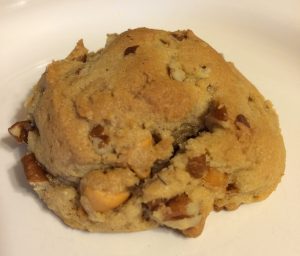
butter-pecan-cookiesThis recipe is adapted very slightly from one called “butter pecan fantasies” in the King Arthur Flour Cookie Companion. While the dough might be a bit of a challenge to work with, the end result is absolutely delicious. The toffee bits, butterscotch chips, and chopped pecans might seem like too much at first, but their flavors blend together perfectly, and their different textures add wonderful crunch to an otherwise soft, chewy cookie.

I added more vanilla extract than the original recipe called for to bring my dough together, as it seemed too crumbly with just 2 teaspoons. It’s also important to note that mixing in the toffee bits, butterscotch chips, and chopped pecans takes some time – I used both the paddle attachment on my mixer and my hands to incorporate them as best I could. These cookies would be delicious with chocolate chips instead of butterscotch, but they’d need a different name.

Ingredients

  • 6 tablespoons butter, softened
  • 1 1/4 cups light brown sugar
  • 2 1/2 teaspoons vanilla extract
  • 1 teaspoon salt
  • 1 teaspoon baking soda
  • 1 egg
  • 2 1/4 cups flour
  • 1 cup toffee bits
  • 1 cup butterscotch chips
  • 1 cup chopped pecans

Preparation

Preheat oven to 375 degrees. Line several baking sheets with parchment paper.

In a mixing bowl fitted with the paddle attachment, cream together butter, brown sugar, vanilla extract, salt, and baking soda. Add egg and beat until well-combined and fluffy. Add flour mixture in three batches, beating well to combine between each; dough will pull away from the side of the bowl when ready.

Mix in toffee bits, butterscotch chips, and pecans; use your hands if necessary.

Using a 2-inch cookie scoop, drop scoops of dough onto cookie sheets about 2 inches apart. Bake for 10 minutes, until tops are just golden brown.

Cool on cookie sheets for about 5 minutes, then remove to a wire rack to cool completely.

Store in an airtight container at room temperature. Makes about 3 dozen.