Roman’s Holy Communion Cake

communioncakeMy nephew Roman made his first Holy Communion yesterday, a huge rite of passage for young Catholic kids. When I was little, I remember “playing communion” with Nilla wafers, and I recall my own first communion very well. I have the dress and veil I wore in a cedar chest in my bedroom, along with other family heirloom garments like my grandmother’s wedding dress and my grandpap’s Navy sailor suit.

Roman requested a chocolate cake with chocolate icing for his communion celebration, and the look on his face when he first saw it was priceless. He got an enormous piece, of course.

I’ve made this cake in cupcake form before, and adapted the recipe for two 8-inch rounds here. This would also make at least 24 cupcakes, or a 9 x 13 sheet cake.

Ingredients

Dark Chocolate Cake

  • 3 cups flour
  • 6 tablespoons cocoa powder
  • 2 cups sugar
  • 2 teaspoons baking soda
  • 1 teaspoon salt
  • 2 tablespoons vinegar
  • 2 teaspoons vanilla
  • 6 tablespoons vegetable oil
  • 2 cups water

Chocolate Buttercream

  • 1 cup butter, at room temperature
  • 1/2 teaspoon salt
  • 3 1/2 cups powdered sugar
  • 1/2 cup cocoa powder
  • 3-4 tablespoons milk
  • 3 teaspoons vanilla extract

Vanilla Buttercream (for accents)

  • 4 tablespoons butter
  • Scant 1 cup powdered sugar
  • About 2 tablespoons milk
  • 1 teaspoon

Preparation

For the cake

Preheat oven to 350 degrees. Spray two 8-inch round cake pans with baking spray. Line the bottom of each pan with a circle of parchment, and spray a second time.

In a large mixing bowl, combine flour, cocoa powder, baking soda, and salt. Make three wells; place vinegar in one, vanilla in the second, and vegetable oil in the third. Add water and stir very well to combine; the batter will bubble up just slightly as the ingredients come together. Your batter will be fairly thin, but should be mostly lump-free.

Divide batter evenly between the pans. Bake for about 30 minutes, until a cake tester comes out clean. Be careful not to over-bake; the sides of these cakes set up pretty quickly and can burn if you let them go too long.

Remove cakes from oven and carefully run a knife around each edge to loosen them from their pans if they’ve stuck at all. Allow to cool for about 5 minutes in the pans, then carefully flip out onto wire racks (removing the parchment for each cake bottom) to cool completely.

For the frostings

To make the chocolate buttercream frosting, in a large bowl, sift together powdered sugar and cocoa powder and set aside.

In a mixing bowl, beat butter on medium speed for about 1 minute; add salt and beat another 30 seconds.

Add powdered sugar and cocoa and beat on low speed to incorporate as much sugar into the butter as you can.  I cover my mixing bowl with a kitchen towel during this step to prevent a sugar storm.

Add three tablespoons milk and two teaspoons vanilla extract; beat for three minutes.

Scrape down the sides of the mixing bowl and add the final teaspoon vanilla extract, then beat for another minute.

To make the vanilla buttercream frosting, in a medium bowl, sift powdered sugar and set aside.

In a mixing bowl, beat butter on medium speed for about 1 minute; add salt and beat another 30 seconds.

Add powdered sugar and beat on low speed to incorporate as much sugar into the butter as you can.

Add 1 tablespoon milk and the vanilla; beat for three minutes. Add remaining milk a half-tablespoon at a time to reach a consistency that can be easily piped.

To assemble and decorate

Flip one cake upside-down onto your cake plate; spread a medium-thin layer of frosting on top. Carefully place your second cake on top of the first layer and frost the top, then the sides.

Fit a piping bag with your desired tip; pipe decorations as you like. I decorated Roman’s cake pretty simply, with his name, a top border that looked a bit like rosary beads, and crosses on the sides.

RomanHCHere, Roman marvels at his cake (and did not lick it). 
Lemon Pound Cake with Poppy Seed Filling

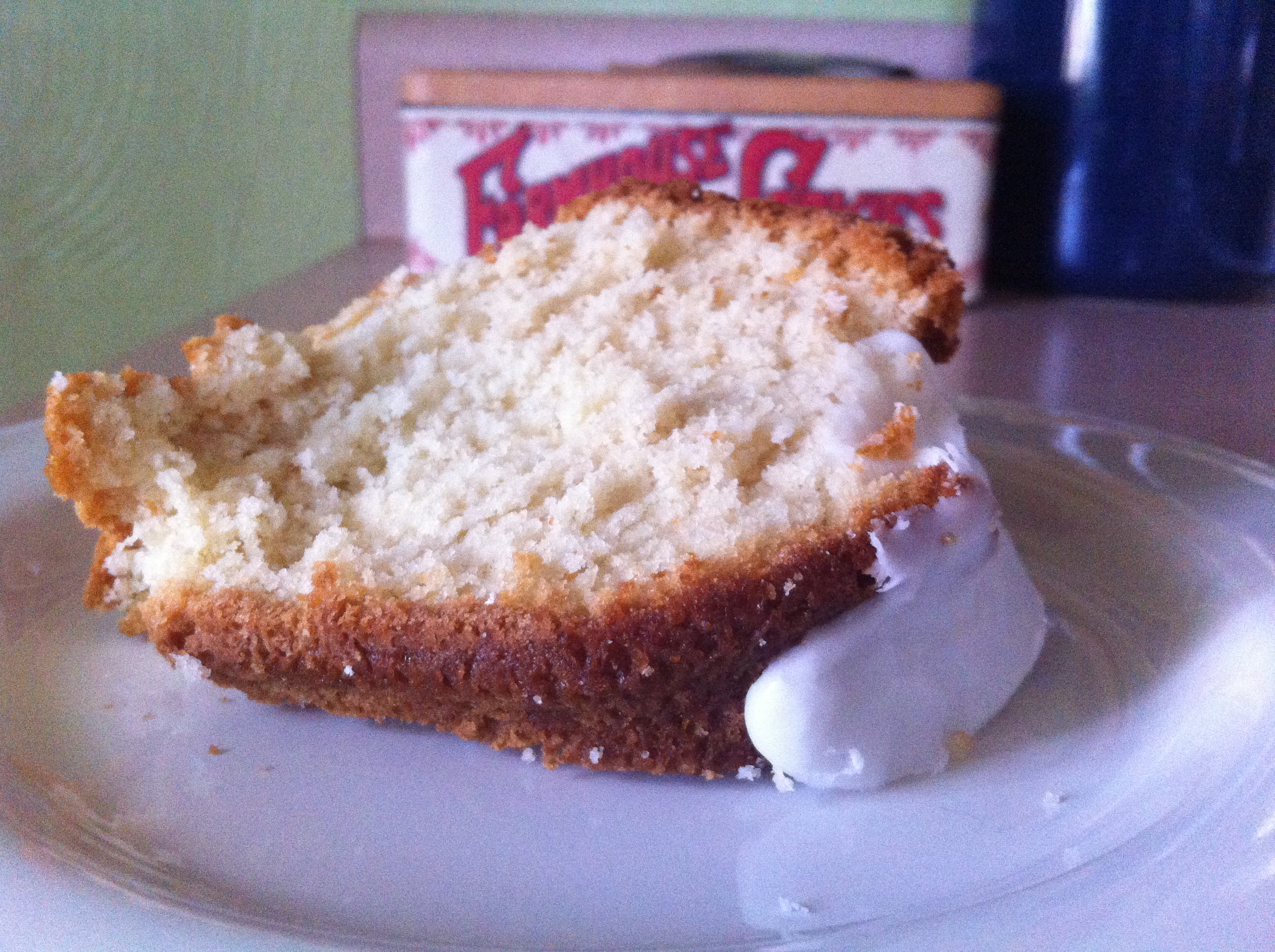
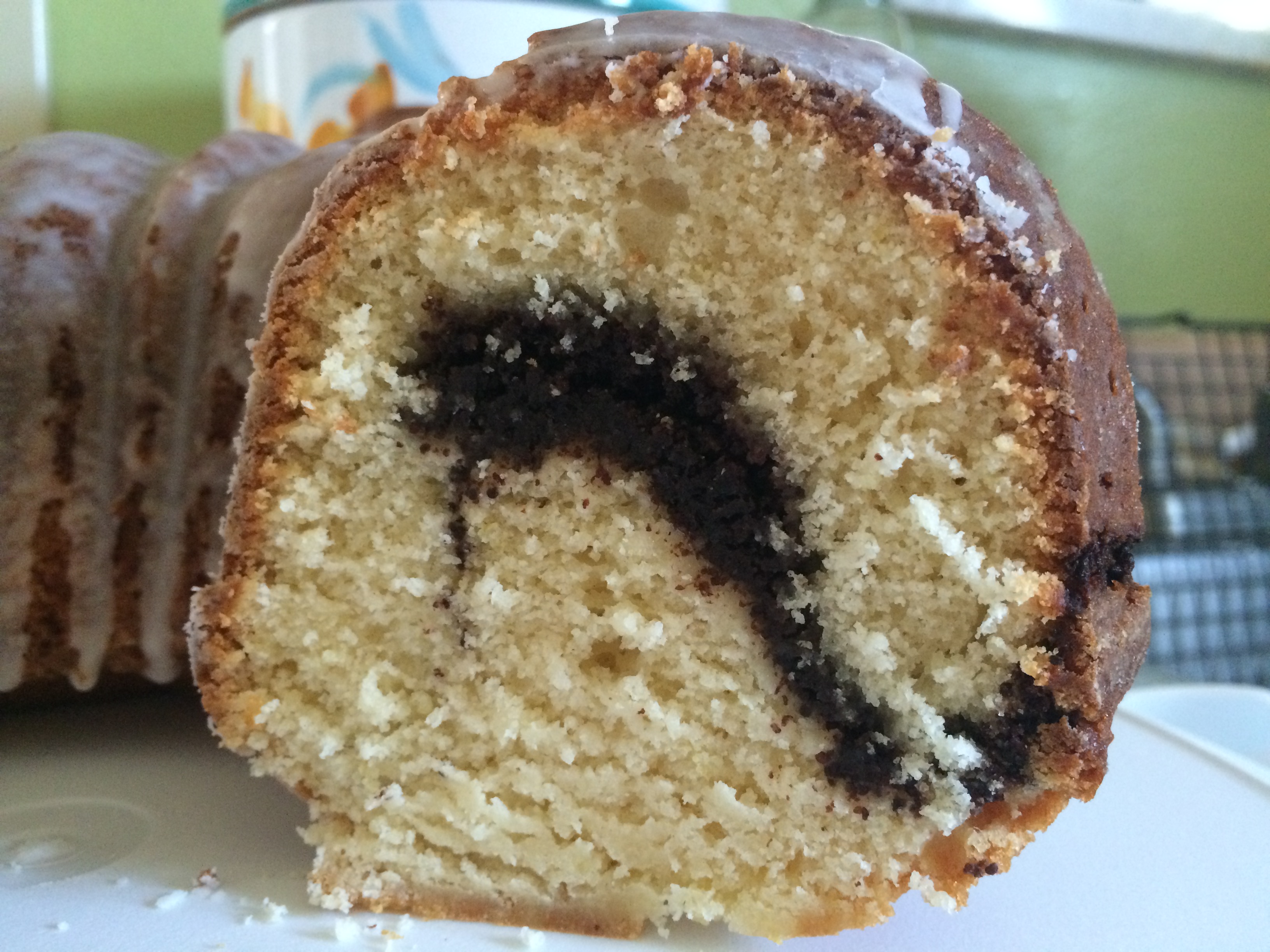
lemonpcwithpoppyYesterday, I wondered: what should I do with a ton of leftover poppy seed filling? I should slather it into a lemon pound cake, that’s what.

This cake calls for lemon extract, and believe me when I tell you that you won’t be able to achieve the necessary level of lemony goodness in it with zest and juice alone. The fine folks at McCormick’s (which Mike always reminds me is a Maryland-based company) make lemon extract that you’ll likely find in the baking aisle at your local grocery store. It is absolutely worth the $5.

If you’d rather not use the poppy seed filling, you can omit it and just serve your cake as-is. I’m a huge fan of poppy seed though, so for me this is pretty close to pound cake heaven. You can serve it warm without glaze, or wait for it to cool and glaze it. Either way, it is delicious.

Ingredients

For the cake

  • 1 1/2 cups poppy seed filling
  • 4 teaspoons lemon juice
  • 3 cups flour
  • 2 teaspoons baking powder
  • 1/2 teaspoon salt
  • 1 cup butter, softened
  • 2 cups sugar
  • 4 eggs
  • 1 1/2 teaspoons vanilla extract
  • 1 1/2 teaspoons lemon extract
  • 1 cup 2% milk
  • zest of 1 medium lemon

For the glaze

  • 2 cups powdered sugar
  • About 2 tablespoons lemon juice

Preparation

Preheat oven to 350 degrees. Grease a bundt pan very well, then dust with flour.

In a small bowl, combine poppy seed filling and 4 teaspoons lemon juice, mixing well; set aside.

In a medium bowl, combine flour, baking powder, and salt; set aside.

In a mixing bowl, beat butter and sugar together until light and fluffy. Add eggs, one at a time, beating well after each. Add vanilla and lemon extracts and mix well.

Add the flour and milk alternatively in three batches, beginning and ending with the flour and mixing until just combined after each addition.

Add lemon zest and beat until just combined.

Pour about half of the batter into your bundt pan, then spoon in poppy seed filling and gently spread to create a ribbon. Top with remaining batter.

Bake for 60 minutes or until a cake tester comes out clean. Remove from oven and allow to cool in the pan for about 20 minutes, then carefully invert the cake onto a wire rack and allow to cool completely.

When the cake is cool, combine powdered sugar and lemon juice, about a teaspoon at a time, in a large glass measuring cup. You want a very drizzly consistency for your glaze so that it can easily drip down the sides of your cake. Pour over cake and allow to set before serving.

Remember: if you want to serve this cake warm – and it is dee-lish-ous warm – you can leave it unglazed.

Orange Almond Cake (gluten-free!)

orange almond cakeWhat exactly is gluten? In simple terms, it is a protein present in wheat, which provides stability to breads, cakes, cookies, and other baked goods. Gluten-free baking relies on other ingredients that can bind together and provide structure, ranging from eggs and nut flours to thickeners like xantham gum.

As a savvy baker, I understand that gluten-free recipes can bring about a number of challenges, and I’ve been sorely disappointed by nut-based, high-egg-volume cake recipes in the past. I baked this as a trial run for our seder, which will take place on the first night of Passover in just a couple of weeks. The recipe came from a food blogger in Australia, hence the use of grams below. The preparation is fascinating, as I think you may agree once you read the directions. I’m happy to say that it turned out very well; my plan for the seder is to add some slices almonds to the top, which will brown nicely during baking.

Ingredients

  • 2 medium oranges
  • 6 eggs, at room temperature
  • 250 grams sugar, processed to super-fine consistency*
  • 250 grams almond meal
  • 1 teaspoon baking powder

*To make regular sugar super-fine, place it in a food processor fitted with a steel blade and pulse several times until you get a consistency like sand.

Preparation

Wash the oranges well. Place them in a large cooking pot with plenty of water and bring them to a boil. Turn down to a simmer, and simmer for 2 hours, checking frequently. Remove oranges from the water and allow to cool completely.

Preheat oven to 375 degrees. Line a 9-inch springform pan with parchment, extending the paper over the sides.

Remove the ends of the oranges, which can be bitter, and place the oranges, skin and all, into a food processor. Pulse to a smooth consistency.

In a large bowl, whisk eggs and sugar together very well. Add orange puree and whisk together.

Add almond meal and baking powder, stirring with a wooden spoon to blend completely.

Pour batter into prepared pan and bake for 50-60 minutes, until a cake tester comes out clean. Be careful not to over-bake; the sides and bottom of the cake will darken considerably and you do not want them to burn.

Remove from oven and cool in pan for about 10 minutes; remove the cake from the pan, leaving it in the parchment, and place it on a wire rack to cool completely. Remove parchment; store at room temperature.

Note: this cake is very moist, and according to the original recipe it becomes even more so after a few days. Be sure to store in an airtight container.


Banana Coffee Cake

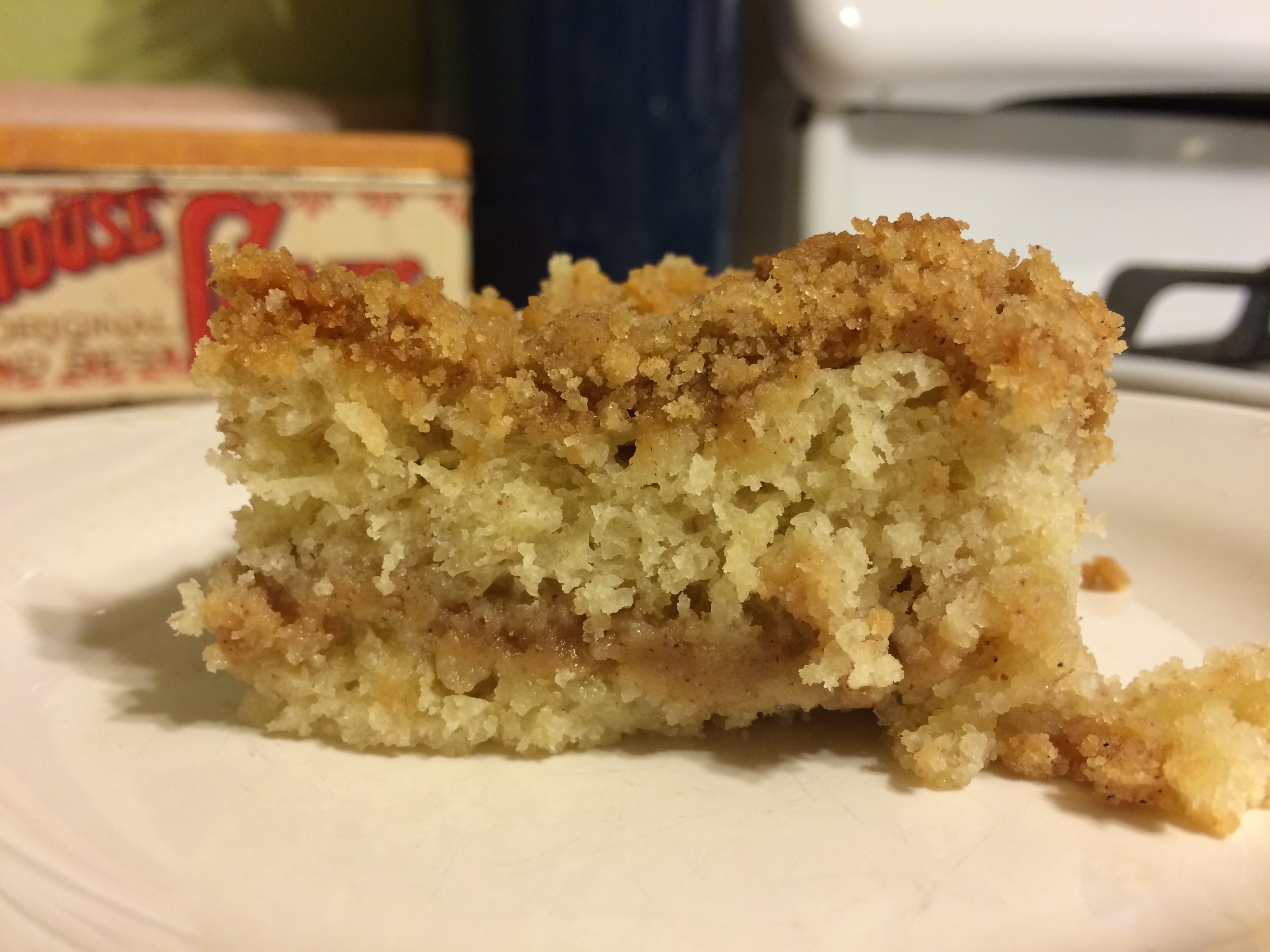
banana coffee cakeWhen one’s bananas are overripe, banana bread is an obvious solution. But this time, I wanted to do something different…and so to the internet I went. On another blog, Tide and Thyme, I discovered the recipe below, and although I still think the preparation process is a bit odd everyone proclaimed the end results to be delicious.

Next time, I’d reduce the streusel quantity by about a quarter, as it seemed like a bit much. I’d also add a drizzle icing, which was included in the original recipe but I didn’t use this time – and I’d make it a chocolate drizzle. I might also toss some pecans into the streusel for extra crunch.

Ingredients

For the streusel:

  • 12 tablespoons cold butter, cubed
  • 1 1/2 cups light brown sugar
  • 1 1/2 cups flour
  • 1 teaspoon cinnamon

For the cake:

  • 2 cups flour
  • 3 teaspoons baking powder
  • 1 teaspoon salt
  • 3 very ripe bananas
  • 8 tablespoons butter, at room temperature
  • 2 cups sugar
  • 2 eggs
  • 1 teaspoon vanilla extract
  • 1 cup milk

Preparation

Preheat oven to 350 degrees. Line a 9 x 13 baking pan with aluminum foil and spray with cooking spray, set aside.

Make the streusel: in a large bowl, combine all the dry ingredients. Cut in butter with a pastry blender (or rub in with your hands, like I did) until the mixture looks like coarse crumbs; set aside.

Make the cake: in a medium bowl, whisk together flour, baking powder, and salt; set aside.

In a mixer fitted with the paddle attachment, beat bananas until they become liquefied. Add butter and mix until combined; the mixture will look very lumpy but that’s okay. Add sugar, eggs, milk, and vanilla and mix until combined.

With the mixer running on low, carefully add flour and mix until just combined. The batter will be fairly thin for a cake, but this is okay.

Pour half of the batter into the prepared pan; cover with streusel mixture, then top with remaining batter and remaining streusel.

Bake 50-55 minutes, until a cake tester comes out clean. Cool completely before serving.

Chocolate Sour Cream Cake

sour cream chocolate cakeI love recipes that employ old-fashioned methods in preparation; melting chocolate on a low flame, beating an egg with a fork, actually mixing batter by hand. This is one such recipe, put to use because I had a container of sour cream staring at me from next to the buttermilk I’d been baking with all last week. Somewhere along the line, I began keeping sour cream on hand in the same way that I always have various baking chocolates, canned pumpkin, and molasses in my pantry. I never know when inspiration will strike and require a cultured dairy product.

This recipe comes from one of my favorite books, Miriam’s Kitchen, an exploration of the connections between food, family, and cultural identity. I read Miriam’s Kitchen at least once a year, usually in the fall, and I’ve been wanting to try this recipe for some time. The end result has great chocolate flavor, but is slightly drier than I’d like it to be – such can be the case with chocolate cakes, and is perhaps why they’re often paired with fudgy icing. This icing is a thick version of a chocolate drizzle; if I make this cake again, I might use a chocolate buttercream or a fudge frosting instead to add a bit of moisture.

Ingredients

For the cake

  • 8 tablespoons unsalted butter
  • 2 1/2 ounces unsweetened baking chocolate
  • 1 egg, beaten
  • 1 cup sugar
  • 1 cup sour cream
  • 1/4 teaspoon baking soda
  • 1 1/4 cup cake flour

For the icing

  • 3 tablespoons butter
  • 2 tablespoons unsweetened cocoa powder
  • 2 cups powdered sugar
  • 1 teaspoon vanilla
  • 2 tablespoons milk

Preparation

Preheat oven to 350 degrees. Grease a bundt pan very well and flour lightly.

In a small saucepan, melt butter and chocolate on very low heat, stirring frequently to combine.

In a large mixing bowl, combine egg and sugar; beat with a fork to combine, then add sour cream and beat again to combine. Scrape the sides of the bowl with a spatula as necessary.

Place a sieve over the mixing bowl and sift in cake flour and baking soda, then mix with a wooden spoon until combined.

Add melted chocolate and butter, mixing with the wooden spoon until combined.

Pour batter into prepared bundt pan; bake for 35-40 minutes, until a cake tester comes out clean. Cool completely in the pan, then turn out onto a wire rack.

Prepare the icing: in a medium saucepan, melt butter. Add cocoa powder and stir until smooth. Remove from heat; add 1 cup powdered sugar and stir until smooth; add vanilla, milk, and remaining powdered sugar to reach a thick drizzling consistency. Pour over cake and spread with an offset spatula; icing will set fairly quickly.


Buttermilk Pound Cake

buttermilk pound cake“There’s a hole in this cake,” says Maria Portocalos in My Big Fat Greek Wedding, when presented with a Bundt from her soon-to-be-in-laws. So what exactly is a Bundt cake? According to Wikipedia, the Bundt is based on a European fruit cake called Gugelhupf or, in the north of Germany, Bundkuchen. The Nordic Ware company began making Bundt pans in the U.S. in the 1950s and, with the help of some publicity from Pillsbury, the pans became popular.

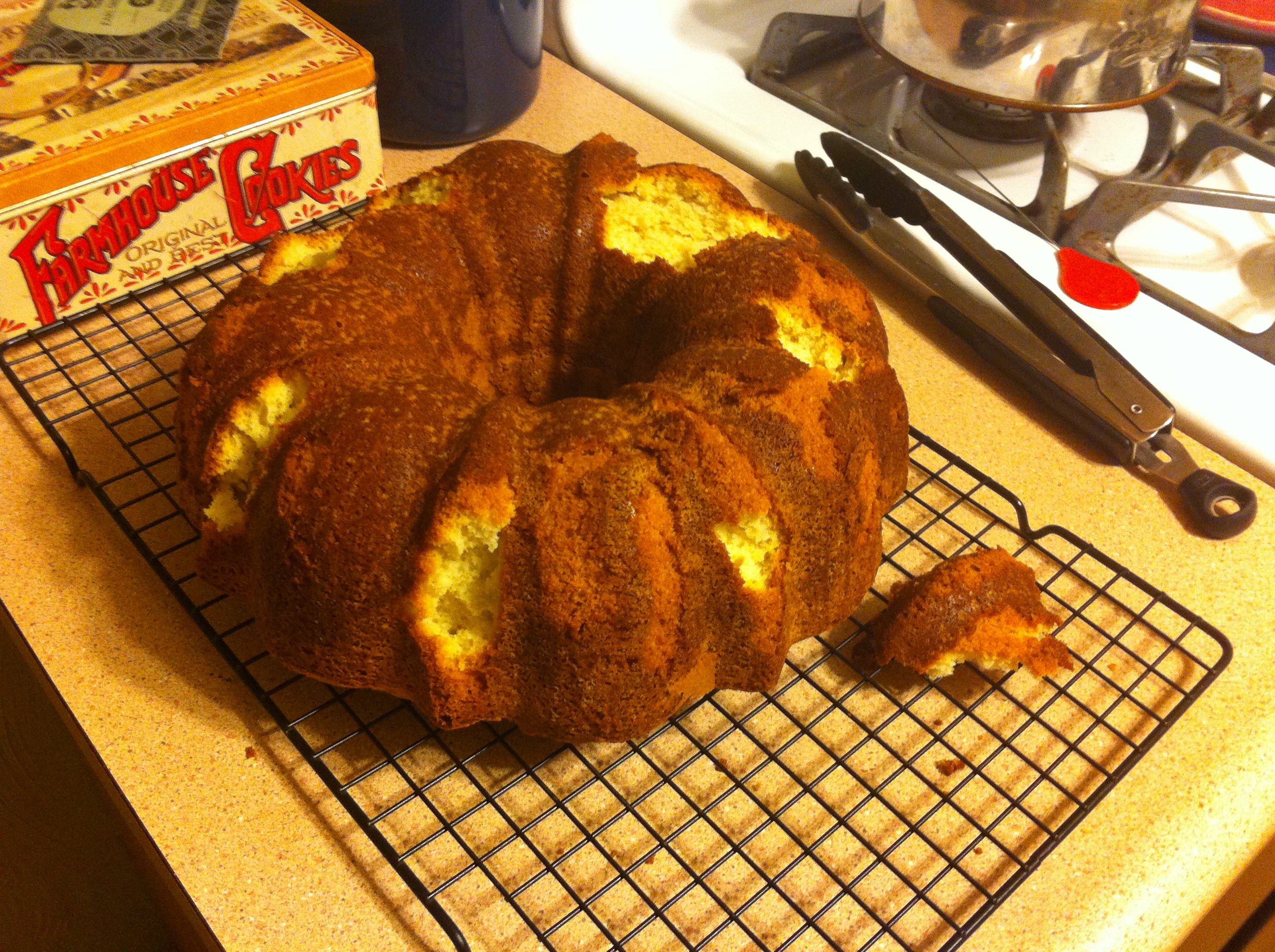
When you look at the photo below, you’ll have a new appreciation for the need to a) properly grease and flour your Bundt pan and b) allow your cake to cool completely before attempting to remove it from said pan. I thought my baking spray, which includes a combination of cooking spray and flour, would be enough to release the Bundt…but I was wrong. Also, I removed the cake when it was still slightly warm, which could have been another problem.

Moral of the story: grease your pan with shortening, flour your pan, and wait until your cake cools completely before you remove it from the pan so you can avoid the torn Bundt situation that I experienced in the photo below. Despite its less-than-perfect appearance, the cake itself is quite delicious.

Ingredients

Buttermilk Pound Cake

  • 3 cups flour
  • 1/4 teaspoon baking soda
  • 1 cup butter, softened
  • 2 1/2 cups sugar
  • 4 eggs
  • 1 cup buttermilk
  • 2 teaspoons vanilla

Almond Drizzle

  • 1 1/2 cups powdered sugar
  • 1 teaspoon almond extract
  • About 1 tablespoon water

Preparation

Preheat oven to 325 degrees. Grease and flour a 10-cup capacity Bundt pan.

In a small bowl, combine flour and baking soda; set aside.

In a mixing bowl, cream together butter and sugar until light and fluffy. Add eggs, one at a time, mixing well after each addition.

Add buttermilk and flour mixture alternatively, beating until just combined. Pour batter into prepared pan and bake for 70 minutes, until a cake tester comes out clean.

Allow cake to cool completely in pan; remove and invert on a cake plate before drizzling.

For the drizzle: in a large glass measuring cup combine powdered sugar and almond extract. Add water slowly, about 1 teaspoon at a time, to reach a thick drizzling consistency. Pour over top of cake and allow to drip down the sides.

Below, the evidence of my faulty pan-greasing and haste of removal is clearly observed. At least it tastes good.

bundtmishap

Lemon Loaf

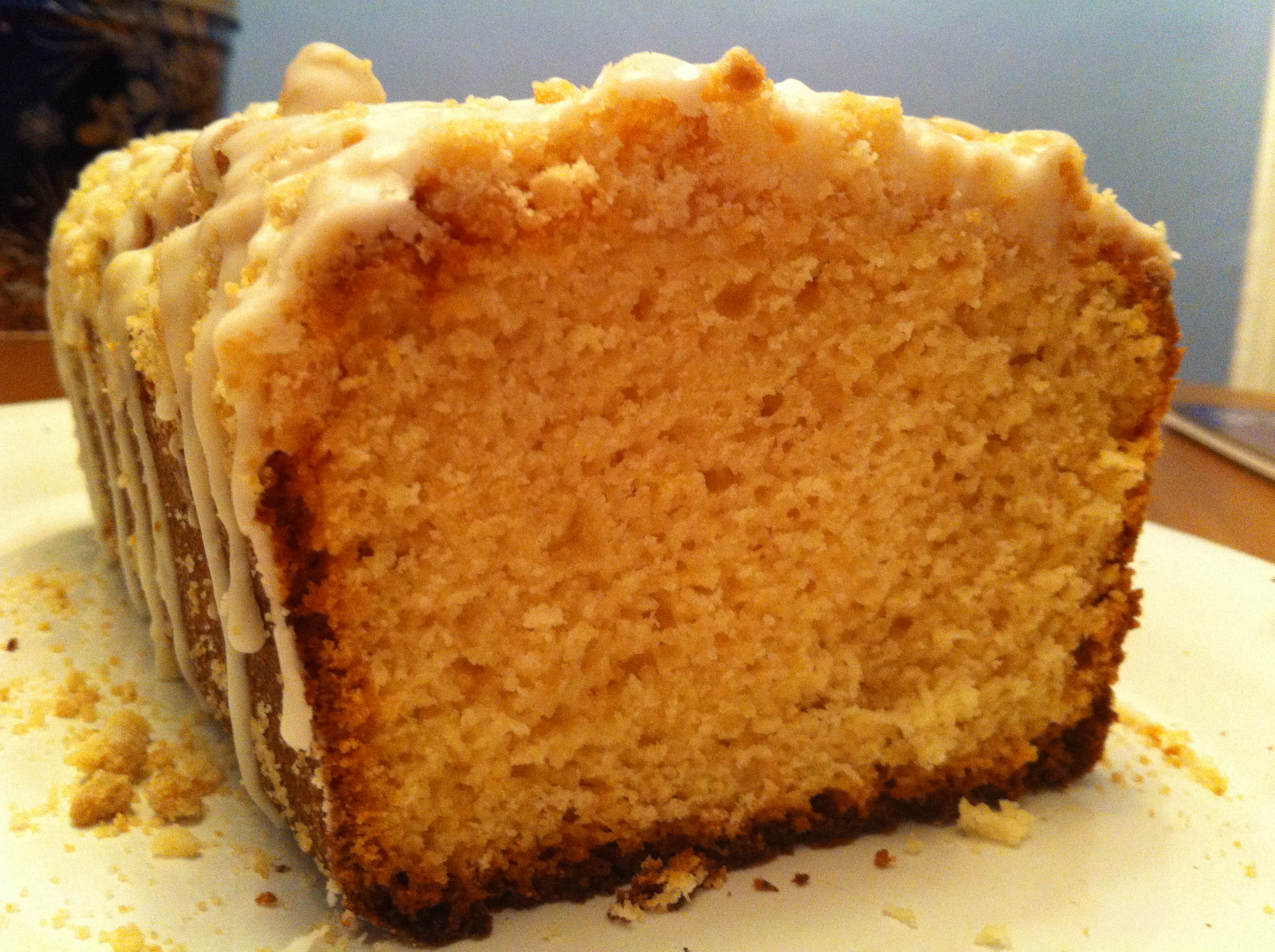
lemon loafHave you thought of putting a crumb topping on lemon bread? I hadn’t until I found this recipe over at Stephie Cooks, and I have to say it is quite a brilliant idea.

I’m crazy about lemons, particularly in quick breads. This recipe yields a drier treat than I was expecting – it’s almost like a pound cake – and has great texture from both the crumb topping and lemon drizzle. I added more lemon zest and drizzle than the original recipe called for, because I believe you can never have too much lemon flavor in a bread like this.

Many quick breads call for vegetable oil and milk, but this recipe employs evaporated milk instead of the regular kind, and that was something new for me. The remaining 7 ounces of evaporated milk are currently waiting in my fridge and are destined to be made into fudge later this week, since I bought a 12-ounce can instead of the 5-ounce variety in the original recipe. And that’s okay – stay tuned for (hopefully) peanut butter fudge later this week.

Ingredients

Crumb Topping

  • 1/4 cup plus 2 tablespoons flour
  • 1/4 cup sugar
  • pinch of salt
  • 2 tablespoons melted butter

Lemon Bread

  • 1 1/2 cups flour
  • 1 cup granulated sugar
  • 1 teaspoon baking powder
  • 1/2 teaspoon salt
  • 5-oz evaporated milk
  • 1/3 cup vegetable oil
  • zest of 1 large lemon
  • 2 eggs

Lemon Drizzle

  • 1 1/4 cups powdered sugar
  • 4 teaspoons lemon juice

Preparation

Preheat oven to 350 degrees. Lightly grease and flour an 8 1/2 x 4 1/2 loaf pan.

Prepare the crumb topping: in a small bowl, combine flour, sugar, salt, and melted butter. Stir with a fork until crumbs form; set aside.

Prepare the bread batter: In a medium bowl combine flour, sugar, baking powder, and salt. In a small bowl combine evaporated milk, vegetable oil, lemon zest, and eggs. Stir well to combine, then add all at once to the flour mixture. Stir to combine.

Pour batter into prepared loaf pan and top with crumbs. Bake for 50-75 minutes, until a cake tester comes out clean (mine baked for about 55 minutes). Cool completely in pan; carefully remove and place on a wire rack above parchment or waxed paper for drizzling.

Prepare the drizzle: in a large measuring cup, combine powdered sugar and lemon juice. Stir well, until consistency is drizzly and easily pourable but not too thin (add a small amount of additional powdered sugar if necessary). Pour over top of loaf; allow to set before serving.


Classic Coffee Cake

classic coffee cakeRemember when people actually visited one another, instead of just interacting online? When they put on nice clothes and went to the home of a friend, relative, or neighbor with the sole purpose of simply spending time with them, catching up, maybe playing a card game or just enjoying a cup of coffee together? This practice may be long gone, but I surely hope it makes a comeback someday.

Whenever I think of such visits, I think of coffee cake, the go-to treat that a savvy hostess would have either already have on hand in case someone stopped by or could whip up at a moment’s notice. I imagine that my grandmothers would have had recipes for coffee cake, though I honestly can’t recall either of them actually baking one.

This coffee cake is a slight adaptation from the Better Homes & Gardens Cookbook buttermilk coffee cake recipe; I adjusted the spices and added some drizzle icing for a sincerely delicious treat. This coffee cake went into the office with me earlier in the week and was devoured within about 24 hours. It has a wonderful texture, just crumbly enough but not too crumbly; you could use walnuts instead of pecans if you like, but being a pecan fan, they’re my preferred baked-good nut and are a great match for the cinnamon and nutmeg in this cake.

Ingredients

  • 2 1/2 cups flour
  • 1 1/2 cups packed light brown sugar
  • 1/2 teaspoon salt
  • 10 2/3 tablespoons butter, cold, cut into small cubes
  • 2 teaspoons baking powder
  • 1/2 teaspoon baking soda
  • 3/4 teaspoon cinnamon
  • 3/4 teaspoon nutmeg
  • 1 1/3 cups buttermilk (or sour milk, see note below)
  • 2 beaten eggs
  • 1/2 cup chopped pecans
  • 1 cup powdered sugar
  • 1 teaspoon vanilla extract
  • 1/2 – 1 tablespoons water

Note: if you don’t have buttermilk, you can make sour milk and substitute it for the same amount of buttermilk that you need. For each cup of sour milk needed, place 1 tablespoon of lemon juice or white vinegar in a glass measuring cup and add enough milk to make 1 cup total of liquid. Stir together and then let stand for 5 minutes before using.

Preparation

Preheat oven to 350 degrees. Grease bottom and 1/2 inch up the sides of a 13 x 9 pan.

In a large mixing bowl, combine flour, brown sugar, and salt; add butter and rub in with your hands, until the mixture resembles coarse crumbs. Reserve 1/2 cup of crumb mixture and combine it with chopped pecans for topping.

Stir in baking powder, baking soda, cinnamon, and nutmeg.

In a large glass measuring cup, combine buttermilk and beaten eggs, then add to the dry mixture all at once and stir until well-combined.

Pour batter into prepared pan and sprinkle with crumb/pecan mixture.

Bake for 35-40 minutes, until a cake tester comes out clean. Cool completely before drizzling, or simply serve warm, right out of the oven, without drizzle.

To make drizzle, place powdered sugar and vanilla in a small bowl and stir together. Add water, a small amount at a time, to make a drizzly consistency; you may need to add more water, then a bit more powdered sugar, to get the consistency you’d like.

Drizzle over cooled cake and allow to set for about 15 minutes before serving.

Lemon Raspberry Roulade

lemon raspberry rouladeLemon and raspberry are two of my favorite flavors, even more so when they’re combined in the same treat. For Easter, I decided that I wanted a lemon-based dessert; I found a few recipes for lemon roulade, but most of them involved a cream cheese or marascapone filling. I wanted something a bit lighter, so I chose a scratch-made raspberry filling and I must say, the end result is delicious.

Rolling a cake can be intimidating, but remember, on this blog, we have no fear. The original recipe for the cake portion of this roulade involved allowing the cake to cool completely before filling and rolling it, but I chose to let it cool for just a few minutes before I rolled it in a heavily-powdered-sugared tea towel. I’d recommend rolling it immediately after removing it from the pan just to be on the safe side rather than waiting any time at all. Also, keep a very close eye on your filling; it goes from liquid to thickened in a matter of seconds!

If you’d rather forgo the tangy lemon icing, you could easily dust the roulade with powdered sugar or serve it with fresh whipped cream. But since you’re working with lemons and will likely have a few tablespoons of lemon juice left over, the icing is a nice way to make the most of it.

Part I: Lemon Cake

Ingredients

  • 3/4 cup flour
  • 1/4 teaspoon baking powder
  • 1/4 teaspoon baking soda
  • 1/4 teaspoon salt
  • 2 eggs
  • 3/4 cup sugar
  • 1/4 cup fresh lemon juice
  • zest of 3 small to medium-sized lemons
  • 1 1/2 teaspoons vanilla extract

Preparation

Preheat oven to 375 degrees. Line a 15 x 10 x 1 jelly roll pan with parchment; spray with baking spray and dust with flour. I used a sieve and dusted the flour directly onto the parchment. Lay a thin tea towel on a counter top and dust heavily with powdered sugar.

In a medium bowl, combine flour, baking powder, baking soda, and salt; set aside.

In a mixing bowl, beat sugar and eggs on medium-high speed for 3 minutes until thickened and light in color.

Add lemon juice, lemon zest, and vanilla and beat until combined.

With the mixer running on low, add flour and beat until just combined.

Pour batter into prepared pan and gently spread with an offset spatula to distribute the batter in one even layer.

Bake for 10-12 minutes, until edges are just golden and cake springs back when touched.

Remove from oven and immediately flip onto a cooling rack; remove parchment paper and quickly flip cake onto the prepared tea towel. Roll up quickly from the short end, placing on a cooling rack to cool completely before filling.

Part II: Raspberry Filling

Ingredients

  • 1 1/2 cups frozen raspberries, pulsed in a food processor to crumb-like texture
  • 1/2 cup sugar
  • 1 tablespoon lemon juice
  • 2 tablespoons cornstarch
  • 1 – 2 tablespoons water

Preparation

In a medium saucepan, combine raspberries, sugar, and lemon juice. Heat until raspberries begin to liquefy; quickly place in the bowl of a food processor and puree. Return to heat; cook until mixture reaches a low boil.

In a small glass measuring cup, place cornstarch and add 1 tablespoon water; mixture will thicken and almost harden immediately, so add another 1/2 to 1 tablespoon of water to achieve a pourable consistency. Whisk into raspberry mixture and cook at a low boil for 1-2 minutes; mixture will thicken very quickly and become glossy.

Remove from heat and place in a small bowl to cool completely before using. Note: this filling will not be seedless unless you pass the puree through a sieve before returning to the stove and adding the cornstarch and water.

Once both the cake and filling are completely cool, carefully un-roll cake and spread with filling. Re-roll and wrap tightly in plastic wrap; store in the refrigerator overnight to set.

Part III: Tangy Lemon Glaze

Ingredients

  • 1 1/2 cups powdered sugar
  • 3 tablespoons lemon juice
  • 1/2 teaspoon lemon zest

Preparation

In a small bowl, combine 1 cup powdered sugar about 2 tablespoons lemon juice; mix well to completely combine. Add another 1/2 cup powdered sugar and up to 1 more tablespoon lemon juice to achieve a thick drizzling consistency; stir in lemon zest until well-combined.

Unwrap cake and place on a platter or cake plate. Pour glaze down the center of the cake, allowing to drip over the sides, spreading as necessary to cover the entire top of the cake. Allow glaze to harden, then return cake to the refrigerator for storage.


Vanilla Bean Cheesecake (for Passover)

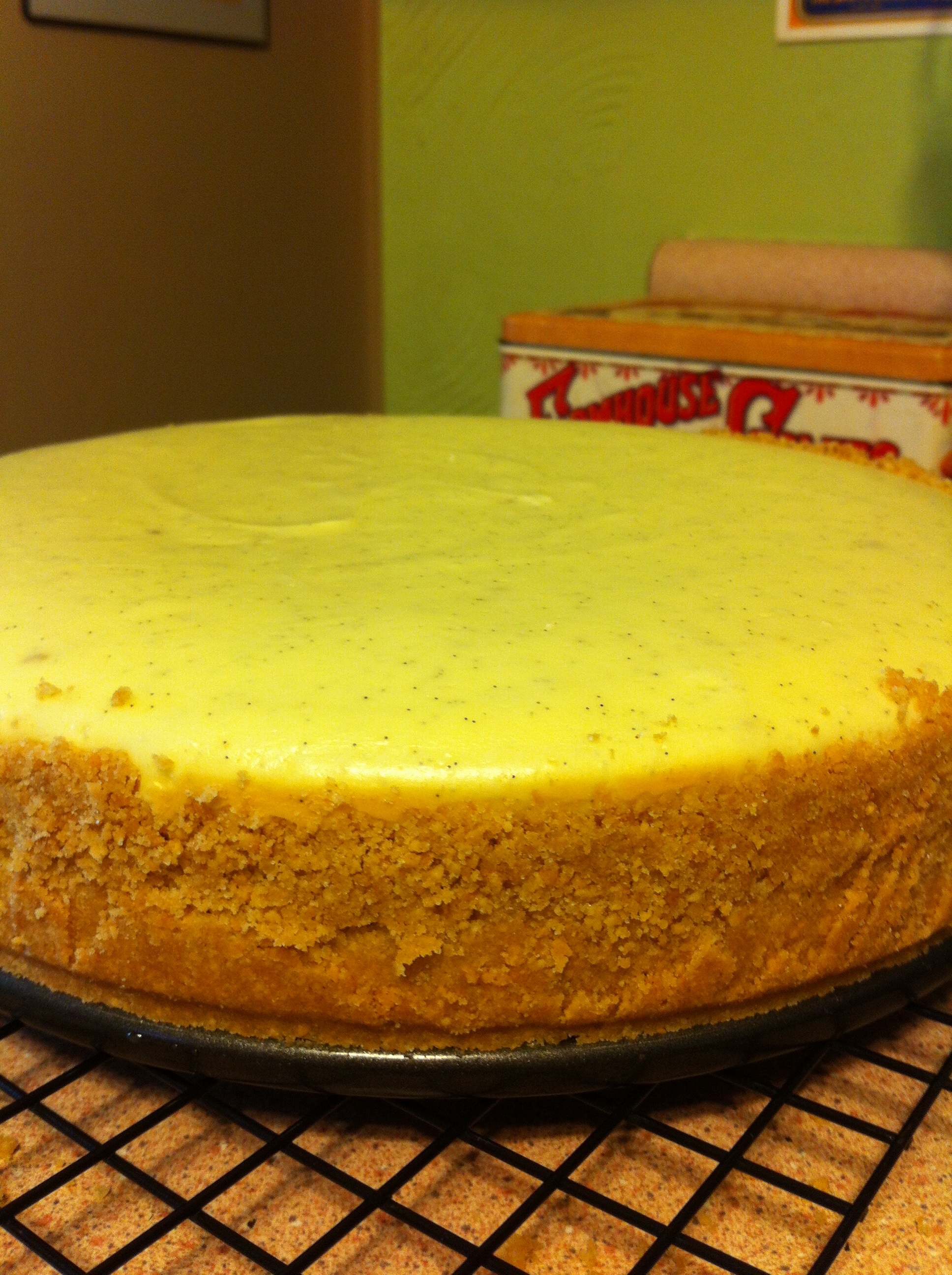
passover cheesecakeI may have gone slightly overboard with the Passover desserts this year. There just seemed like so many interesting options, and I had to try them all. In addition to our toffee chocolate matzoh and truffles on tomorrow night’s seder table, there will be this cheesecake, a leaven-free treat of vanilla bean and almond goodness.

The crust for this lovely dessert is a concoction of almonds, matzoh cake meal, sugar, and melted butter, and the filling is a standard cream cheese and sugar mixture that includes the seeds of two vanilla beans, as well as a dash of almond extract. Garnish-wise, you could pair many foods with this cheesecake; strawberries and raspberries come to mind, as does good old-fashioned whipped cream, or perhaps chocolate curls.

I’m so excited about this cheesecake, I may have to break my sugar fast tomorrow night. Passover is about freedom, after all.

Ingredients

  • 3/4 cup chopped blanched almonds, toasted and cooled
  • 2/3 cup matzoh cake meal
  • 2/3 cup sugar
  • 1/4 teaspoon salt
  • 8 tablespoons butter, melted and slightly cooled
  • 3 8-ounce packages cream cheese
  • 3/4 cup sugar
  • 3 eggs
  • seeds scraped from 2 vanilla beans
  • 1/4 teaspoon almond extract

Preparation

Preheat oven to 350 degrees.

In the bowl of a food processor, combine almonds, matzoh cake meal, sugar, and salt. Pulse until finely ground, then transfer to a medium bowl and drizzle in butter, mixing with a spoon to incorporate evenly. Mix with your hands to combine; you want a sandy texture.

Press the crust mixture into the bottom and 1 inch up the sides of a 9-inch springform pan and bake for 12-15 minutes, until one shade darker in color. Cool completely on a wire rack.

In a mixing bowl, combine cream cheese and sugar and beat for 2 minutes on medium speed to combine, scraping the sides of the bowl as necessary. Add eggs, one at a time, beating well after each addition.

Add vanilla seeds and almond extract and beat until well combined, about 1-2 minutes more.

Place springform pan in a shallow baking dish and pour filling into crust. Bake for 45-50 minutes, until filling is set 1 1/2 inches from the edge but still wobbly in the middle.

Remove from oven and baking dish; set springform pan on a cooling rack and immediately run a knife around the edge of the crust, then remove the side of the pan and allow cheesecake to cool completely. Store in the refrigerator.