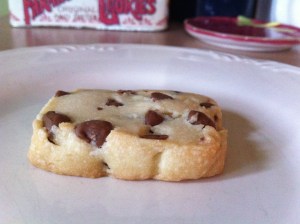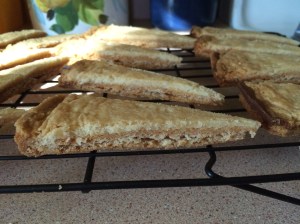
Almond-Filled Shortbread

almond-filled-shortbreadShortbread filled with almond paste? Yes, it is just as delicious as it sounds.

While experimenting with raspberry-filled shortbread last weekend, I decided to take the advice of the incredibly talented bakers at King Arthur Flour and fill my second shortbread round with almond paste. The result is a sturdier cookie than the jam-filled variety, and now I have to wonder…what would happen if I put both almond paste and jam into the same shortbread round? We’ll save that experiment for another day.

Ingredients

  • 1 cup unsalted butter, slightly softened
  • 1 teaspoon salt
  • 3/4 cup sugar
  • 1 teaspoon vanilla extract
  • 10 ounces flour (about 2 1/3 cups; I used a food scale to measure mine)
  • 1 cup almond paste

Preparation

Preheat oven to 300 degrees.

In a mixing bowl, cream together butter, sugar, salt, and vanilla, then beat in flour.

Divide dough into four pieces, about 6 ounces each (I’d recommend 5.7 or 5.8 ounces each to divide as evenly as possible).

Place an 8-inch round cake pan upside down on your counter top and cover with plastic wrap. Press one portion of dough onto the plastic wrap, covering the bottom of the pan completely – you’ll need to be careful, as the dough can tear as it stretches. Wrap the circle of dough in the plastic wrap and refrigerate while repeating this step with each remaining portion.

Gently knead your almond paste, then divide it into two portions. On a lightly floured surface, roll out your paste into a circle about 7 1/2 inches wide.

Lightly grease two 8-inch round cake pans; remove dough circles from the fridge. Peel plastic wrap off the first circle of dough and press into the bottom of one cake pan; top with almond paste, leaving about 1/2 inch bare border around the edges. Top with another circle of dough and gently press the edges to seal them. Prick all over with a fork all the way through each layer. Repeat with the third and fourth circles of dough in the other pan.

Bake for 45 minutes, until golden brown. Remove from oven and loosen the sides with a knife, then cool in pans for 10 minutes.

Carefully turn the shortbread out onto two cutting boards and allow to cool for 5 minutes, then cut into wedges. I cut mine into 16 wedges each for slimmer slices.

Makes 32 wedges.
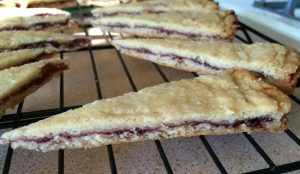
Raspberry-Filled Shortbread

raspberry-filled-shortbreadThe people at King Arthur Flour are baking geniuses. Who else but a genius would come up with delicious buttery shortbread filled with raspberry jam?

This recipe comes from the King Arthur Flour Cookie Companion, my new favorite book. While the preparation does take a bit of time, the end result is totally worth it. You could use any jam with this, and I look forward to making other batches with apricot and strawberry in the future. The recipe below yields two 8-inch rounds of shortbread, so you could use one flavor of jam in one round and a different flavor in the other if you like. When I originally baked this last weekend, I made one round with jam and the other with almond paste; both were tasty, but the jam version was my favorite.

Ingredients

  • 1 cup unsalted butter, slightly softened
  • 1 teaspoon salt
  • 3/4 cup sugar
  • 1 teaspoon vanilla extract
  • 10 ounces flour (about 2 1/3 cups; I used a food scale to measure mine)
  • 6 tablespoons raspberry jam*

*If you’re making one round with raspberry and the other round with a different type of jam or with almond paste, you only need 3 tablespoons of jam.

Preparation

Preheat oven to 300 degrees.

In a mixing bowl, cream together butter, sugar, salt, and vanilla, then beat in flour.

Divide dough into four pieces, about 6 ounces each (I’d recommend 5.7 or 5.8 ounces each to divide as evenly as possible).

Place an 8-inch round cake pan upside down on your counter top and cover with plastic wrap. Press one portion of dough onto the plastic wrap, covering the bottom of the pan completely – you’ll need to be careful, as the dough can tear as it stretches. Wrap the circle of dough in the plastic wrap and refrigerate while repeating this step with each remaining portion.

Lightly grease two 8-inch round cake pans; remove dough circles from the fridge. Peel plastic wrap off the first circle of dough and press into the bottom of one cake pan; top with jam, leaving about 1/2 inch bare border around the edges. Top with another circle of dough and gently press the edges to seal them. Prick all over with a fork all the way through each layer. Repeat with the third and fourth circles of dough in the other pan.

Bake for 45 minutes, until golden brown. Remove from oven and loosen the sides with a knife, then cool in pans for 10 minutes.

Carefully turn the shortbread out onto two cutting boards and allow to cool for 5 minutes, then cut into wedges. I cut mine into 16 wedges each for slimmer slices.

Makes 32 wedges.
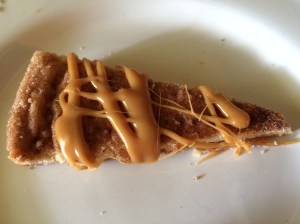
 

Cinnamon Caramel Swirl Shortbread

cinnamon-caramel-swirl-shortbreadCinnamon and caramel, together in shortbread? Trust me…it’s delicious. This is my second recipe from the King Arthur Flour Cookie Companion and it is, as promised, a surprisingly tasty result from an unexpected flavor pairing.

Shortbread is easy to make; you just need a few ingredients, and you can dress it up any way you like. In this case, we combine cinnamon and caramel, two flavors that don’t often go together but in this case work perfectly.

Just a few things to note about this recipe: I measured my flour by weight, using a food scale, rather than by volume this time. You’ll need 10 ounces of flour, which comes out to about 2 1/3 cups if you use the method recommended by the King Arthur Flour folks, which involves stirring up your flour to aerate it, then scooping it into your measuring cup with a spoon and leveling it. Also, I recommend drizzling each individual wedge on its own, rather than drizzling your entire cooling rack’s worth of wedges in long sweeps at once. The caramel cools fairly quickly, forming strings between the wedges that you have to cut with a knife to separate.

Ingredients

  • 1 cup sugar, divided
  • 1 tablespoon cinnamon
  • 1 cup butter, slightly softened
  • 1 teaspoon salt
  • 1 teaspoon vanilla extract
  • 10 ounces (about 2 1/3 cups) flour
  • 16 vanilla caramel candies
  • 1 tablespoon heavy cream

Preparation

Preheat oven to 300 degrees. Lightly grease two 9-inch round baking pans.

In a small bowl, combine 1/4 cup sugar and cinnamon; sprinkle the bottom of each pan with 1 tablespoon cinnamon sugar.

In a mixer fitted with the paddle attachment, cream together butter, salt, 3/4 cup sugar, and vanilla extract until fluffy. Add flour and beat to combine.

Divide dough in half and press into prepared pans, smoothing the tops with your fingers or the bottom of a measuring cup to create a smooth surface. Sprinkle the top of each round of dough with remaining cinnamon sugar, then prick the surface with a fork in whatever pattern you like.

Bake for 35-40 minutes, until edges are golden brown. Remove from oven and loosen the sides with a knife, then cool in pans for 5 minutes.

Carefully turn the shortbread out onto a cutting board and cut into wedges; I cut mine into 16 wedges each. Cool wedges completely on a wire rack.

In a small saucepan, combine vanilla caramel candies and heavy cream, stirring until the caramels melt and the mixture is smooth. Drizzle each wedge with caramel; if the caramel becomes too thick to drizzle, return it to the heat briefly to soften it.

Allow caramel to set before storing, and store at room temperature in an airtight container between layers of waxed paper.

Makes 32 wedges.

Shortbread Spiral Cookies

shortbread spiralsAlthough I’ve seen many a spiral cookie in my baking travels, I’ve never made them until today. This easy recipe will make a handy addition to my arsenal, as I can see tinting the dough all manner of colors for various holidays or incorporating cocoa into the dough for a chocolate and vanilla spiral.

I’d also love to experiment with shapes, like the amazing baker at Eugenie Kitchen did with this remarkable heart cookie. Perhaps next year for St. Patrick’s Day, I’ll create a clover cookie not unlike the rainbow heart, with different shades of green – but that will take some practice.

These treats are destined for my goddaughter, Maureen, and her family for St. Patrick’s Day.

Ingredients

  • 2 1/2 cups flour
  • 1 teaspoon salt
  • 1/4 teaspoon baking soda
  • 1 cup butter, softened
  • 1 cup powdered sugar
  • 1 egg
  • 1 teaspoon vanilla
  • 1 1/2 teaspoons almond extract
  • green food coloring

Preparation

In a medium bowl, sift together flour, salt, and baking soda; set aside.

In a mixing bowl, beat butter on medium speed for 2-3 minutes, until light and fluffy. Add powdered sugar and beat until fluffy.

Add egg, vanilla, and almond and beat well – your batter will become slightly clumpy, but once you add the flour mixture, the texture will even out.

Add flour mixture in three batches, beating well between each.

Divide dough in half and tint one half green. Wrap each half in plastic wrap and chill for about 1 hour.

Remove dough from refrigerator and allow to sit at room temperature for just a few minutes.

Lightly dust your counter top with flour and roll out the plain half of the dough first; you will want to create a square that is about 8 x 8. Roll out your green dough next, then place it on top of your plain dough. If your dough isn’t completely square, that’s okay; you can cut the edges to make a square and roll the scraps together to make marble cookies*.

Gently press the two layers together by lightly rolling with your rolling pin. Carefully roll up your dough to create a log, pressing gently to tighten the roll as you go. Wrap the log in plastic wrap and chill for about 10-15 minutes.

Preheat oven to 375 degrees. Line three baking sheets with parchment or foil.

Remove the log from the fridge and unwrap. Slice into 1/2 inch cookies, turning the log every few slices to keep it round. Place cookies about 2 inches apart on the baking sheets.

Bake 10-12 minutes, until edges are just beginning to turn golden. Remove from oven and cool on baking sheets for 1-2 minutes, then remove to a wire rack to cool completely.

*If you had to trim your dough to make a square, take your scraps and knead them together gently, creating a marbled ball of dough. Roll into a log, then chill, slice, and bake as above.


Shortbread

shortbreadFlour, salt, butter, and powdered sugar are all you need to create this classic shortbread. Even if you’re not a baker, I bet you can make this.

The possibilities for shortbread are endless; there are plenty of flavorings you could add, and you could dip it in chocolate or drizzle it with some kind of glaze. But believe me when I tell you, this cookie needs no such frills; it is a delicious, simple, salty-sweet treat that would go very well with tea or coffee.

Martha Stewart bakes hers in a tart pan, but I took my dough and made a circle on parchment, then cut it with a pizza cutter into 16 even wedges. You could probably roll this out – though it might stick to your rolling pin – and cut it into shapes, but just once, try making it in the classic wedges. You won’t be sorry, I promise.


Ingredients

  • 2 cups flour
  • 1 1/4 teaspoons kosher (or other coarse) salt
  • 1 cup unsalted butter
  • 3/4 cup powdered sugar

Preparation

Position oven rack in the upper third and preheat oven to 300 degrees. Line a baking sheet with parchment paper.

In a medium bowl, sift flour and salt together; set aside.

In a mixing bowl fitted with the paddle attachment, beat butter on medium-high speed until light and fluffy, about 3 minutes, scraping the sides of the bowl as necessary.

Add powdered sugar about 1/4 cup at a time, beating well and scraping the bowl between additions.

Add flour mixture all at once and beat until just combined.

Shape dough into a ball, then flatten into an 8-inch disc. Prick all over with a fork, then cut into 16 even wedges (a pizza cutter works very well).

Bake for about 30-35 minutes, until the edges are just golden brown. You may have to increase baking time depending on your oven.

Remove from oven and allow to cool completely on the baking sheet; gently break wedges apart and store in an airtight container.


Chocolate Chip Shortbread

ccshortbread

I’ve been reading a lot of novels set in Scotland lately, and Scotland makes me think of two of my favorite treats: shortbread and scones. I’ve made chocolate chip scones before, so when I found this chocolate chip shortbread recipe on Pinterest, I thought I’d give it a try.

The dough is very easy to make and the end results are delicious, but there’s just a bit of a flaw in preparation that I’m not sure how to remedy. As I sliced through the chilled dough my knife got caught on the chocolate chips, causing it to break and crumble. This isn’t an insurmountable flaw, of course; I simply rounded up all of the broken scraps, formed another small log, and cut it into finger-like rectangles instead of squares. If anyone has any suggestions about how to prevent such an occurrence, though, I’d love to hear them.

Regardless of the preparation challenges, these treats are delicious; just salty enough, just crumbly enough, and definitely a good complement to a cup of tea…just as all good shortbread should be.

Ingredients

  • 1 cup butter, at room temperature
  • 3/4 cup powdered sugar
  • 1 teaspoon kosher salt (or sea salt)
  • 2 1/3 cups flour
  • 1 cup milk chocolate chips

Preparation

In a mixing bowl fitted with the paddle attachment, cream together butter, powdered sugar, and salt until very well-combined, scraping the sides of the bowl frequently.

Add flour slowly, about 1/2 cup at a time, mixing until just combined. Stir in chocolate chips; you may need to knead the dough slightly to get them well-distributed.

Roll the dough into an 8-inch square log and wrap tightly in plastic or waxed paper, then chill for 1 hour (or freeze for 30 minutes), until the log is firm.

Preheat oven to 350 degrees. Line two baking sheets with parchment paper.

Slice cookies to about 1/4 inch thickness and place on prepared baking sheets; you can slice each square in half a second time to create smaller finger-like, rectangle-shaped cookies if you like.

Bake for 15-18 minutes, until golden brown.

Cool on baking sheets for a few minutes, then remove to a wire rack to cool completely.


Chocolate-Dipped Orange Shortbread

orange shortbreadOrange and chocolate is one of my all-time flavor combinations, ranking up there with chocolate and peppermint, chocolate and peanut butter, and lemon and raspberry. The orange Milano cookie is among my favorite commercially-produced cookies, and I’m surprised to say that these cookies taste very much like an orange Milano.

This is the first time I’ve used cane sugar in a recipe, rather than as a topping on my baked goods. I wasn’t so sure about it, given that it sounded like broken glass in my mixing bowl, but it turned out quite well.

If you don’t like orange and chocolate together, you can certainly leave these plain, but I believe the chocolate, particularly semi-sweet, gives these cookies a great dimension of flavor that you won’t achieve otherwise.

Ingredients

  • 4 tablespoons unsalted butter, softened
  • 1/3 cup cane sugar
  • 1/2 teaspoon salt
  • 1 tablespoon orange zest
  • 1/4 teaspoon orange extract
  • 1 cup plus 2 tablespoons flour
  • 1/2 cup semisweet chocolate chips
  • 1 tablespoon shortening

Preparation

Preheat oven to 300 degrees. Line an 8 x 8 baking dish with parchment paper.

In a mixing bowl, combine butter and cane sugar; mix on medium speed until combined, scraping the sides of the bowl frequently. Add salt, orange zest, and orange extract and beat until well-combined, about 2 minutes.

Add flour about 1/4 cup at a time, beating until a soft dough forms. Press dough into the prepared pan and smooth the top with a small offset spatula. Prick with a fork to make designs, if desired.

Bake for 30-35 minutes, until the top is just golden brown. Remove from oven and let cool in pan for about 10 minutes; gently lift out parchment and place on a heatproof cutting board. Cut into squares and place on a wire rack to cool completely before dipping.

In a small saucepan, slowly melt chocolate chips and shortening, stirring frequently until smooth. Dip half of each cookie into chocolate and place on parchment or waxed paper to harden; store in an airtight container.

Shortbread Bars

shortbread bars


You’d think that someone who isn’t eating sweets for four months wouldn’t torture herself by baking flaky, buttery shortbread studded with miniature semisweet chocolate chips. And yet.

This recipe is an adaptation, in both ingredients and process. The original recipe called for dried cranberries instead of chocolate chips, mixing the dough with a spoon, and then, to my great shock, cutting the finished product into heart shapes and discarding the remaining scraps. Since I had some miniature chocolate chips on hand, I easily substituted those for the cranberries, and I found that rubbing the butter into the dry ingredients with my hands was far easier than using a spoon. As for discarding the remaining scraps, well, only someone who isn’t in their right mind would waste perfectly good shortbread.

Just a few tips for this recipe: you want your butter to be at room temperature, but not too soft. The flour and powdered sugar should be sifted before measuring, which is why this isn’t written “3/4 cup powdered sugar, sifted.” And while using your hands will be messy, it will also be infinitely easier than trying to stir the dough together with a spoon.

Ingredients

  • 1 cup butter, at room temperature
  • 3/4 cup sifted powdered sugar
  • 2 cups sifted flour
  • 1 1/4 teaspoons vanilla extract
  • 1/2 teaspoon salt
  • 1/2 cup miniature semisweet chocolate chips

Preparation

Preheat oven to 325 degrees.

In a large bowl, combine butter, powdered sugar, flour, vanilla, and salt.

Using your hands, rub the butter into the dry ingredients until a well-combined and soft dough forms.

Add chocolate chips and, again using your hands, incorporate them into the dough.

Press the dough evenly into an 8 x 8 baking dish.

Bake for 30-35 minutes, until firm and pale golden.

Let cool on a wire rack for about 20 minutes.

Invert pan onto a cutting board and cut into squares.

Allow to cool completely on a wire rack.