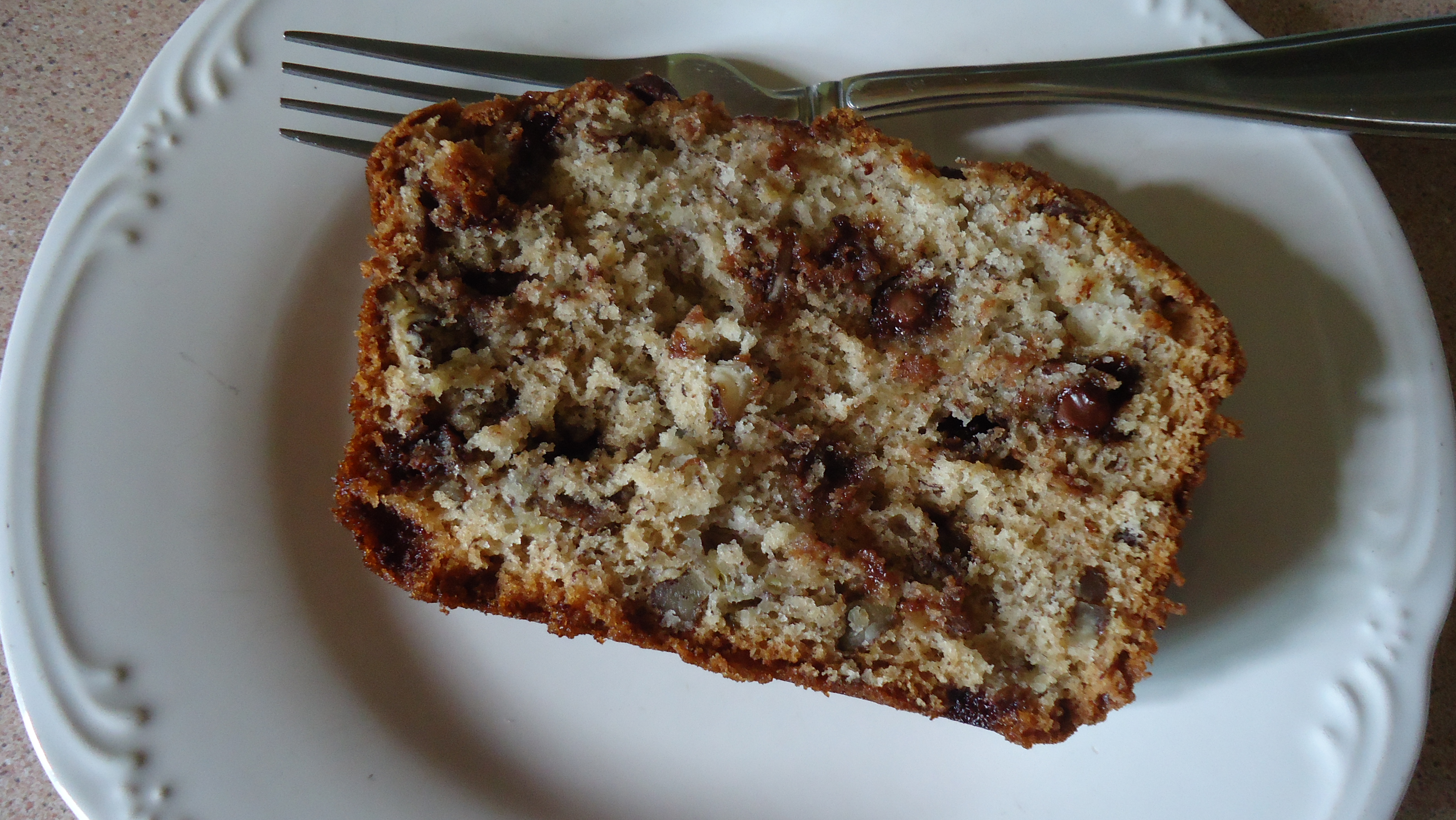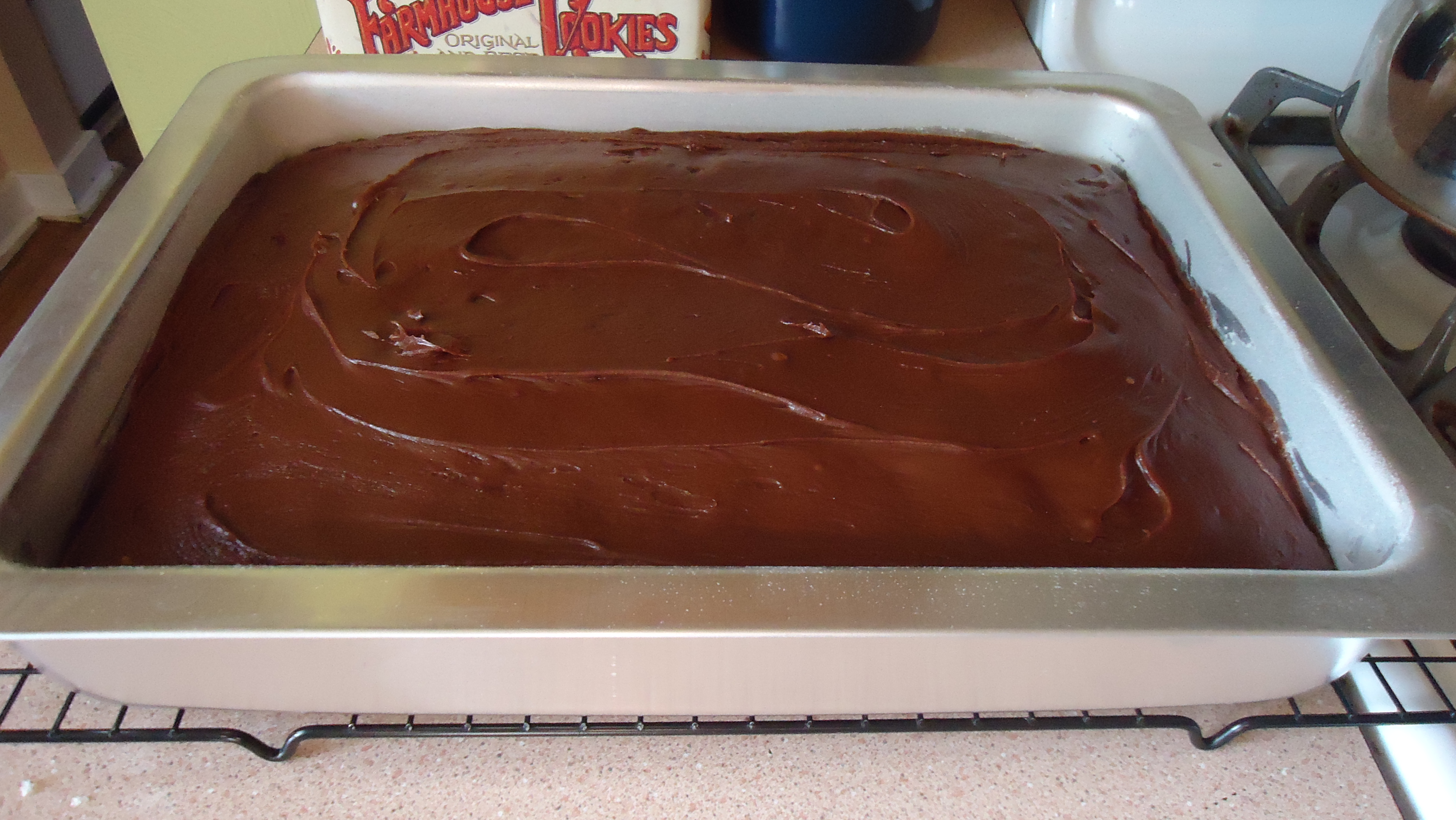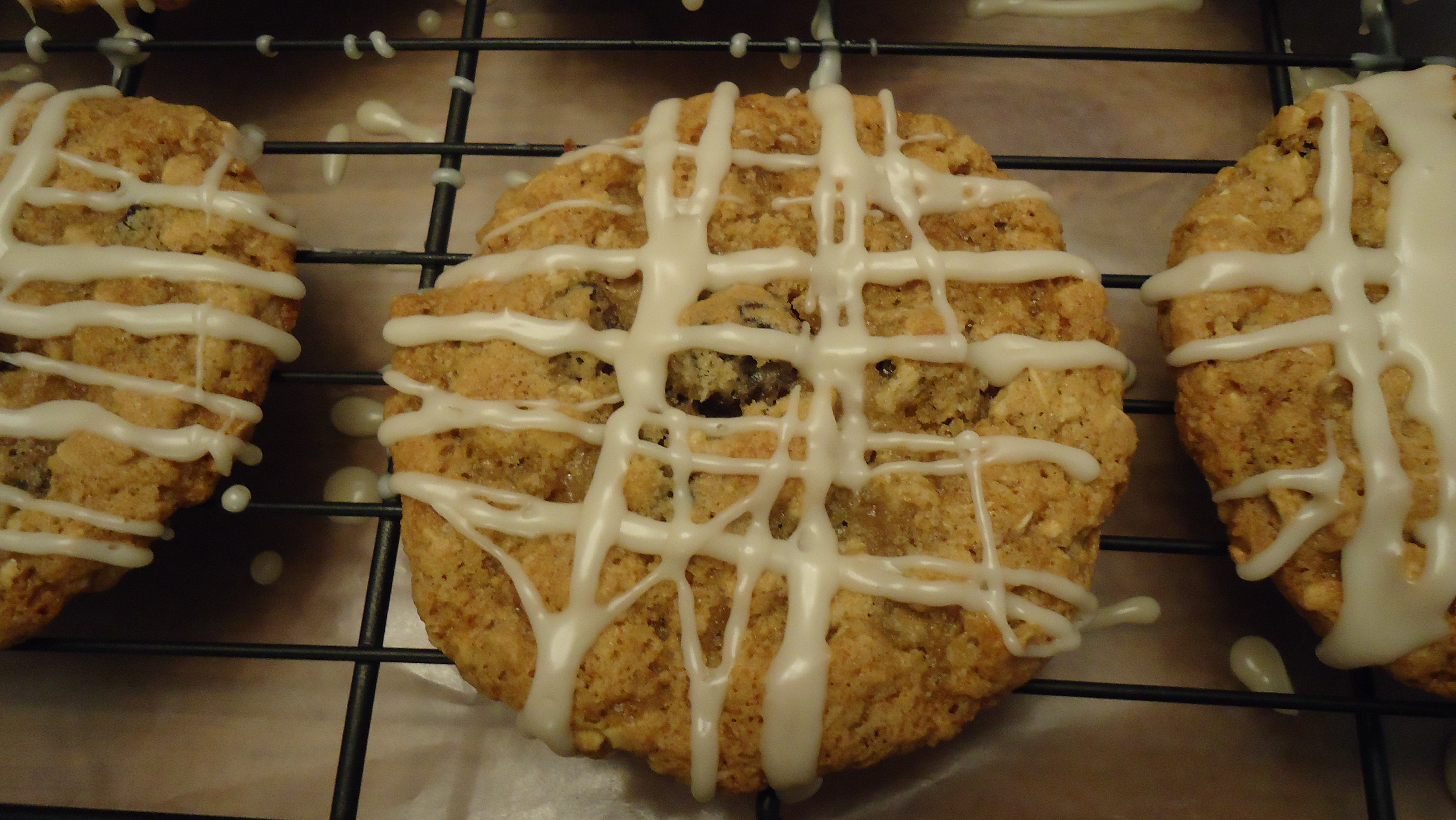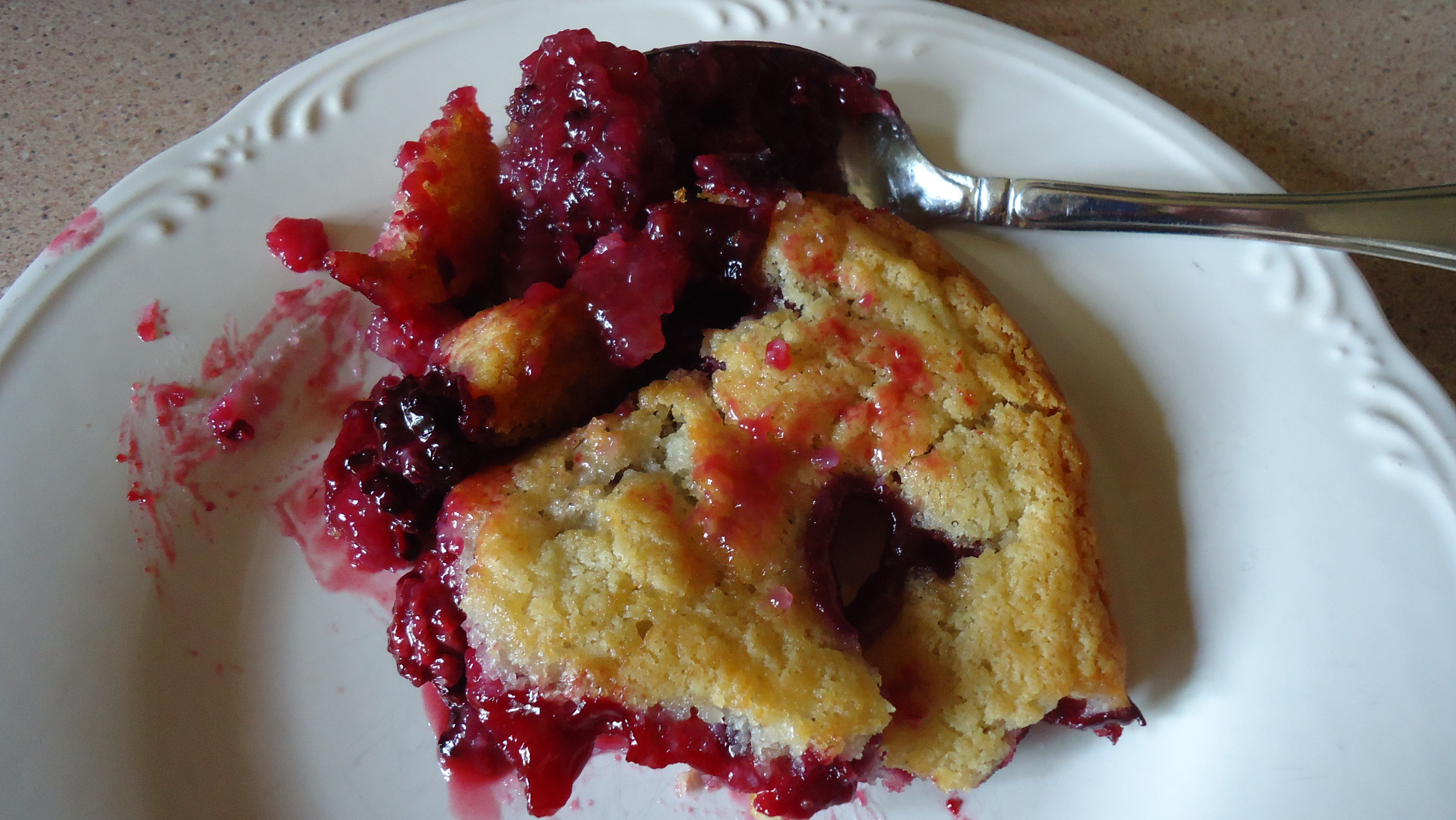
Banana Oat Chocolate Chip Cookies


Bananas fare poorly in our kitchen.  Perhaps we have improper air flow, or really need one of those banana hanger gadgets.  Either way, before I know it even the greenest of bananas turn spotted and brown on our counter top.  When I pass them, I swear they whisper that I’m a bad hostess.

I once asked Mike if a particularly leopard-looking bunch was a nonverbal request for banana bread, to which he replied, “no, but if you wanted to make some that would be nice.”  I thought about making banana bread with our uber-ripe bananas tonight, but then I flipped through a cookie book and found a sticky note, left by Mike, on the page with this recipe.  I suspect that adding a bit of peanut butter to the batter would make them even more enticing, so stay tuned for Peanut Butter Banana Chocolate Chip Cookies in another post.

Ingredients

  • 1 1/2 cups flour
  • 1/4 teaspoon baking soda
  • 1/4 teaspoon salt
  • 12 tablespoons butter, slightly softened
  • 2/3 cup sugar
  • 1/3 cup light brown sugar
  • 1 egg
  • 2 teaspoons vanilla extract
  • 1/2 cup thoroughly mashed very ripe banana (2 small bananas or 1 medium banana)
  • 1 cup old-fashioned oats
  • 1 cup milk chocolate chips

Preparation

Preheat oven to 350 degrees

Line several baking sheets with foil and spray with cooking spray.

In a medium bowl, stir together flour, baking soda, and salt; set aside.

In a mixing bowl, cream together butter and sugars.

Add egg and vanilla and beat well.

Add flour mixture and banana and beat until combined.

Stir in oats and chocolate chips until well combined.

Using a two-inch cookie scoop, drop cookies onto prepared baking sheets about two inches apart; you should have six cookies per sheet.

Bake for 12-14 minutes, until light golden brown all over and centers are almost firm when pressed.

Transfer baking sheet to a wire rack and allow to stand for 2-3 minutes to firm up slightly.

Transfer cookies from the baking sheet to another wire rack to cool completely.

Blackberry Cobbler


Happy Independence Day!   Let’s take a moment to express our sincere thanks to the men and women of the United States military for protecting our freedom and for their bravery, selflessness, and sacrifice.

Being an American is pretty awesome, no matter what anyone says about politics.  We have a beautiful country with a diverse landscape and ample natural resources.  We have freedom of speech, the press, and religion.  We have the right to vote.  We have access to education.  We have choices, and we have hope.  Those are amazing gifts, and not one of us should take them for granted.

In celebration of Independence Day, I wanted to make a traditional American dessert.  Since the blackberry bushes in our yard yielded an impressive crop in the past few days, Mike suggested blackberry cobbler.  Cobbler originated in the British American colonies, where settlers lacked the ingredients and equipment they needed for English desserts.  To remedy this, enterprising colonial women combined uncooked biscuit dough or dumplings with stewed fruit, and cobblers were born.  Cobblers are so named not only because they resemble a cobbled street when baked, but also because their ingredients were quite literally cobbled together.

Mike, a veteran of the Maryland Army National Guard, proclaimed this cobbler excellent.

Ingredients

  • 2 1/2 cups blackberries
  • 1 cup sugar
  • 1 cup flour
  • 2 teaspoons baking powder
  • 1/2 teaspoon salt
  • 1 cup milk
  • 1/2 cup butter, melted

Preparation

Rinse blackberries well and place in a medium bowl.  Add sugar, mix well, and let stand for about 20 minutes, mixing occasionally to distribute the sugar evenly.

Preheat oven to 375 degrees.

In a large bowl, combine flour, baking powder, salt, and milk; mix well.

Add melted butter; mix very well.

Pour batter into an ungreased 8-inch baking dish.

Spoon berry/sugar mixture over the top.

Bake for 45-50 minutes, until the dough rises and turns golden brown.

Serve warm or let cool; add a scoop of vanilla ice cream or fresh whipped cream if you like.

Steamed Crab Sugar Cookie Cut-Outs with Vanilla Icing


The Great State of Maryland has played a huge role in my life.  My mom was born and raised there, and I chose Frostburg State University for college, married a Maryland boy, and lived there for a while before moving to DC.

Marylanders are proud of the Chesapeake Bay, its history, and its industry.  Mike can tell you, in great detail, about the pollution that led to a serious reduction in the crab and oyster populations in the 1980s, precipitating the “Save the Bay” initiative. Fortunately, Marylanders are environmentally-minded, and the bay is now a healthy source of tasty seafood, the most famous of which is the blue crab.

Crab feasts are social events, involving iced tea, beer, Old Bay, newspaper-covered picnic tables, and epic storytelling.   They last for hours and hours.  I had never eaten a crab until I met Mike, and his dad taught me how to whack the shell open with a mallet and extract the meat with a knife.  I admit that I had the patience for one crab-whacking only; to this day, I prefer my crab in cake form.

These crab cookies are dedicated to all of my favorite Marylanders.

You will need:

  • A crab-shaped cookie cutter
  • One double batch of Sugar Cut-Outs
  • One batch vanilla icing (see below)
  • Red and brown gel paste food coloring

Vanilla Icing

Ingredients

  • 6 tablespoons shortening
  • 2 egg whites
  • Pinch of salt
  • 4 cups powdered sugar
  • 2 teaspoons vanilla extract
  • 1-2 teaspoons water

Preparation

Combine shortening, egg whites, salt, and 1 cup powdered sugar in a mixing bowl.  Beat well on medium speed for about one minute.

Add one cup of powdered sugar at a time, beating well on medium, then high speed for about one minute after each.

Add vanilla extract and beat well; if you want a thinner consistency, add one to two teaspoons of water and beat very well.

To create cookies:

Reserve a small portion of the icing to tint brown for eyes; tint remaining icing red.

Frost crab bodies red, then pipe on eyes.

Let icing harden for a few hours before storing; store between sheets of waxed paper in an airtight container.

Almond Clouds (gluten-free)


This weekend Mike and I are off to the Clarksville Picnic in my mom’s hometown of Clarksville, Maryland.  The picnic is one of the highlights of my year; it features the white elephant rummage sale, bingo, pony rides, games for kids, a bake sale, a quilt raffle (which my mom won three years ago, and that quilt is now on my bed) and a family-style fried chicken and baked ham dinner.

I love the picnic because it gives me a chance to hang out with my Maryland family, the descendants of the Feaga-O’Donnell clan.  The lynchpin is Aunt Liz, my mom’s twin sister. Yes, my mom has a twin.  And no, you cannot get a word in edgewise when they’re together.

Anyway…Aunt Liz is the youngest of the six O’Donnell kids, and her home, Glyndon, is the center of my Maryland universe.  Tucked into a corner of Montgomery County that hasn’t been developed to death, Glyndon is a classic white colonial with black shutters, a wood stove, and a dog pen that’s been home to many faithful mutts over the years.

Aunt Liz puts on meals like nobody’s business.  Her Thanksgiving dinners are legendary, her breakfasts the stuff of myths.  She’s an excellent cook and baker, but she was diagnosed with Celiac Disease a few years ago.  After mentioning some almond cookies she liked that she’d gotten at an allergy-free store, I decided to go on the hunt for a gluten-free almond cookie that I could make on my own, and I found this one.

Aunt Liz proclaimed it the best cookie she’d ever eaten in her life.  The highest of praise, indeed.

Ingredients

  • 10 ounces almond paste
  • 1 cup sugar
  • 1/4 teaspoon salt
  • 2 large egg whites, lightly beaten
  • 1/4 teaspoon almond extract
  • Powdered sugar

Preparation

Preheat oven to 325.

Line three baking sheets with parchment paper.

Break up almond paste into pieces.

In a mixing bowl, combine almond paste, sugar, and salt until uniformly crumbly.

Gradually add egg whites until dough is smooth and paste-like.

Add almond extract and beat well.

Drop by rounded teaspoonfuls onto prepared sheets, leaving ample room in between; I bake six cookies per sheet.

Using a small sieve, generously dust each cookie with powdered sugar.

Bake for 20-22 minutes, until edges are light golden brown.

Cool for several minutes on baking sheets, then remove and cool completely on a wire rack.

Dust with more powdered sugar if desired.

Almond Biscotti


Pittsburgh’s Strip District is a 20-odd block extravaganza of ethnic food shops, restaurants, and eclectic stores.  It is my favorite part of Pittsburgh, a neighborhood I truly missed when I lived in DC.

On weekends the Strip teems with an endless flow of Pittsburghers and their out-of-town relatives, many of whom appear awestruck at the spectacle that is Penn Avenue on a Saturday morning.  They wander in and out of the shops, picking up fresh mozzarella, olives, pepperoni rolls, kielbasa, pierogi, tortilla chips, avocados, basmati rice, and knockoff t-shirts.  In the air hangs an intoxicating aroma, and that aroma emanates from Enrico Biscotti.

Enrico is a tiny shop that makes its biscotti from scratch, by hand.  Huge glass jars line the counter, featuring everything from anise almond to doggie biscotti with cheese and bacon (naturally, Millie has had Enrico’s doggie biscotti and loves it).  Enrico’s founder left his corporate job to pursue baking full-time, making him one of my heroes.

While my biscotti can’t compete with Enrico’s, the recipe below is quite tasty.  These biscotti are great candidates for drizzling with or dipping in melted chocolate, and they pair well, as all biscotti does, with coffee or tea.

Ingredients

  • 1 cup blanched almonds, toasted and coarsely chopped
  • 1 teaspoon baking powder
  • 1/8 teaspoon salt
  • 2 cups flour
  • 3/4 cups sugar
  • 3 large eggs
  • 1 teaspoon vanilla extract
  • 1 teaspoon almond extract

Preparation

Preheat oven to 300 degrees.

Line a baking sheet with parchment paper.

In a small bowl, beat eggs and extracts; set aside.

In a mixing bowl, combine baking powder, salt, flour, and sugar; mix well.

Gradually add egg mixture until dough begins to form.

Add almonds and continue to beat until the dough comes together.

Turn on a lightly floured surface and roll dough into a log that is about 12 inches long and 3 inches wide.

Bake for 40-45 minutes or until firm.

Remove from oven and cool for 10 minutes.

Slice log into 1/2 inch slices and arrange on the baking sheet.

Return to the oven and bake for 12 minutes on each side, until the edges are very light golden brown.

Cool completely on a wire rack.

Peanut Butter Cookies

My mom Genny will be the first to admit that she’s not Betty Crocker.  She certainly bakes with Betty’s help though, employing boxed mixes or pouches that require only an addition of eggs and water to produce whatever cookie, cake, or treat she wishes to make.

Genny’s recipe for peanut butter cookies involves a box of yellow cake mix, peanut butter, a few eggs, and probably some oil.  I’m not sure where she got this recipe, or why cake mix is involved, but it turns out a pretty tasty cookie.  Especially when a Hershey’s Kiss is plopped in the middle.

The recipe below yields a classic homemade peanut butter cookie and isn’t meant for the Hershey’s Kiss; that recipe requires a slightly sturdier dough made with shortening and a different quantity of flour.  If you want to get creative with this recipe, try pressing some milk chocolate chips into the tops of these cookies when they are right out of the oven.

Ingredients

  • 1/2 cup butter, slightly softened
  • 1/2 cup peanut butter
  • 1/2 cup sugar
  • 1/2 cup brown sugar
  • 1/2 teaspoon baking soda
  • 1/2 teaspoon baking powder
  • 1 egg
  • 1/2 teaspoon vanilla
  • 1 1/4 cups flour
  • Granulated sugar, for rolling

Preparation

Preheat oven to 375 degrees.

In a mixing bowl, combine butter and peanut butter; beat on medium speed for 30 seconds.

Add sugar, brown sugar, baking soda, and baking powder; beat until combined.

Scrape down the sides of the bowl and add the egg and vanilla; beat until combined.

Add flour and beat until combined.

Using a one-inch cookie scoop, scoop out dough and roll into balls, then roll in granulated sugar.

Place on an ungreased cookie sheet about 2 inches apart, then press a crisscross pattern into the top of each cookie with a fork.

Bake for 8-10 minutes, until just golden brown. The centers of the cookies should still be puffy and look somewhat raw; that’s okay, as they’ll continue to bake as they cool on the baking sheets.

Cool on the baking sheet for a few minutes, then transfer to a wire rack to cool completely.

Black Bottom Mini Brownies (Version One)


People often ask me what I miss about living in DC, and I tell them many things; our dear friends, our cool apartment on the Hill from which, in the winter when there were no leaves on the magnolia tree, you could see the top of the Capitol Dome, the Metro, the ample assortment of activities, the fact that we could walk to almost everything and only needed one car.  Oh, and of course, easy access to Starbucks.

From our apartment, there were three Starbucks shops in short walking distance; from my office on G Street, there were at least five.  While working at Catholic Charities Foundation, my friend Kelly and I literally went to Starbucks every day.  Sometimes more than once.

Among the treats behind the curved-glass dessert case was the infamous black bottom cupcake, a marvelous confection of cream cheese batter and dark chocolate batter that was at once spongy and dense.  I’m sure it had about a million calories, but it was totally worth it.

This recipe reminded me of the black bottom cupcake, though I have to wonder if the author actually tested it before it was published.  The original baking time needed to be nearly doubled, and when I popped each brownie out of its muffin cup after they cooled, they basically fell apart.  I’d suggest many changes, including baking in full-size muffin cups or a rectangular pan, reducing the quantity of mini chocolate chips in the cream cheese layer, or spooning significantly less batter into each mini muffin cup.  Let’s call this recipe Version One and keep trying, eh?

Ingredients

Cream Cheese Layer

  • 3 ounces cream cheese, slightly softened and cut into chunks
  • 2 1/2 tablespoons sugar
  • 1 tablespoon butter, melted
  • 1 egg yolk
  • 1/2 teaspoon vanilla extract
  • 1/2 cup miniature semisweet chocolate chips

Chocolate Layer

  • 4 tablespoons butter, cut into chunks
  • 2 ounces unsweetened baking chocolate, coarsely chopped
  • 3/4 cup sugar
  • 1/2 cup minus 1 tablespoon flour
  • 1/4 teaspoon salt
  • 1/8 teaspoon baking soda
  • 1 egg
  • 1 teaspoon vanilla extract

Preparation

Preheat oven to 350 degrees.

Coat a 24-cup mini muffin tin with nonstick spray.

In a food processor, process the cream cheese, sugar, butter, egg yolk, and vanilla until well blended and completely smooth.

Pour into a bowl and add the mini chocolate chips, stirring to combine; set aside while preparing chocolate layer.

In a small bowl, combine flour, salt, and baking soda; set aside.

In a medium, microwave-safe bowl, combine butter and baking chocolate.  Microwave in 30-second intervals, stirring after each, until chocolate almost melts; remove from microwave and stir until the remaining chocolate melts completely.

Add sugar and stir until well combined.

Add flour mixture and stir until very well combined.

Spoon about 1/2 tablespoon of the chocolate mixture into each mini muffin cup.

Spoon about 1 teaspoon of the cream cheese mixture over the chocolate layer, distributing batter evenly.

Spoon remaining chocolate batter evenly over the cream cheese layer.

Place muffin tin on a baking sheet and bake for about 15-20 minutes, until a toothpick comes out almost clean; if the bottom is a bit moist, that is okay.

Cool completely in pans on a wire rack, then remove gently using the tip of a table knife.

Black & White Cupcakes


Say what you want, Seinfeld fans, but my mom calls black & white cookies “Baltimore cookies.”  Growing up in Clarksville, a small town in Howard County, Maryland, Genny likely encountered such treats in Baltimore-area bakeries.

Yesterday I baked almond cupcakes and intended to frost half of them with chocolate buttercream and the other half with vanilla almond buttercream when I thought…why not make a cupcake version of the Baltimore cookie?

A note about the frostings: it may be necessary to add more powdered sugar (and cocoa powder, for the chocolate buttercream) or milk to either batch to reach the right consistency.  You want the frostings to be easily spreadable, like very soft peanut butter, in order to create the half-vanilla, half-chocolate design on the top.  Always sift the powdered sugar before adding more to avoid lumps, and if you add more to the chocolate buttercream, add a bit more cocoa powder as well.

Almond Cupcakes

Ingredients

  • 2 cups flour
  • 1 teaspoon baking powder
  • 1/2 teaspoon baking soda
  • 1/8 teaspoon salt
  • 1/2 cup shortening
  • 1 3/4 cups sugar
  • 1 teaspoon vanilla extract
  • 4 egg whites
  • 1 1/3 cup buttermilk

Preparation

Preheat oven to 350 degrees.

Line two muffin tins with paper liners.

In a medium bowl, sift together flour, baking powder, baking soda, and salt; set aside.

In a mixing bowl, cream shortening for about 30 seconds.

Add sugar and vanilla and beat well.

Add egg whites, one at a time, until well combined.

Add flour mixture and buttermilk alternatively in small batches until just combined.

Using a two-inch cookie scoop, fill cupcake liners about half-full.

Bake 20-22 minutes until the tops are very, very light golden brown.

When cupcakes are completely cool, frost one-half with vanilla almond buttercream and one-half with chocolate buttercream.

Vanilla Almond Buttercream

Ingredients

  • 8 tablespoons butter, softened
  • 3 cups powdered sugar, sifted
  • 1/4 teaspoon salt
  • 1/2 tablespoon vanilla extract
  • 1/2 tablespoon almond extract
  • 1-2 tablespoons milk

Preparation

In a mixing bowl, cream butter for one minute.

Add powdered sugar and beat on low speed to incorporate into the butter; this takes a few minutes.  I cover my mixer with a kitchen towel during this step to prevent a sugar storm.

Add salt, vanilla extract, almond extract, and one tablespoon milk; beat on medium speed for three minutes, scraping the sides of the bowl a few times.

Check the consistency; you may need an additional tablespoon of milk to reach an easily-spreadable consistency.

Chocolate Buttercream

Ingredients

  • 8 tablespoons butter, softened
  • 2 1/2 to 3 cups powdered sugar
  • 1/4 cup plus 2 to 3 tablespoons cocoa powder
  • 1/4 teaspoon salt
  • 1 tablespoon vanilla extract
  • 1 tablespoon milk (you may need an additional teaspoon as well)

In a medium bowl, sift together 2 1/2 cups powdered sugar and 1/4 cup plus 2 tablespoons cocoa powder.

In a mixing bowl, cream butter for one minute.

Add powdered sugar/cocoa mixture and beat on low speed to incorporate as much into the butter as possible; this takes a few minutes.  I cover my mixer with a kitchen towel during this step to prevent a sugar storm.

Add salt, vanilla extract, and one tablespoon milk; beat on medium speed for three minutes, scraping the sides of the bowl a few times.

Check the consistency; you may need to add an additional 1/2 cup of powdered sugar and 1 tablespoon cocoa powder.  If this addition makes the frosting too thick, thin it slightly with one additional teaspoon of milk.

Yellow Cupcakes with Chocolate Buttercream


What can you say about a classic?  The yellow cake/chocolate frosting combination is the little black dress of baking, one that baker should have it in her repertoire.  There seems to be something magical in the pairing of rich chocolate buttercream with mellow yellow cake, in the same way that a chocolate cupcake is finely matched with vanilla buttercream.  They say opposites attract, right?

Yellow Cupcakes

Ingredients

  • 2 1/2 cups flour
  • 2 1/2 teaspoons baking powder
  • 1/2 teaspoon salt
  • 10 2/3 tablespoons butter, slightly softened
  • 1 3/4 cups sugar
  • 1 1/2 teaspoons vanilla
  • 2 eggs
  • 1 1/4 cups milk

Preparation

Preheat oven to 375 degrees.

Line two muffin tins with paper liners.

In a medium bowl, combine flour, baking powder, and salt; set aside.

In a mixing bowl, beat butter on medium speed for one minute.

Add sugar and vanilla and beat until well combined.

Add eggs, one at a time, beating for one minute after each.

Add flour mixture and milk alternatively, beating until combined.

Using a two-inch cookie scoop, scoop batter into prepared muffin cups, filling about half-full.

Bake for 18-20 minutes, until a toothpick inserted in the center comes out clean.

Cool on a wire rack before frosting.


Chocolate Buttercream

Ingredients

  • 1 cup butter
  • 3 1/2 cups powdered sugar
  • 1/2 cup cocoa powder
  • 1/2 teaspoon salt
  • 3-4 tablespoons milk
  • 3 teaspoons vanilla extract

Preparation

In a large bowl, sift together powdered sugar and cocoa powder; set aside.

In a mixing bowl, cream butter for about one minute.

Add powdered sugar and cocoa and beat on low speed to incorporate as much sugar into the butter as you can.  I cover my mixing bowl with a kitchen towel during this step to prevent a sugar storm.

Add three tablespoons milk and two teaspoons vanilla extract; beat for three minutes.

Scrape down the sides of the mixing bowl and add the final teaspoon vanilla extract, then beat for another minute.


Pecan Rugelach


I think Millie, our dog, is Jewish.   She enjoys challah, the Shabbat bread, and rugelach, a traditional Ashkenazic Jewish pastry.  I discovered her fondness for rugelach after I’d baked a batch for my dear friend Carrie, to celebrate her son’s baptism.  Carrie and I are both Catholic with non-Catholic husbands, and we have interesting conversations about faith.

The day before the baptism the best-looking cookies sat on a platter, wrapped in plastic, on our dining room table.  Not giving the table-to-dog height ratio a second thought, Mike and I went out to dinner.  When we returned, the plastic wrap had been peeled off, about four cookies remained, and Millie stood in the hallway guiltily licking crumbs from her nose.  Fortunately, the other half of the batch had been packed safely in a tin, so those were the cookies that made it to the baptism.

Rugelach are not for the faint of heart, or those who cannot abide a chaotic kitchen.  They require a serious commitment of time, employ various baking techniques and appliances, and will create a gigantic mess on your counter tops. In the end, though, they are worth it.  This batch is intended for Carrie and her family, who I hope can make it to Pittsburgh tomorrow for Memorial Day.

Ingredients

For the dough:

  • 2 1/3 cups flour
  • 1/4 teaspoon salt
  • 1 cup butter, cut into chunks and slightly softened
  • 8 oz. cream cheese, cut into chunks and slightly softened
  •  zest of 1 small lemon
  • 1 1/2 teaspoons vanilla extract

For the filling:

  • 2 1/4 cups pecans, toasted and cooled
  • 3/4 cup apricot preserves
  • 1 1/2 tablespoons honey
  • 1/4 teaspoon cinnamon

You will also need powdered sugar for rolling and sprinkling on the cookies.

Preparation

Begin with the dough, as follows:

In a medium bowl, combine flour and salt; set aside.

In a mixing bowl, combine butter, cream cheese, lemon zest, and vanilla and beat until light and fluffy.

Add flour mixture and beat until well combined.  You may need to knead your dough very slightly to get all of the bits of flour at the bottom of your mixing bowl to incorporate it fully.

Divide dough in half, shape into balls, then flatten into discs.  Wrap in plastic and chill for 1 1/2 hours, until firm but not hard.

When the dough is ready to work with, begin to make the filling, as follows:

In a food processor, combine preserves, honey, and cinnamon and pulse a few times until smooth.

Add pecans and process until coarsely ground.

Transfer filling to a large, four-cup glass measuring cup so you’re able to divide it evenly among the dough.  You should have about two cups of filling.

Preheat oven to 375 degrees.

To assemble the cookies:

Sprinkle a clean counter top heavily with powdered sugar.

Roll one disc of dough into a 12-inch circle – don’t worry if it’s not completely round.  Dust with more powdered sugar and turn frequently to ensure the dough doesn’t stick to the counter.

Spread half of the filling over the circle to within one-quarter inch of the edge.

Using a pizza cutter, cut dough into quarters, then cut each quarter into five or six wedges, depending on the size of the quarter.  Your wedges do not have to be perfectly uniform in size; if I have some that are larger than others, I bake the larger ones toward the back of the oven, because my oven is hotter in the back.

Beginning with the outer edge, firmly roll up each wedge and place on a prepared baking sheet, then dust generously with powdered sugar.

Bake for 18-21 minutes, until lightly golden brown on the top.

Cool on a wire rack.