Peanut Butter Chocolate Chip Oatmeal Cookies

pb oatmealPeanut butter, chocolate chips, and oatmeal are all delicious on their own, but when combined in cookie form in this recipe they bring out the best in each other. These treats are among my favorites that I’ve made lately; they’re not too sweet, with interesting texture and a great combination of flavors.

If you’re not really a chocolate person (not that I could ever understand such a thing) you can omit the chocolate chips and just go with plain peanut butter oatmeal. You could also use peanut butter chips, or you could use crunchy peanut butter instead of smooth for some added texture. Either way, I’d recommend keeping these cookies small, because the oatmeal makes them pretty hearty.

This batch of cookies went to Southern Maryland with Mike this week; he’s visiting his parents, and our awesome cousins Barb and Robb and the incomparable Maureen, my goddaughter. I’m hoping that I’ll get a photo of Maureen eating one, but so far I’ve only seen a video of her with chocolate pudding all over her face. We’ll keep that one around for her wedding, of course.

Ingredients

  • 3/4 cup butter, slightly softened
  • 1/2 cup peanut butter
  • 1 cup sugar
  • 1/2 cup packed light brown sugar
  • 1 teaspoon baking powder
  • 1/2 teaspoon baking soda
  • 2 eggs
  • 1 teaspoon vanilla
  • 1 1/4 cups flour
  • 2 cups rolled oats
  • 1 cup semisweet chocolate chips

Preparation

Preheat oven to 375 degrees. Line three baking sheets with foil or parchment.

In a mixing bowl, combine butter and peanut butter and beat on medium speed for about 30 seconds. Add sugar, brown sugar, baking powder, and baking soda and mix until well-combined, scraping the sides of the bowl often.

Add eggs, one at a time, beating well after each addition, then add vanilla and beat until combined.

Beat in flour, about one half-cup at a time, until well-combined. Stir in oats and chocolate chips.

Using a one-inch cookie scoop, drop dough onto prepared cookie sheets; you should be able to fit 12 cookies on each sheet.

Bake for 8-10 minutes, until edges are just golden brown; cookie centers will still look slightly puffy. Remove from oven and allow to cool on cookie sheets for about 5 minutes, then place on wire racks to cool completely.

Note: this recipe yields 60 cookies. Because I only have three large-sized baking sheets, I let each of them cool between batches before I scoop on another round of dough.


Fudge Rounds

fudge roundsWhen I was in college, my grandma Zella would send me care packages. As a graduate of secretarial school in the 1940s, my little Hungarian-born gram never had the experience of microcosmic college life that I had at Frostburg State University. There, on a little campus on the side of a mountain in Western Maryland, my entire existence was wrapped up in papers about subjects I’d never remember today, in presentations for my communications degree, in quarters for laundry, and in the simple joy of grilled cheese day at the dining hall.

Another great joy in campus life was the care package from one’s grandma, and my packages always included some home-baked good, such as Zella’s almond cookies or butterscotch chip cookies, a few cans of Pringles, and some kind of Little Debbie Snack Cakes. The variety of snack cakes depended on the season; in autumn, Fall Party Cakes arrived, and in winter, Christmas Tree Cakes. Any time of year might bring Swiss Rolls, Zebra Cakes, Oatmeal Cream Pies, or Donut Sticks. Despite being one of the best bakers I’ve known, Z definitely believed in the convenience (and affordability) of Little Debbie’s offerings.

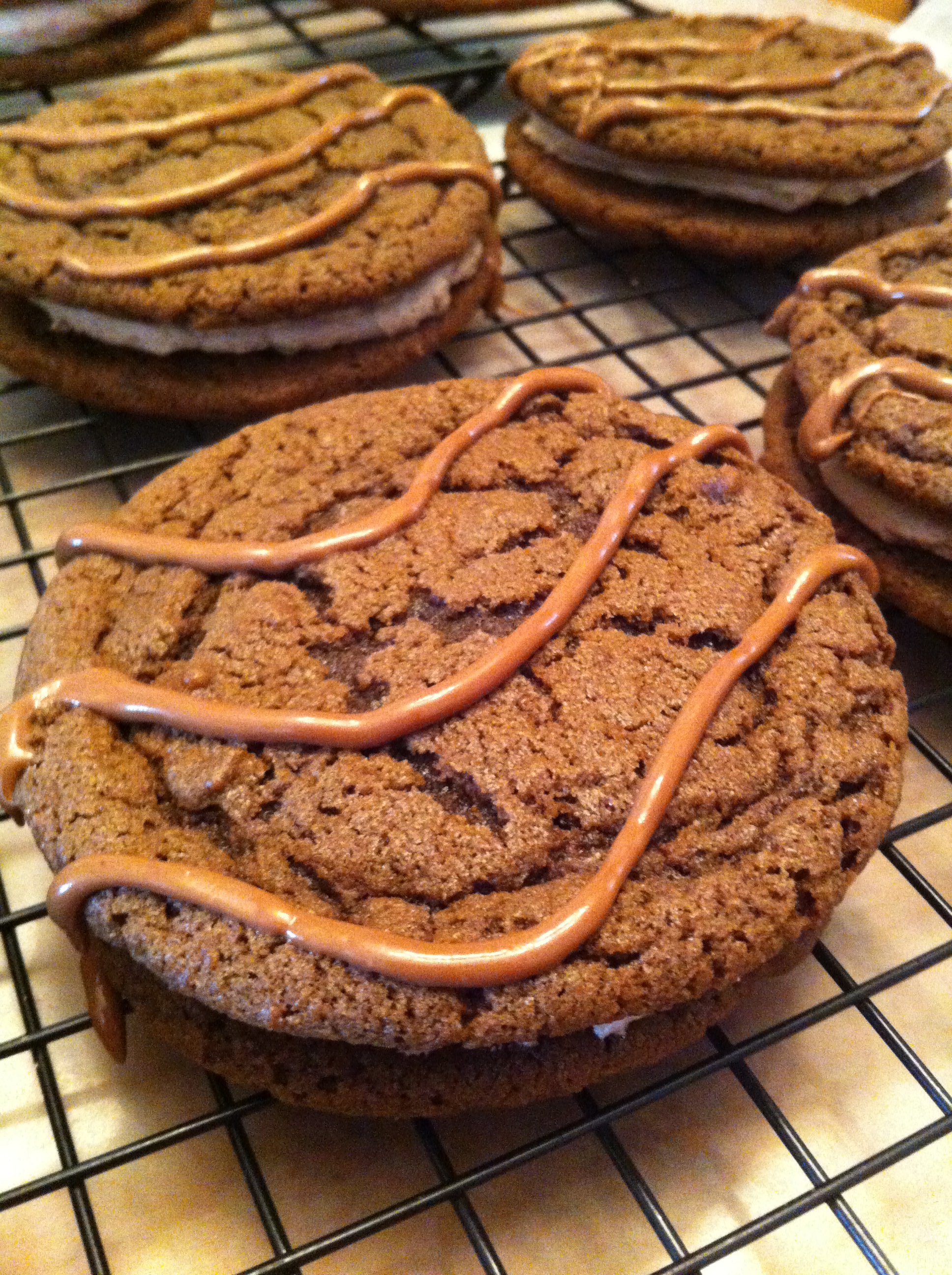
I’m not sure if she ever sent me Fudge Rounds, but I bet my gram would be proud of this recipe below; it captures the essence of the Fudge Round perfectly and, dare I say, with even more fudgy goodness than its packaged counterpart. The recipe below is adapted from a few others I found online, adjusting quantities for what I believe to be softer cookies and sturdier filling. You may notice the addition of 1 tablespoon of flour beyond the standard 2 cups in the cookie recipe; my first test batch seemed too soft, even after a few additional minutes of baking, so I added some more flour to stabilize the dough and it worked very well. It’s also important to note the need for salted butter here; if you’re using unsalted, you’ll want to add some salt with your dry ingredients to balance the flavor.

Fudge Cookies

Ingredients

  • 2 cups plus 1 tablespoon flour
  • 3/4 cups cocoa powder
  • 1 teaspoon baking soda
  • 1 1/4 cups salted butter, softened
  • 2 cups sugar
  • 2 eggs
  • 3 teaspoons vanilla extract

Preparation

Preheat oven to 350 degrees. Line three baking sheets with parchment paper.

In a medium bowl, stir together flour, cocoa powder, and baking soda; set aside.

In a mixing bowl, cream butter and sugar until light and fluffy. Add eggs, one at a time, beating well after each addition. Add vanilla and beat well.

Add flour mixture in three batches, scraping the sides of the bowl regularly; it will take several scrapings to fully incorporate all of the dry ingredients into the wet ingredients.

Using a two-inch cookie scoop, drop scoops of dough onto parchment-lined sheets; you should have 6 scoops on each sheet.

Bake for 8-10 minutes, until edges are set and centers are still puffy; remove from oven and allow cookies to cool on baking sheets for several minutes before removing to wire racks to cool completely. I left my batches on for about 8 minutes each.

Cool cookies completely before filling.

Chocolate Filling

Ingredients

  • 1/2 cup shortening
  • 1/2 cup salted butter, softened
  • 1 teaspoon vanilla extract
  • 1/4 cup cocoa powder
  • 3 1/2 to 3 3/4 cups powdered sugar
  • 4 tablespoons warm water

Preparation

In a mixing bowl, cream shortening and butter. Add vanilla and beat until well-combined.

Add cocoa powder and 1 cup powdered sugar; beat until well-combined, scraping the sides of the bowl often. Add 2 more cups powdered sugar, 1 cup at a time, mixing well and scraping the bowl between each addition. As with the batter for the cookies, it takes a while for the dry ingredients to fully incorporate with the wet ingredients in this recipe.

Add water and beat on low at first, then increase speed to medium and beat for 2 minutes, until filling is light and fluffy. Add remaining 1/2 to 3/4 cup powdered sugar, depending on the consistency of your filling; mine was quite thin, probably due to very soft butter in yesterday’s heat, so I added the full additional 3/4 cup to stabilize it.

Once the cookies have completely cooled, flip them all over; using a 1-inch cookie scoop, drop scoops of filling onto half of the cookies, spread with an offset spatula, and top with the remaining cookies.

Chocolate Drizzle

Ingredients

  • 1/2 cup milk chocolate chips
  • 1 teaspoon vegetable oil

Preparation

In a large glass measuring cup, melt chocolate chips and vegetable oil by microwaving in 15-second intervals, stirring between each. Pour drizzle into a pastry bag fitted with a small plain tip and pipe drizzle in wavy shapes. Allow chocolate to set before serving.

Store fudge rounds in single layers in airtight containers.

Brown Sugar Sandwich Cookies

brown sugar sandwichesFor some reason there’s a surplus of sour cream in our fridge. A few weeks ago I bought two containers intending to make something completely different–possibly a chocolate cake, although I can’t quite remember now–and then Mike brought home a third to use as a baked potato topping earlier this week. It was a happy accident to discover that this recipe called for sour cream, as clearly, I have plenty.

Scientifically speaking, sour cream alters the texture of baked goods because of its acidity, making cakes and cookies lighter and moister than those without. These cookies are soft, but also have a delightful just-shy-of-crispy edge. The original recipe called for them to be frosted with a caramel mixture, but I decided to fill them with a vanilla cream instead to balance the nearly-caramel flavor of the brown sugar. You could certainly eat them plain if you like; next time, I’ll use more filling for each cookie than I did today, so I’d actually recommend doubling the filling ingredients in the recipe below.

Brown Sugar Cookies

Ingredients

  • 2 3/4 cups flour
  • 1 teaspoon baking soda
  • Generous 1/4 teaspoon salt
  • 1 cup butter, slightly softened
  • 1 1/3 cups packed light brown sugar
  • 2 eggs
  • 1 1/2 teaspoons vanilla extract
  • 1/3 cup sour cream

Preparation

Preheat oven to 350 degrees. Line several baking sheets with parchment paper.

In a medium bowl, sift together flour, baking soda, and salt; set aside.

In a mixing bowl, beat butter and brown sugar until light and fluffy.

Add eggs and vanilla and mix until well-combined.

Add sour cream and mix until well-combined.

Add flour mixture in two separate batches, scraping the sides of the bowl in between.

Using a two-inch cookie scoop, drop scoops of dough onto prepared sheets, leaving a few inches between each as the cookies will spread. Spray your palm with baking spray and gently press each scoop of dough until the top is flattened.

Bake for 12 minutes; remove from oven and allow to cool on baking sheets for a few minutes before removing to wire racks to cool completely before filling.

Vanilla Cream Filling

Ingredients

  • 4 tablespoons butter, at room temperature
  • 4 tablespoons vegetable shortening
  • 2 cups powdered sugar
  • 1 1/2 teaspoons vanilla extract

Preparation

In a mixing bowl, beat butter and shortening until combined.

Add powdered sugar 1/2 cup at a time, mixing well between each addition.

Add vanilla extract and beat until well-combined.

To fill the cookies: flip half of the cookies over and spread filling on each; top with another cookie to create the sandwich.

Almond Paste

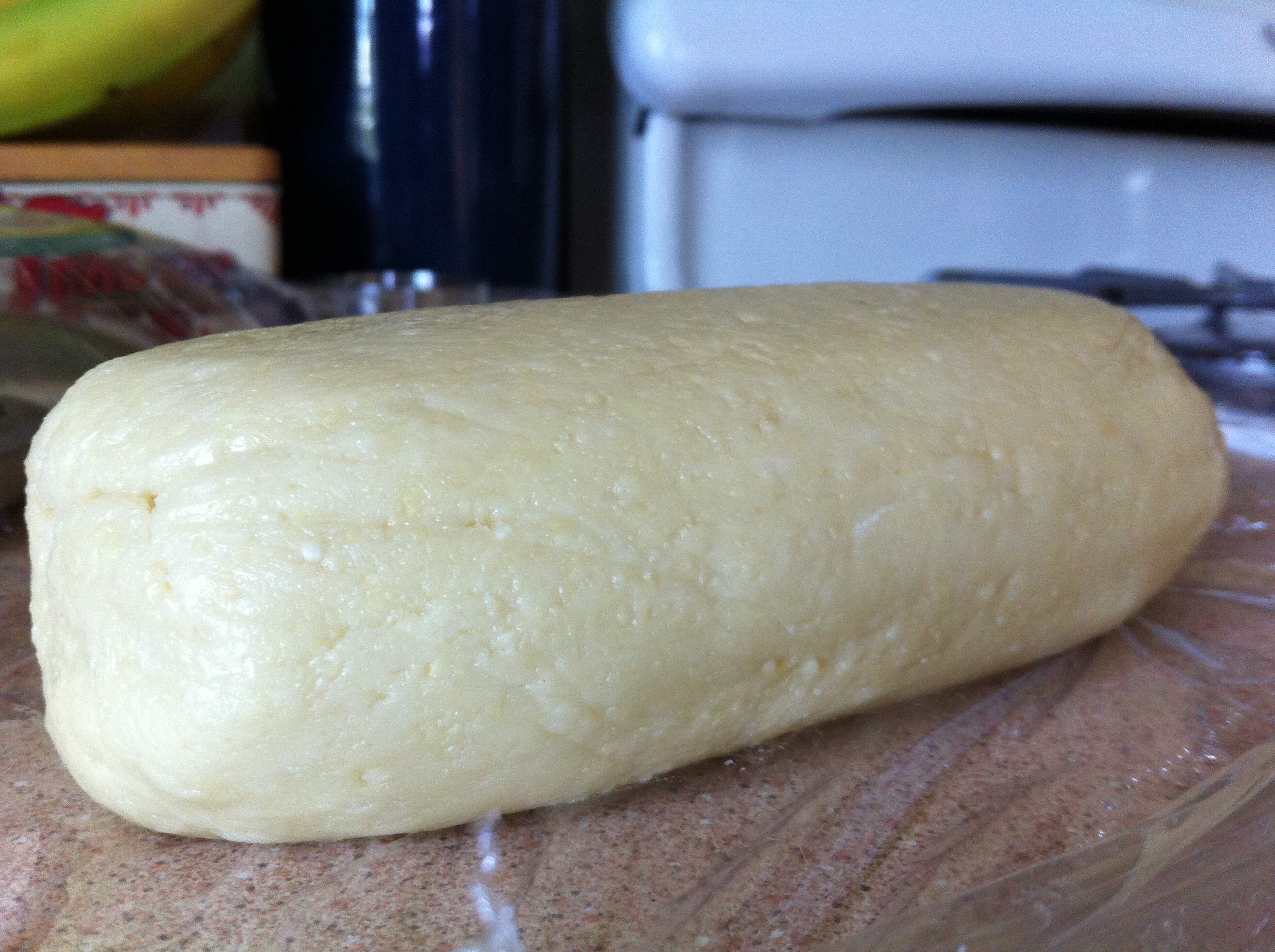
almond pasteNow that I’ve made almond paste, I may never purchase it again. Seriously, this was so easy, I don’t know why I’ve never made my own almond paste before.

This all started with the Heath bit bars I made earlier this afternoon. Searching the pantry cabinet for some pecans, which I thought would add some extra crunch to the bars, I found none…but I did find a few cups of blanched almonds. I didn’t want to add blanched almonds to my Heath bit bars, but I did realize that they, along with a few other ingredients, could be ground into almond paste. Out came the food processor, and a few minutes later – also utilizing the leftover egg white from my Heath bit bars – I had my first-ever homemade batch of almond paste.

So, the question is: what will I bake with it? Almond clouds are a good idea…which only use egg whites and will leave me with some leftover yolks. Which is fine, because the yolks can go into lemon curd. And then, what will I do with the lemon curd? Oh, so many possibilities.

Ingredients

  • 1 1/2 cups whole blanched almonds
  • 1 1/2 cups plus 1 tablespoon powdered sugar
  • 1 egg white, lightly beaten
  • 1/4 teaspoon salt
  • 2 teaspoons almond extract

Preparation

Place almonds in the bowl of a 7-cup food processor fitted with a steel blade. Process until almonds are finely ground.

Add 1 1/2 cups powdered sugar, egg white, salt, and almond extract. Process until the mixture forms a ball; you’ll need to scrape the sides of the bowl a few times.

Break up mixture and add remaining tablespoon of powdered sugar, which will help make the paste less sticky. Process again; the mixture will return to a ball very quickly.

Carefully remove from the processor and pat with your hands, shaping paste into a log. Wrap in plastic and store in the refrigerator for up to 1 month.

Note: this recipe yields 15 ounces of almond paste.

Heath Bit Bars

heath bit barsThis week at the office, my purchase of a Twix precipitated a discussion about favorite candy bars. There was great debate; some folks are Milky Way and Three Musketeers fans, while others (including me) favor Reese’s Peanut Butter Cups, Snickers bars, or those ingenious Take 5 bars that include a pretzel, caramel, peanut butter, peanuts, and milk chocolate all in one delicious little package.

I’m also a big fan of the Heath bar, and with that ind mind, I picked up some Heath Milk Chocolate Bits in the baking aisle yesterday. There’s a great recipe on the bag for Heath bit peanut butter cookies that I fully intend to bake sometime, but because I also had the Twix bar on my mind, I decided to make a treat that would sort of combine the best of both worlds: a bar with a shortbread-like crust, milk chocolate chips, and Heath bits.

This recipe is adapted from one that I found on the Hershey’s website that used plain toffee bits, rather than Heath Milk Chocolate Bits. Next time, I’d like to sprinkle on some chopped pecans, or maybe even chopped salted peanuts, to add another dimension of flavor. You’re supposed to wait until these bars have cooled completely before you cut them, but as you can see by the glossy chocolate in the photo above, I simply couldn’t wait.

Ingredients

  • 1 cup butter, at room temperature
  • 1 cup packed light brown sugar
  • 2 cups flour
  • 1 egg yolk
  • 2 teaspoons vanilla extract
  • 1 12-ounce package milk chocolate chips
  • 1 cup Heath Milk Chocolate Bits

Preparation

Preheat oven to 350 degrees.

In a mixing bowl, beat butter at medium speed for 1-2 minutes, until fluffy.

Add brown sugar, egg yolk, and vanilla and mix well.

Add flour and mix until combined.

Press crust mixture into the bottom of a 10 x 15 x 1 jelly roll pan, smoothing with an offset spatula as best you can for even browning.

Bake for 22-25 minutes, until top is golden brown.

Remove from oven and sprinkle immediately with chocolate chips. After about 5 minutes, spread melting chips with an offset spatula to cover the crust completely. Sprinkle on Heath Milk Chocolate Bits and let stand for just a moment, then spread with an offset spatula.

Allow to cool completely before cutting.

Oatmeal Spice Muffins

oatmeal spice muffinThis morning I had a wee mishap in the kitchen, when I forgot to add the baking powder to my first batch of oatmeal spice muffins. Baking powder is an important leavening agent composed of both sodium bicarbonate, also known as baking soda, and acid salts that react with wet ingredients to create bubbles of carbon dioxide that lighten batter.

When you forget to add a leavening agent to a recipe, you’ll end up with a dense, flat finished product rather than a light, fluffy one; see the photograph below for the difference in my muffins. And, while baking powder and baking soda are related, they’re not necessarily interchangeable. If all you have is baking powder, you can use it in place of baking soda by doubling or tripling the quantity in your recipe. But, if all you have is baking soda, you’ll need to mix it with cream of tartar before substituting it for baking powder; just mix one part baking soda to two parts cream of tartar.

My second batch of these muffins turned out very well, though they’re not as sweet as I was expecting. Next time, I might add a bit of oatmeal streusel topping with brown sugar to ramp up the flavor. This recipe was adapted from another that I found online which was supposed to yield 12 muffins, but my batch only yielded 11. I suspect that these would be great as mini muffins, though.

Ingredients

  • 2/3 cup flour
  • 1/4 cup sugar
  • 1/2 cup old-fashioned rolled oats
  • 1 teaspoon baking powder
  • 1/8 teaspoon salt
  • 1/2 teaspoon cinnamon
  • 1/2 teaspoon nutmeg
  • dash of cloves
  • 1/3 cup milk
  • 1 beaten egg
  • 2 tablespoons canola oil
  • 1 teaspoon vanilla extract
  • 1/4 cup chopped pecans

Preparation

Preheat oven to 400. Line muffin cups with paper liners.

In a large bowl, combine flour, sugar, oats, baking powder, salt, cinnamon, nutmeg, and cloves; make a well in the center.

In a glass measuring cup, combine milk, egg, oil, and vanilla; add all at once to the well in the dry mixture and stir until combined. Batter will be lumpy, but that’s okay.

Add pecans and stir to combine.

Fill muffin cups about 2/3 full and bake for 17 minutes.

Cool on a wire rack or serve warm.

Below, you can see the difference baking powder makes. The muffin on the left is not only fluffier, but darker in color than the muffin on the right. 

leaven vs unleaven

Classic Coffee Cake

classic coffee cakeRemember when people actually visited one another, instead of just interacting online? When they put on nice clothes and went to the home of a friend, relative, or neighbor with the sole purpose of simply spending time with them, catching up, maybe playing a card game or just enjoying a cup of coffee together? This practice may be long gone, but I surely hope it makes a comeback someday.

Whenever I think of such visits, I think of coffee cake, the go-to treat that a savvy hostess would have either already have on hand in case someone stopped by or could whip up at a moment’s notice. I imagine that my grandmothers would have had recipes for coffee cake, though I honestly can’t recall either of them actually baking one.

This coffee cake is a slight adaptation from the Better Homes & Gardens Cookbook buttermilk coffee cake recipe; I adjusted the spices and added some drizzle icing for a sincerely delicious treat. This coffee cake went into the office with me earlier in the week and was devoured within about 24 hours. It has a wonderful texture, just crumbly enough but not too crumbly; you could use walnuts instead of pecans if you like, but being a pecan fan, they’re my preferred baked-good nut and are a great match for the cinnamon and nutmeg in this cake.

Ingredients

  • 2 1/2 cups flour
  • 1 1/2 cups packed light brown sugar
  • 1/2 teaspoon salt
  • 10 2/3 tablespoons butter, cold, cut into small cubes
  • 2 teaspoons baking powder
  • 1/2 teaspoon baking soda
  • 3/4 teaspoon cinnamon
  • 3/4 teaspoon nutmeg
  • 1 1/3 cups buttermilk (or sour milk, see note below)
  • 2 beaten eggs
  • 1/2 cup chopped pecans
  • 1 cup powdered sugar
  • 1 teaspoon vanilla extract
  • 1/2 – 1 tablespoons water

Note: if you don’t have buttermilk, you can make sour milk and substitute it for the same amount of buttermilk that you need. For each cup of sour milk needed, place 1 tablespoon of lemon juice or white vinegar in a glass measuring cup and add enough milk to make 1 cup total of liquid. Stir together and then let stand for 5 minutes before using.

Preparation

Preheat oven to 350 degrees. Grease bottom and 1/2 inch up the sides of a 13 x 9 pan.

In a large mixing bowl, combine flour, brown sugar, and salt; add butter and rub in with your hands, until the mixture resembles coarse crumbs. Reserve 1/2 cup of crumb mixture and combine it with chopped pecans for topping.

Stir in baking powder, baking soda, cinnamon, and nutmeg.

In a large glass measuring cup, combine buttermilk and beaten eggs, then add to the dry mixture all at once and stir until well-combined.

Pour batter into prepared pan and sprinkle with crumb/pecan mixture.

Bake for 35-40 minutes, until a cake tester comes out clean. Cool completely before drizzling, or simply serve warm, right out of the oven, without drizzle.

To make drizzle, place powdered sugar and vanilla in a small bowl and stir together. Add water, a small amount at a time, to make a drizzly consistency; you may need to add more water, then a bit more powdered sugar, to get the consistency you’d like.

Drizzle over cooled cake and allow to set for about 15 minutes before serving.

Sugar & Spice Scones

sugar & spice sconesMy pantry cabinet is a place of wonder. A cache of ingredients both practical and diverse, it contains just about every staple a baker could ever need, plus fun things like cans of pumpkin, bags of nuts, containers of cocoa powder, bricks of baking chocolate, and bottles of molasses and Lyle’s Golden Syrup. On the top shelf lives a canister of rolled oats so large it must lay on its side to fit.

Sometimes, what I bake is determined by what lives in the pantry cabinet; I may open it one afternoon and realize I have a surplus of pecans, or some dark brown sugar that I’d like to use up. Today, after trolling online and finding a very simple yet delicious-sounding scone recipe, I was delighted to find that I had everything I needed right in the pantry cabinet, and that no trips to the market would be necessary.

These scones are adapted from a brown sugar cinnamon scone recipe I found on another blog called Kitchen Treaty, which adapted its recipe from Alton Brown’s scone recipe. The result is heavenly, both in aroma while baking and in flavor while eating. I chose to make small scones that are about two bites each, but you could certainly just cut them into 8 wedges like traditional scones if you prefer.

Ingredients

  • 2 cups flour
  • 1/2 cup light brown sugar
  • 2 teaspoons cinnamon
  • 1/2 teaspoon nutmeg
  • 3/4 teaspoon kosher salt
  • 6 tablespoons butter, cold, cut into small cubes
  • 3/4 cup plus 1 tablespoon heavy cream
  • 2 teaspoons vanilla extract
  • 1 egg

Preparation

Preheat oven to 350 degrees. Line two baking sheets with parchment paper.

In a large mixing bowl, stir together flour, brown sugar, cinnamon, nutmeg, and salt until well-blended.

Add butter and rub into dry mixture until the mixture looks like coarse crumbs.

Make a well in the center and add 3/4 cup heavy cream, vanilla extract, and egg; stir with a wooden spoon until a soft dough forms, adding the additional tablespoon of heavy cream once your dough has almost come together.

Turn dough onto a lightly floured surface and knead gently to bring together. Shape dough into a circle and flatted to about 1-inch thickness.

Slice into 8 wedges, then slice those wedges into smaller, more bite-sized wedges. You’ll have varying shapes; some will be longer and thinner while others will be more traditional wedge shapes. This is totally fine.

Place on parchment-lined baking sheets and bake for 13-16 minutes; when done, scones will be firm on the top and just golden at the edges.

Serve warm, or cool on a wire rack.

Pecan Drops

pecan dropsBaking is both a science and an art, given that it requires both precision and creativity. Once you’ve baked your fair share of treats, you realize that just because the recipe in the book says to use a cup of this and a teaspoon of that, you sometimes need to improvise.

Why is this necessary? It all depends on the conditions under which a recipe has been tested, and the conditions under which you’re baking, which might be very different. Perhaps the test kitchen is in New York City, and you’re baking in New Orleans. Maybe the recipe was tested on a day in the middle of November, and you’re baking in the middle of July. Perhaps the test kitchen baker didn’t let her butter soften as much as yours, or she used a different kind of baking sheet.

Whatever the reason, you’ll usually know if you need to improvise as soon as you’ve finished mixing it according to the source’s instructions, and you’ll most definitely know after your first batch has baked. I suspected that I’d need to add more flour right after I finished mixing my dough, but I baked one test batch just to be sure, and I was proven right. This recipe includes more flour than Martha’s original, but I also fully acknowledge that it’s 88 degrees in Pittsburgh and very humid today, so the next time I make these, I might not need it.

Ingredients

  • 1 cup plus 2 tablespoons flour
  • 1/2 teaspoon kosher salt
  • 1 cup butter, softened
  • 3/4 cup dark brown sugar
  • 1 egg yolk
  • 2/3 cup pecan bits, toasted and cooled
  • 32 pecan halves

Preparation

Preheat oven to 325 degrees. Line four baking sheets with parchment.

In a small bowl, sift flour and kosher salt together; set aside.

In a mixing bowl, cream together butter and brown sugar, scraping the sides of the bowl as necessary.

Add egg yolk and mix well.

With the mixer running on low, slowly beat in flour mixture until just combined.

Stir in pecan bits.

Using a 1-inch cookie scoop, scoop dough onto prepared baking sheets, spacing about 2 inches apart (you should have 9 cookies per sheet for optimal baking). Press a pecan half into the top of each cookie.

Bake for 12-15 minutes, until edges are just golden. Cool on cookie sheets for 2-3 minutes, then place on a wire rack to cool completely.


Vanilla Donuts

vanilla donutsDonuts (or doughnuts, if you prefer) are present in cultures throughout the world, on nearly every continent. Some are strongly associated with holidays, like the pre-Lenten Polish paczki or the Hanukkah sufganiyot, while others, like the beignet of New Orleans, are hallmarks of regional cuisine. Whether baked for fried, glazed or filled, these treats are incredibly popular.

This recipe is slightly adapted from one that I found on the Semisweet Sisters blog, and I incorporated more vanilla than the original and changed the glaze. If you’re curious about the incorporation of nutmeg, fear not: the recipe really does need it, as it adds interesting dimension to the vanilla flavor.

These treats could certainly be glazed with any variety of glaze or icing, but I chose to present two simple options, including a vanilla icing and a maple icing, which appear below. Next time, I’ll thin these out and make them very drizzly, as literal glazes, instead of putting them on thickly like I did here. The donuts themselves have a great flavor that really doesn’t need much enhancement!

Vanilla Donuts

Ingredients

  • 1/2 cup sour cream
  • 1 egg
  • 1/4 cup canola oil
  • 1/2 cup sugar
  • 1 teaspoon vanilla
  • 1 cup flour
  • 1/2 teaspoon baking soda
  • 1/4 teaspoon salt
  • 1/8 teaspoon nutmeg

Preparation

Preheat oven to 350 degrees.

Spray a 6-well donut pan with baking spray.

In a medium bowl, combine sour cream, egg, canola oil, sugar, and vanilla. Whisk together with a fork, then add flour, baking soda, salt, and nutmeg and stir well until completely combined.

Fill a pastry bag with batter and pipe into prepared donut pan, filling about 3/4 full; you will have enough batter for 6 generously-portioned donuts.

Bake for 14 minutes, until tops spring back when touched and a cake tester comes out clean.

Remove donuts from pan immediately and place on a wire rack to cool completely before glazing.

Vanilla Icing

Ingredients

  • 1 cup powdered sugar
  • 2 teaspoons vanilla extract
  • About 1 1/2 tablespoons milk

Preparation

Combine powdered sugar and vanilla in a small bowl; slowly add milk, mixing well to achieve a thick glaze. Dip donuts in glaze and allow to set slightly before serving.

Maple Icing

Ingredients

  • 1 cup powdered sugar
  • 1 teaspoons vanilla extract
  • 2 tablespoons maple syrup
  • About 1 tablespoon milk

Preparation

Combine powdered sugar, vanilla, and maple syrup in a small bowl; slowly add milk, mixing well to achieve a thick glaze. Dip donuts in glaze and allow to set slightly before serving.