Irish Cream Brownies

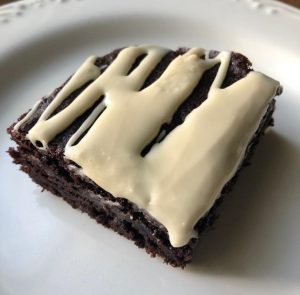
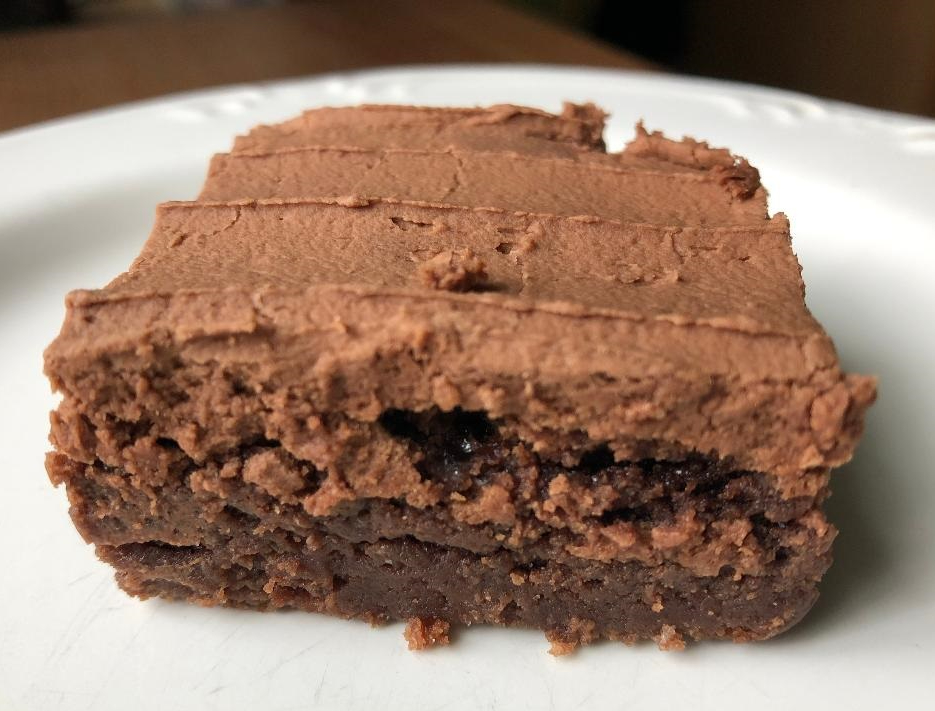
Full disclosure: until today, I didn’t actually know the ingredients in Bailey’s Irish Cream. I suppose it never occurred to me to investigate the contents of a liqueur that I consume rarely and pretty much only in baked goods, despite its deliciousness. But it’s St. Patrick’s Day week, and some Irish cream brownies seemed like a good idea. They were, indeed.

Bailey’s Irish Cream, as you may know, is a mixture of Irish whiskey, cream, and cocoa. Why anyone thought to put these three ingredients together, I don’t know. But they’re a genius, and should be celebrated well beyond St. Patrick’s Day. Sláinte, friends.

Note: you can likely buy the 50 ml “mini” bottles of Bailey’s at your local liquor store (known as a state store in Pennsylvania). If not, a 50 ml bottle translates to about 3 1/3 tablespoons.

Ingredients

For the brownies

  • 1 cup butter
  • 2 1/4 cups sugar
  • 1 1/4 cups Dutch process cocoa
  • 1 teaspoon salt
  • 1 teaspoon baking powder
  • 4 eggs
  • 50 ml bottle Bailey’s Irish Cream
  • 1/2 tablespoon vanilla extract
  • 1 1/2 cups flour

For the icing

  • 2 cups powdered sugar
  • 50 ml bottle Bailey’s Irish Cream
  • 1 – 2 tablespoons milk

Preparation

Preheat oven to 350 degrees. Line a 9 x 13 baking tin with foil and spray lightly with baking spray. Sprinkle the bottom with sugar; this is my tip for a slightly crunchy bottom crust that adds a nice texture to otherwise soft treats like brownies.

In a large pot, melt butter over low heat. Stir in sugar and continue heating for another minute while stirring, until the mixture is just hot. Remove from heat and stir in cocoa powder, salt, and baking powder, then whisk in eggs, Bailey’s, and vanilla extract. Stir in flour, then spread evenly in prepared pan.

Bake for 28-30 minutes, until a cake tester inserted in the center comes out clean. Cool completely before icing.

To make icing, place powdered sugar in a medium bowl and add the bottle of Bailey’s, stirring to combine. Add 1-2 tablespoons of milk to reach a thicker drizzling consistency. Drizzle over brownies; allow icing to set before cutting into squares. Makes 24.

Focaccia

Bread baking requires a whole different set of skills than I currently possess. But I’m determined to become a bread baker, so here I am, learning to make focaccia.

Why focaccia? It’s a fairly simple dough, and thus seemed like a good place to begin. I made a different version a few weeks back but didn’t get a chance to blog it; the recipe itself is adapted from one I found at Gimme Some Oven. I used a good cup or so more flour than in the original, kneaded it for a slightly longer time, and sprinkled the top with regular Italian seasoning instead of fresh rosemary. I’m happy to say that it turned out very well, and it’s something I’ll definitely make again. Maybe next time, I’ll top it with a bit of parmesan cheese.

Ingredients

  • 1 1/3 cup warm water (about 110 degrees)
  • 2 teaspoons sugar
  • 2 1/4 teaspoons active dry yeast (one 7-gram package)
  • 3 1/2 to 4 1/2 cups flour
  • 1 teaspoon kosher salt
  • 1/4 cup extra virgin olive oil, plus more for drizzling
  • Italian seasoning, for sprinkling

Preparation

In a mixing bowl, combine warm water and sugar. Add yeast and stir, then allow to sit for 5-10 minutes until the yeast appears foamy.

Using your dough hook, mix the dough on low speed and gradually add about 3 1/2 cups flour, the salt, and the olive oil. Increase the speed to medium-low and mix for 5 minutes, adding an additional 1/4 to 1/2 cup flour. The dough will be fairly sticky.

Turn dough onto a lightly floured surface and knead for a few more minutes, adding the remaining flour (up to about 4 1/2 cups). The dough will still be a bit sticky, but you’ll be able to shape it into a ball. Place the dough in an oiled bowl and cover it with a damp towel; allow the dough to rise for about 1 hour, until double in size.

Gently deflate the dough and transfer it to a 9 x 13 baking pan; stretch the dough so it fills the pan, and cover it with the damp towel again. Allow the dough to rise a second time for about 30 minutes. Meanwhile, preheat your oven to 400 degrees.

Before placing your dough in the oven, poke deep indentations in the top, then drizzle with additional olive oil and sprinkle with Italian seasoning. Bake for 23-25 minutes, until dough is golden on top. Remove from oven and allow to cool for just a few minutes before serving, or cool to room temperature.

Makes one 9 x 13 rectangle of focaccia, enough for about 12-15 servings.

Rum Raisin Sweet Rolls

As someone who doesn’t like raisins, I’ve never had rum raisin ice cream. Apparently it originated in Sicily, with wine-soaked raisins in vanilla gelato, and became a huge hit in the U.S. in the 1980s. Why raisins? Who knows. This is one of life’s culinary mysteries, along with bizarre (and yet beloved) treats like fruitcake.

Mike likes both raisins and rum, so I made these rum raisin rolls for him with a “make-it-mine” recipe from the Better Homes & Gardens Baking book. I’m trying to gain more experience with yeast doughs, and today’s batch turned out really well. You could omit the rum in the icing if you like and just go with vanilla extract or water, but I highly recommend using the rum.

Dough

  • 4 1/4 to 4 3/4 cups flour
  • 2 1/4 teaspoons (or 1 package) active dry yeast
  • 1 3/4 cups milk
  • 1/2 cup instant mashed potato flakes
  • 5 1/3 tablespoons butter, cut into pieces
  • 1/3 cup sugar
  • 1 teaspoon salt
  • 2 eggs

Filling

  • 1/2 cup golden raisins
  • About 1/8 cup dark rum
  • 1/4 cup butter, softened
  • 1/2 cup packed light brown sugar
  • 1/8 teaspoon cinnamon

Icing

  • 2 1/2 cups powdered sugar
  • 3 teaspoons dark rum
  • About 2 tablespoon water

Preparation

Place raisins and rum in a bowl and stir together; you can let this sit overnight, or just for a few hours while you prepare your dough.

In a stand mixer fitted with the paddle attachment, combine 1 and 1/2 cups flour and active dry yeast.

In a medium saucepan, combine milk, masked potato flakes, butter, sugar, and salt; heat on medium in just warm, between 120 and 130 degrees. Pour into flour/yeast mixture, then add eggs, and beat on low speed for 30 seconds. Scrape down your bowl and beat for 3 minutes on medium.

Switch to your dough hook, and add another 3 cups flour. Mix on low speed until flour incorporates as much as possible, then set your timer and allow the dough to mix for another 2-3 minutes; it will pull away from the sides and wrap itself around the hook. You can also knead this dough by hand, but I used my mixer to do all the work today, and it turned out really well. Remove from the bowl, knead by hand just 2-3 times, then place it back in your mixing bowl and cover it with plastic wrap. Allow to rise in a warm place until about doubled in size, 45-60 minutes.

Once dough has risen, punch it down gently and turn it onto a lightly floured surface to rest for 10 minutes. While the dough rests, stir together the light brown sugar and cinnamon; set aside. Lightly grease a 13 x 9 baking tin.

Shape dough into an 18 x 12 rectangle and spread with softened butter; I just used my fingers for this. Sprinkle filling leaving 1 inch unfilled along the top and bottom of the rectangle. Roll up the rectangle, starting from the long side, and pinch the dough to seal the seams. Slice into 12 equal portions and place cut-sides down in the baking tin. Cover and allow to rise in a warm place for about 30 minutes.

Preheat oven to 375 degrees. Uncover rolls and bake for 25-30 minutes, until tops are golden. Remove from oven and allow to cool in the pan for 10 minutes.

While rolls are cooling, make the icing by combining the powdered sugar, rum, and 1 tablespoon water in a small bowl. Stir in enough remaining water to make a drizzly consistency. Spread over warm rolls; serve warm or at room temperature. Keep in an airtight container at room temperature for 1-2 days. Makes 12.

Apple Hand Pies

Mike requested apple hand pies for this weekend’s treat. I need to continue developing my pastry skills, and this was excellent practice. Because I chose to focus on the pastry, I decided to use canned apple pie filling, but you could absolutely use fresh apple filling if you prefer. Next time, I probably will.

The crust recipe comes from Live Well Bake Often, and it’s probably my favorite I’ve come across so far. I also used some crust-making techniques I learned from this incredibly comprehensive video from King Arthur Flour, and feel like this pastry-making experience was the easiest that I’ve ever had. While the pies look like tiny flying saucers, Mike says they’re absolutely delicious.

Ingredients

  • 2 1/2 cups (315 grams) flour – use the spoon and level method if you’re measuring by volume
  • 2 teaspoons sugar
  • 1 teaspoon salt
  • 8 tablespoons unsalted butter, cold, cut into cubes
  • 8 tablespoons vegetable shortening, cold, cut into cubes
  • 1/2 cup ice water
  • 1/2 of a 21-ounce can apple pie filling
  • Nutmeg
  • Cinnamon
  • 1 egg
  • 1 tablespoon milk
  • Sanding sugar

Preparation 

In a large bowl, stir together flour, sugar, and salt. Add butter and shortening, tossing with a fork to coat. Use a pastry blender to combine the butter and shortening into the flour mix until the mixture looks like coarse crumbs. Drizzle in water1 tablespoon at a time and mix with a fork until the dough begins to combine; you may not need the full half-cup, but I did.

Turn the dough out onto a sheet of parchment paper and use the paper to gather the dough into a rough rectangle shape; fold the dough over on itself a few times to fully incorporate the wet and dry ingredients. The technique in the video around 7:03 is really helpful here. Shape the dough into a rectangle and chill for 1 hour.

Preheat oven to 400 degrees. Line two baking sheets with parchment paper.

Scoop out half the can of pie filling into a medium bowl and chop up the apples into chunks. Add nutmeg and cinnamon to taste; set filling aside while you roll and shape your crust. Reserve the remaining filling for another use; you can heat it up and serve it over ice cream, or just warm it and eat it by itself as a side dish.

Remove crust from fridge and place on a lightly floured surface, rolling into a rectangle about 1/8 inch thickness. Using a 3 1/2 inch cookie cutter, cut out circles of crust; re-roll scraps and repeat. Place half of the circles on the baking sheet and top with about a tablespoon of filling. Punch a steam hole in the remaining circles using a small cutter (I used a frosting piping tip) or knife and place the top crusts over the filling, pinching the edges to join the bottom and top crusts. Gently press the edges with a fork to seal.

In a small bowl, beat together the egg and milk to make an egg wash and brush over the pies, then sprinkle with sanding sugar. Bake for 20-22 minutes, until the pies are golden brown. Remove from oven and cool for a few minutes on the baking sheet, then remove to a wire rack to cool completely. Store in an airtight container at room temperature for 2-3 days. Makes 10 pies (my recipe made nine round pies, plus one larger half-circle shaped pie that I made from the last of the scraps).
Old-Fashioned Chocolate Sugar Cookies

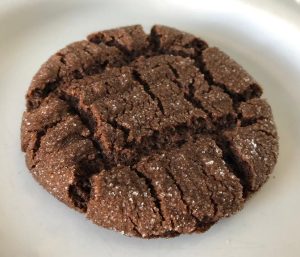
Choosing a favorite cookie is next to impossible…at least for me. But these old-fashioned chocolate sugar cookies, a recipe I found at Mel’s Kitchen Cafe, could be serious contenders for one of my favorite cookies ever. They’re soft, with a crunchy edge and soft, chewy middle. Flavor-wise, they remind me just a bit of a brownie, but not exactly. I decided to call mine “old-fashioned,” since I made them slightly smaller than the original and pressed them with a fork like you would a peanut butter cookie. They look very homey, like something your favorite aunt would have made.

The original author stressed the importance of using dark brown sugar in the recipe, and I completely agree with her. I don’t think the light brown version would yield the same kind of flavor or texture you get with dark brown sugar, but you can certainly substitute it and let me know what happens.

Ingredients

  •  1/3 cup sugar
  •  1 1/2 cups plus 2 tablespoons  flour
  •  3/4 cup  unsweetened cocoa powder
  •  1/2 teaspoon baking soda
  •  1/4 teaspoon baking powder
  •  14 tablespoons butter
  •  1 3/4 cups packed dark brown sugar
  •  1 tablespoon vanilla extract
  •  1/2 teaspoon salt
  •  1 egg, plus 1 egg yolk

Preparation

Preheat oven to 350 degrees. Line two baking sheets with parchment paper.

Place granulated sugar in a small bowl; set aside. In a medium bowl, stir together the flour, cocoa powder, baking soda, and baking powder and set aside.

Melt 10 tablespoons butter in a microwave-safe bowl, checking frequently – you want your butter to be just melted and not too hot. Stir in the remaining 4 tablespoons butter; this will bring the temperature down slightly. Let the butter sit until its about 90 degrees in temperature, then pour into a large bowl and whisk in dark brown sugar, vanilla, and salt until completely smooth. Whisk in egg and yolk, then stir in flour mixture until just combined.

Using a 2-inch cookie scoop, scoop out dough and roll into balls, then dip in granulated sugar to coat. Place on the baking sheet, leaving space between for spreading. Gently press the tops with a fork to make the crisscross pattern.

Bake for about 10-12 minutes, until edges are set but tops are still puffy – be careful not to overbake these, or they’ll be too hard. Cool on baking sheet for about 3 minutes, then transfer to a wire rack to cool completely.

Makes about 24 cookies.

Carmelitas

Carmelitas: I’ve wanted to bake them forever. And I am astonished at how easy they were to make. This recipe came from Six Sisters’ Stuff and uses pretty basic ingredients, most of which you likely have in your pantry. While the Six Sisters recommended baking this in a glass dish, I baked mine in a ceramic dish lined with foil and sprayed with baking spray for easier clean-up.

Next time, I think I’ll try this with semisweet chocolate chips to see how it turns out, and I might even add a small dash of cinnamon into the crust/topping mixture. I also recommend pressing the top crust bits into the caramel layer (using a spatula or the back of a spoon so you don’t burn your fingers) to make it stick just a bit better.

Ingredients

  • 11-ounce bag caramel bits (or 32 unwrapped caramel squares)
  • 1/2 cup heavy cream
  • 12 tablespoons butter, melted
  • 1 cup packed light brown sugar
  • 1 cup old-fashioned oats
  • 1 cup flour
  • 12-ounce package milk chocolate chips

Preparation

Preheat oven to 350 degrees. Line an 8 x 8 ceramic or glass baking dish with foil, extending the foil over the sides. Spray lightly with baking spray.

Combine caramel bits and heavy cream in a medium saucepan over low heat. Stir until caramel bits are melted and mixture is smooth; keep warm while your crust bakes. I got my caramel started and kept an eye on it while I made my crust.

To make the crust, combine melted butter, brown sugar, oats, and flour; I mixed mine with my hands to make sure it incorporated well. Press half the mixture in the baking dish and level it out; bake for 10 minutes.

Remove crust from oven and sprinkle with chocolate chips, then pour on the caramel. Sprinkle the remaining crust dough over the caramel and return to the oven, baking for about 15 minutes, until the top begins to just turn golden brown.

Remove from oven and cool completely at room temperature, or place in the fridge to speed the cooling process. You can’t cut these bars until they’re completely cool, so don’t even try – you’ll end up with a mess, from what I read in other recipes. Lift out of the pan and peel off foil; place on a cutting board and cut into 16 bars. Store in an airtight container at room temperature for 2-3 days.

Spiced Pecan Rolls

I’m a bread amateur, and most of the bread I’ve baked has been of the sweet, filled-with-something variety. Poppy seed and nut rolls, babkas, cinnamon rolls…these are my breads of choice. Someday I plan to bake “normal” breads – you know, the kind that you can make a sandwich with – but for now, I’ll stick with the sweet variety.

My Better Homes & Gardens Baking book has a great recipe for “make it mine” cinnamon rolls, and I chose to go with apple pie spice, chopped pecans, and cinnamon chips for this recipe. The end result is an incredibly tasty creation that had an excellent texture when they first came out of the oven. Today, they were quite dry; I’m not sure if this means I over-baked them, but they still tasted pretty good. I also think the cinnamon chips got a bit lost in the filling, but hey – we bake, we learn. I look forward to making more versions of this in the future.

Ingredients

Dough

  • 4 1/4 to 4 3/4 cups flour
  • 1 package active dry yeast
  • 1 3/4 cups milk
  • 1/2 cup instant mashed potato flakes
  • 5 1/3 tablespoons butter, cut into pieces
  • 1/3 cup sugar
  • 1 teaspoon salt
  • 2 eggs

Filling

  • 1/4 cup butter, softened
  • 1/2 cup packed light brown sugar
  • 1 tablespoon apple pie spice
  • 1/2 cup chopped pecans
  • 1/2 cup cinnamon chips

Icing

  • 1 1/2 cups powdered sugar
  • 1 teaspoon vanilla extract
  • About 2 1/2 tablespoons milk

Preparation

In a stand mixer fitted with the paddle attachment, combine 1 and 1/2 cups flour and active dry yeast.

In a medium saucepan, combine milk, masked potato flakes, butter, sugar, and salt; heat on medium in just warm, between 120 and 130 degrees. Pour into flour/yeast mixture, then add eggs, and beat on low speed for 30 seconds. Scrape down your bowl and beat for 3 minutes on medium.

Switch to your dough hook, and add another 2 1/2 cups flour. Mix on low speed until flour incorporates as much as possible, then turn dough onto a lightly floured surface. Dough will be very sticky; I used a bench knife to scrape it from the countertop during kneading. Knead in enough remaining flour to make a moderately soft though that is smooth and elastic; this can take between 3 and 5 minutes. Shape dough into a ball.

Place dough in a large, lightly greased bowl and allow to rise in a warm place until about doubled in size, 45-60 minutes. I place my dough bowl on a heating pad set to low, as my house tends to be on the cooler side. Once dough has risen, punch it down gently and turn it onto a lightly floured surface to rest for 10 minutes.

While the dough rests, make the filling by combining brown sugar, apple pie spice, pecans, and cinnamon chips in a medium bowl. Set aside. Lightly grease a 13 x 9 baking tin.

Shape dough into an 18 x 12 rectangle and spread with softened butter; I just used my fingers for this. Sprinkle filling leaving 1 inch unfilled along the sides. Roll up the rectangle, starting from the long side, and pinch the dough to seal the seams. Slice into 12 equal portions and place cut-sides down in the baking tin. Cover and allow to rise in a warm place for about 30 minutes.

Preheat oven to 375 degrees. Uncover rolls and bake for 25-30 minutes, until tops are golden. Remove from oven and allow to cool in the pan for 10 minutes.

While rolls are cooling, make the icing by combining the powdered sugar, vanilla, and 1 tablespoon milk in a small bowl. Stir in enough remaining milk to make a drizzly consistency. Remove rolls from the pan and drizzle with icing; allow icing to set before storing. Serve warm or at room temperature; keep in an airtight container at room temperature for 1-2 days. Makes 12.

Black Forest Cake for Two

Dark chocolate cake, sweetened whipped cream, and cherries: that’s really all you need for a Black Forest cake. But if you’re like me, and you like cherry-flavored things but not actual cherries, what can you do? You can whip up your own version of this famous dessert, that’s what.

Cherries have wonderful flavor, but I don’t want to eat an actual cherry because of the skin. So instead of making this cake with cherries, I put a few tablespoons of cherry preserves into my food processor and spun it until it became smooth, then folded it into my Kirsch-flavored whipped cream. The end result is one of the best little cakes I’ve made in some time; it’s a small, two-layer 6-inch cake, perfect for just Mike and me. I chose to level my cakes, leaving me with a fair amount of leftover scraps; those will likely become cake pops later this week. You could absolutely make this without leveling your cakes, though the layers just won’t be quite as even; you could also bake this in a regular 8-inch cake pan and just split that one layer into two. 

Ingredients

For the cake

  • 1 cup plus 2 tablespoons flour
  • 3/4 cup sugar
  • 3 tablespoons Dutch process cocoa powder
  • 3/4 teaspoon baking soda
  • 1/4 teaspoon baking powder
  • 1/2 teaspoon salt
  • 3/4 cup water
  • 1/4 cup plus 2 tablespoons vegetable oil
  • 1 teaspoon vanilla extract

For the whipped cream

  • 1 cup heavy cream
  • 3 tablespoons powdered sugar
  • 1/2 teaspoon Kirsch
  • 2 tablespoons cherry preserves, pureed if desired
  • Semisweet chocolate, for garnish

Preparation 

Preheat oven to 350 degrees. Lightly grease two 6-inch round cake tins and line each with a parchment circle.

In a mixing bowl, combine flour, sugar, cocoa powder, baking soda, baking powder, and salt. Stir together, then add water, oil, and vanilla extract. Beat on low speed for about 2 minutes, until the batter is smooth; it will be thin.

Divide batter evenly between the two tins; bake for 22-25 minutes, until a cake tester inserted in the center comes out clean. Remove from oven and allow to cool in the tins for just a minute or two, then turn out onto a wire rack to cool completely. Once cakes are cool, level them if desired; reserve the scraps for a trifle, cake pops, or other treat. 

Place heavy cream and powdered sugar in a mixer fitted with the whisk attachment, and beat on low at first to combine. Add Kirsch, then increase speed to medium-high and beat until stiff peaks form. Fold in cherry preserves.

Place bottom layer of cake on your cake plate and top with a thick layer of whipped cream. Carefully place the top layer, covering the top and outside of the cake. Using a fine grater, grate semisweet chocolate over the top of the cake for garnish. 

Store cake in an airtight container in the refrigerator for about 2 days; the cake will dry out once it’s cut, but still taste delicious. Makes about 6 servings. 

Apricot Fruitcake

During my pre-Christmas baking extravaganza, I decided to make a second type of fruitcake using “lighter” ingredients. This meant using light brown sugar rather than dark, and including a hearty quantity of apricots (hence this recipe’s name), golden raisins, and currants, rather than candied cherries and dates.

Both Mike and my mom tried both types of fruitcake, and while they preferred the darker version, they also liked this one. I chose to bake this recipe in two smaller loaf tins, which I think helps with baking time, and also allows you to give one away as a gift – perfect for the holidays. My second loaf went to my friend Arvind and his family, and he let me know that it was gone in less than 48 hours.

Ingredients

  • Heaping 1 1/2 cups (300 grams) diced dried apricots
  • Heaping 3/4 cup (125 grams) golden raisins
  • Heaping 1/2 cup (75 grams) currants
  • 6 tablespoons dark rum
  • 8 tablespoons butter, softened
  • 1 cup light brown sugar
  • 1/2 teaspoon salt
  • 1/2 teaspoon cinnamon
  • 1/8 teaspoon allspice
  • 1/8 teaspoon nutmeg
  • 1/2 teaspoon baking powder
  • 2 eggs
  • 1 1/2 cups flour
  • 2 tablespoons golden syrup
  • Heaping 2/3 cup (90 grams) chopped toasted pecans
  • 1/4 cup cranberry juice
  • A few more tablespoons rum, for brushing

Preparation

Combine dried fruits and 6 tablespoons dark rum in a glass or ceramic bowl; stir together and let rest overnight.

Preheat oven to 300 degrees. Lightly grease two 8 x 4 loaf tins.

In a mixer fitted with the paddle attachment, cream butter and brown sugar until fluffy. Add salt, cinnamon, allspice, nutmeg, and baking powder and beat to combine. Add eggs, one at a time, scraping the bowl and mixing well between each addition. Add flour and golden syrup and beat until just combined; add cranberry juice and beat, then fold in rum-soaked fruits and pecans, stirring to distribute evenly.

Spoon batter into loaf tins, dividing evenly and filling about 3/4 full. Bake for about 1 hour to 1 hour and 15 minutes, until a cake tester inserted in the center comes out clean. Remove from oven and cool in the pan for about 5 minutes, then brush with remaining rum. Allow to cool completely; fruitcake can be stored in the loaf tin for several days. Makes two 8 x 4 loaves; servings vary based on how thick you slice it.

Nutty Chocolate Chip Peanut Butter Cookies

These cookies are an excellent example of the classic chocolate and peanut butter flavor combination with a fun twist. Adapted from a recipe from my King Arthur Flour Cookie Companion (of course), this recipe blends a peanut butter cookie base, made with dark brown sugar for rich flavor, with chopped lightly salted peanuts and chocolate chips. The end result is, not surprisingly, delicious, and the dough is very easy to make.

The recipe below makes a pretty big batch at 46 cookies, but you could yield even more if you used a smaller cookie scoop. I went with a 2-inch scoop for slightly larger treats.

Ingredients

  • 1 cup butter, very soft
  • 1 cup dark brown sugar
  • 1 cup granulated sugar
  • 1 1/4 cups peanut butter
  • 1/2 teaspoon baking powder
  • 1/2 teaspoon baking soda
  • 1/2 teaspoon salt
  • 2 eggs
  • 2 2/3 cups flour
  • 1 1/4 cups lightly salted, dry-roasted peanuts, chopped
  • 1 1/2 cups milk chocolate chips

Preparation

Preheat oven to 350 degrees. Line several baking sheets with parchment paper.

In a mixer fitted with the paddle attachment, cream butter, sugars, peanut butter, baking powder, baking soda, and salt. Add eggs, one at a time, beating well after each addition. Stir in flour, peanuts, and chocolate chips.

Using a two-inch cookie scoop, drop scoops of dough into the baking sheets; the cookies don’t spread much during baking, but you want to leave a bit of room between them. Bake for 13-14 minutes, until edges are brown. Remove from oven and cool on the baking sheets for a few minutes, then remove to a wire rack to cool completely.

Makes 46.