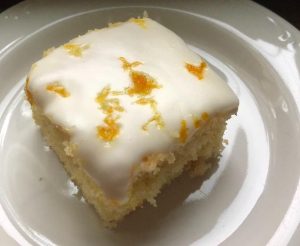
Citrus “Traybake” Cake

“Traybake” isn’t really part of the American baker’s vocabulary…unless she watches the Great British Baking Show, of course. Visitors to this blog know very well of my GBBS obsession, which lives on in full force

A traybake can be a cake, brownie, or other dessert baked in a rectangular pan. Ranging from the simple to the complex, traybakes are apparently a staple of family baking in Britain. This recipe is adapted from Mary Berry’s Fast Cakes: Easy Bakes in Minutes; I subbed oranges for limes because that’s what I had on hand. I suspect that I slightly over-baked my cake, but Mike’s coworkers registered no complaints. I also made the mistake of zesting my lemon and orange in advance, then trying to sprinkle the chilled zest over my icing; next time, I’ll zest the fruit straight onto the icing so it falls more evenly, rather than in clumps.

Ingredients

For the cake

  • 1 cup margarine* straight out of the fridge
  • 1 cup superfine sugar
  • 2 1/2 cups self-rising flour
  • 4 eggs
  • 1 teaspoon baking powder
  • 2 teaspoons lemon curd
  • zest of 1/2 lemon
  • zest of 1/2 orange

For the icing

  • 2 1/2 cups powdered sugar, sifted
  • 3-4 tablespoons lemon and orange juice
  • zest from 1/2 lemon
  • zest from 1/2 orange

Preparation

Preheat oven to 350 degrees. Lightly grease a 9 x 13 (or 9 x 12, if that’s what you have) baking tin and line it with parchment.

Place all cake ingredients in a mixer and beat well to combine, until batter is light and fluffy. Pour into prepared tin and bake for 30-35 minutes, until well risen and the top springs back slightly when gently pressed.

Remove from oven and cool completely before icing.

To make icing, place powdered sugar in a bowl and add 1 tablespoon lemon and orange juice at a time to make a smooth, thick drizzle icing. Pour over cake; spread with an offset spatula to cover completely. Top with lemon and orange zest.

Allow icing to set, then cut into 16 pieces. Store in an airtight container at room temperature for 2-3 days.

Cream Puffs

I can now make choux pastry. Say it with me: shoo, or shoe, if you like. Choux is French for cabbage, so named for the resemblance these pastries have to small cabbages. This patisserie staple was surprisingly easier to make than I’d imagined.

As always, I approached this recipe with my standard “no fear” motto. What was the worst that would happen, I wondered? I suspected that perhaps my choux buns wouldn’t rise, having seen more than one baker fall victim to flat choux on The Great British Baking Show. But rise they did! And once they cooled, I filled them with pastry cream, and I’m here to tell you that I’m never going to be the same again. This recipe is adapted from the King Arthur Flour recipe, just cut in half to yield a smaller batch.

Ingredients

  • 1/2 cup water
  • 4 tablespoons butter
  • 1/8 teaspoon salt
  • 1/2 cup plus 2 tablespoons flour
  • 2 eggs
  • Pastry cream, for filling

Preparation

Preheat oven to 425 degrees. Line a baking sheet with parchment paper.

Place water, butter, and salt in a medium saucepan and bring to a rolling boil. Remove from heat and add flour all at once, stirring vigorously. Return to heat and cook over medium heat, stirring constantly, until the mixture forms a ball. This will only take a minute or so.

Remove from heat and allow the mixture to cool for about 10 minutes, until it reaches about 140 degrees. Transfer to a mixer fitted with the paddle attachment and beat in one egg; the mixture will look curdled, but keep beating for about 30 seconds, then add the second egg and beat for 2 minutes more. The mixture will even out and turn into a smooth batter.

Transfer batter to a piping bag and pipe into 1- to 1 1/2-inch rounds. Wet the tip of your finger and lightly press any sharp peaks down.

Bake for 15 minutes, then lower the oven temperature to 375 degrees and bake 15 minutes more. Turn off your oven, open the door a crack (I used a bamboo spoon to hold the door open just a bit) and allow the choux to cool inside the oven for 30 minutes. Remove from oven and cool completely.

To fill, you can either pipe pastry cream into each choux bun from the bottom, or split the pastries and fill them from the middle. Store in an airtight container in the refrigerator for 2-3 days.

Makes about 12, depending on how large you pipe your rounds.

Filled cream puffs – yay!

Marble Brownies

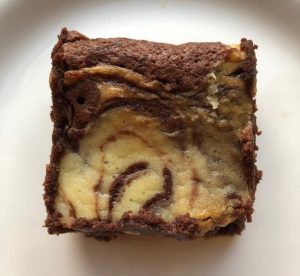
Until yesterday, I’d never made those classic cream cheese marbled brownies. How this treat escaped me for so many years I don’t know, but there you have it. While I’m still not eating chocolate, I really considered it yesterday, wondering if it would send me into migraine land. As they baked, a heavenly aroma of chocolate filled my kitchen. And who doesn’t like cream cheese, especially when it’s swirled in chocolate? Well, some people probably don’t, but seriously, I don’t need that kind of negativity in my life.

These brownies went to work with me today, as a special thank you to our design team. My buddies in design are incredibly talented, have great senses of humor, and always make things work for us even with very short notice. Surely worthy of these treats.

Ingredients

For the cream cheese swirl

  • 3 ounces cream cheese, at room temperature
  • 2 tablespoons butter, at room temperature
  • 1/4 cup sugar
  • 1 egg
  • 1 tablespoon flour

For the brownies

  • 1 1/4 cups flour
  • 3/4 teaspoon baking powder
  • 1/2 teaspoon salt
  • 6 ounces unsweetened chocolate, chopped
  • 12 tablespoons butter
  • 2 1/4 cups sugar
  • 4 eggs
  • 1/4 cup milk
  • 1 tablespoon vanilla extract
  • 1 teaspoon almond extract

Preparation

Preheat oven to 325 degrees. Line a 9 x 13 pan with foil, extending over the sides, and spray with baking spray.

Make the cream cheese topping: in a mixing bowl, cream together cream cheese and butter until smooth. Gradually add sugar, beating until light and fluffy. Add egg and 1 tablespoon flour and beat to combine. Set aside.

In a medium bowl, stir together flour, baking powder, and salt; set aside. Melt chocolate and butter in a saucepan over low to medium heat; remove from heat and transfer to a clean mixing bowl, then slowly beat in sugar, a little bit at a time. Add eggs, one at a time, beating on low speed after each until just combined. Beat in milk, vanilla extract, and almond extract. Beat in flour mixture in three batches, beating until just combined after each.

Pour chocolate batter into prepared pan, spreading evenly. Spoon cream cheese topping in blobs over the top. Using a dull knife or spatula, gently swirl the cream cheese into the chocolate batter.

Bake for 40-45 minutes, until a cake tester comes out clean or with a few moist crumbs. Cool in pan on a wire rack; once brownies are completely cool, lift out of the pan by the foil. Cut into bars.

Makes 24 (or you can cut them smaller if you like).

Mini Snickerdoodle Loaves

My friend Kanika and I met at Catholic Charities Foundation many years ago in DC. Our team had two back-to-back unsuccessful hires for the events assistant position, so we asked our priest to bless the desk and exorcise the bad luck. A few weeks later Kanika joined us (thanks, Father Mario!), bringing amazing professional skills, a great sense of humor, and a picky appetite to our crew. As a fellow picky eater, I fully supported this. We had some very funny times on that team, many thanks to her.

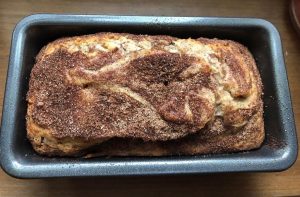
Kanika sends me recipe ideas sometimes, and when these mini snickerdoodle loaves came across Facebook Messenger, I knew I needed to bake them. The end result is absolutely delicious, with a tender crumb and great cinnamon flavor. I can see this recipe as a base for other flavor combinations; the original came from Health Printable Recipes, and I tweaked it just slightly based on only having 6 ounces miniature cinnamon chips in my pantry. My recipe yielded five loaves, rather than four; two of those loaves are on their way to Kanika right now. Thanks for the recipe, Marbles!

Ingredients

  • 2 1/2 cups of flour
  • 2 teaspoons baking powder
  • 1/2 teaspoon salt
  • 2 teaspoons cinnamon
  • 1  cup butter, softened
  • 2 cups sugar
  • 3 eggs, at room temperature
  • 1 teaspoon vanilla
  • 3/4 cup sour cream
  • 6 ounces miniature cinnamon chips
  • About 2 tablespoons sugar, for topping
  • About 2 teaspoons cinnamon, for topping

Preparation

Preheat oven to 350 degrees. Lightly grease five miniature loaf tins (about 5 x 3 size).

In a medium bowl, combine flour and baking powder; set aside.

In a mixer fitted with the paddle attachment, cream butter, sugar, salt, and cinnamon until fluffy, about 3 minutes. Add eggs, one at a time, beating between each addition. Stir in vanilla and sour cream, then stir in flour mixture until no dry streaks remain. Stir in cinnamon chips and incorporate evenly, being careful not to over-mix your batter, which will be fairly thick.

Divide batter between loaf tins, filling about 2/3 full; mine had about 10 ounces of batter in each. Combine 2 tablespoons sugar and 2 teaspoons cinnamon, then sprinkle on top of each loaf.

Bake for 35 – 40 minutes, until a cake tester comes out clean. Remove from oven and serve warm, or cool completely and store, tightly wrapped, at room temperature.

Make 5 miniature loaves.

Spiced Apple Cupcakes

Fall begins tomorrow, and I am ready. As a person who appreciates all seasons, I welcome the changing leaves, crisp evening air, and an excuse to bake with delicious fall favorites like apples, pumpkins, and one of my favorite spices, nutmeg. Apples feature heavily in many fall desserts, but these cupcakes feature an easy pantry staple that also lends great, tender texture: applesauce.

I found this recipe at Cooking Classy and adapted it slightly to cut down its size, adjust the spice level, and add a vanilla caramel buttercream rather than a cream cheese frosting (which would also be delicious). The cupcakes themselves carry more of a spice flavor than an apple flavor, but are quite delicious with a very tender crumb. The frosting has a subtle caramel flavor that brings a nice balance of sweetness to the warm spice in the cupcakes. Next time, I’d love to try this recipe as a whole cake, served with warm apple compote and whipped cream. Stay tuned!

Ingredients

For the cupcakes

  • 1 cup flour
  • 1/2 teaspoon baking powder
  • 1/2 teaspoon salt
  • 1 teaspoon cinnamon
  • Heaping 1/4 teaspoon nutmeg
  • 4 tablespoons butter, softened
  • 1/2 cup sugar
  • 1/4 cup packed light brown sugar
  • 2 eggs, at room temperature
  • 3/4 cups unsweetened applesauce

For the frosting

  • 8 tablespoons butter, at room temperature
  • 2 cups powdered sugar
  • 1/3 cup caramel sauce
  • 3 tablespoons heavy cream
  • 1 teaspoon vanilla

Preparation

Preheat oven to 350 degrees. Line a cupcake tin with paper liners.

In a medium bowl, combine flour, baking powder, salt, cinnamon, and nutmeg. In a mixer fitted with the paddle attachment, cream butter, sugar, and brown sugar until light and fluffy. Add eggs, one at a time, beating well between each addition. With the mixer running on low, add the applesauce. Turn off the mixer and stir in flour until just combined.

Using a 2-inch cookie scoop, scoop batter into liners, filling about 2/3 to 3/4 full. Bake for 20-21 minutes, until a cake tester comes out clean. Remove from oven and remove cupcakes from tin; place on a wire rack to cool completely before frosting.

For the frosting, beat butter in a mixer for about 1 minute, then add powdered sugar and mix on low, then medium speed until the sugar is fully incorporated into the butter. Add caramel, heavy cream, and vanilla and beat well, about 3-4 minutes.

Fit a large piping bag with a large plain tip; pipe a generous blob of frosting onto each cupcake. You’ll have plenty of frosting left over for another use; I may make a second batch of these cupcakes for mine!

Store in an airtight container at a cool room temperature, or in the fridge. Makes 12.

Gingerbread Sandwich Cake

The Great British Baking Show has influenced my baking in many ways, among them what I’m starting to call things. Two-layer cakes have become sandwich cakes, baking pans have become tins, rising time for bread has become proving time. I don’t mind – I’m an Anglophile after all. This week I re-watched a few episodes from a previously viewed season where the bakers made highly creative sandwich cakes, and wanting to make something fun for the impending arrival of fall, I settled on rich spicy flavors.

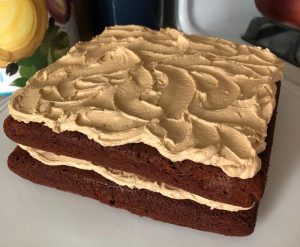
This gingerbread sandwich cake features apple pie spice rather than traditional gingerbread spices, although truth be told, they’re quite similar and next time I’ll probably go with the regular gingerbread spice blend. The frosting is a lovely creation of buttercream with molasses and ginger that I found at Two Sisters Crafting and tweaked to suit my own taste for a stronger molasses flavor. The cake itself was a bit on the dry side, so I suspect I may have baked it just a bit longer than necessary. Good to know for next time, as I’ll definitely make this again.

Ingredients

For the cake

  • 1 1/2 cups all purpose flour
  • 2 teaspoons apple pie spice
  • 1/2 teaspoon baking powder
  • 1/2 teaspoon baking soda
  • 8 tablespoons butter, at room temperature
  • 6 tablespoons brown sugar
  • 1/2 cup molasses
  • 1 egg
  • 1/2 cup water

For the frosting

  • 8 tablespoons butter, at room temperature
  • 2 cups powdered sugar
  • 2 tablespoons molasses
  • 1/4 teaspoon ginger

Preparation

For the cake:

Preheat oven to 350 degrees. Lightly grease two 8-inch square cake pans (or tins, if you prefer the British version!) and line the bottoms with parchment.

In a medium bowl, combine flour, apple pie spice, baking powder, and baking soda; set aside.

In a mixing bowl fitted with the paddle attachment, cream together butter and brown sugar until fluffy, about 2-3 minutes, scraping the sides of the bowl well. Add molasses and egg and beat well to combine.

Add flour mixture and water alternatively in three batches, starting and ending with the flour and mixing to combine between each.

Pour batter into prepared pans and bake for 15-17 minutes, until a cake tester comes out clean. Cool in the pan for about 20 minutes, then remove to a wire rack to cool completely before frosting.

For the frosting:

In a mixer fitted with the paddle attachment, beat butter for about 1 minute, then add all the powdered sugar at once and beat on low, then medium speed until the sugar is fully incorporated into the butter. Add molasses and ginger and beat to fully combine, scraping the sides of the bowl at least a few times.

To assemble, place one layer on your cake stand and top with half the frosting; repeat with the second layer and remaining frosting, leaving the sides bare. Store in an airtight container at room temperature for 2-3 days.
Makes about 12 servings.

Madeira Cake

How many recipes do I want to bake? All of them, I suppose…but some more than others. To stay on track and ensure that I try (and ideally, master) as many intriguing treats as possible, I’ve set monthly baking goals. September includes Madeira cake, which seems to be more common in Britain than here in the States.

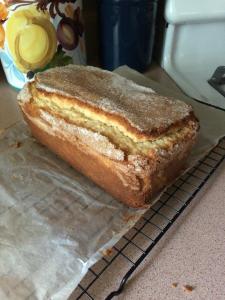
Contrary to its name, Madeira cake contains no wine. Victorians enjoyed this pound cake-like treat with Madeira, and today it’s served with tea or liqueur. Traditional Madeira cake has a crack in the top, and I’m proud to say that mine did, too. The recipe comes from The Kitchn, and mine yielded a well-flavored but slightly dry cake, likely because I had to bake it for longer than I’d planned. Next time I’ll bake it in a 9 x 5 loaf tin, rather than an 8 x 4, to cut down on baking time.

Ingredients

  • 2 1/2 cups flour
  • 1 1/2 teaspoons baking powder
  • 1/4 teaspoon kosher salt
  • 1 1/4 cups unsalted butter, at room temperature (2 1/2 sticks)
  • 1 cup plus 2 tablespoons sugar, divided
  • Zest of 1 medium lemon
  • 3 eggs, at room temperature
  • Juice of 1 medium lemon

Preparation

Preheat oven to 325 degrees. Grease an 8 x 4 loaf tin with butter, then line the tin with parchment.

In a medium bowl, whisk together flour, baking powder, and salt; set aside. In a mixer fitted with the paddle attachment, cream butter, sugar, and lemon zest until light and fluffy, about 3-5 minutes, scraping the bowl well at least a few times.

Add the first egg and one spoonful of flour mixture, beating to combine. Scrape down the bowl, then repeat with remaining eggs and one spoonful of flour mixture for each egg, scraping the bowl between each. Add remaining flour and lemon juice and mix until combined; batter will be quite thick.

Spoon batter into the pan and smooth out the top, then sprinkle the remaining 2 tablespoons of sugar over the top. Bake for about 60-70 minutes, until a cake tester inserted in the center comes out clean. Cool in pan completely, then lift out by the parchment and store, well wrapped, at room temperature. Makes about 10 servings.

At left, you get a nice view of the crack down the side of the top. 

Pineapple Upside-Down Cake

To me, pineapple upside-down cake is pretty retro. I imagine bakers in the 1950s and 60s serving it at dinner parties, but according to What’s Cooking America, inverted cakes that reveal a special topping go back as far as the Middle Ages. Once the Hawaiian Pineapple Company (today known as Dole) began producing in canned pineapple in the early 1900s, bakers across the United States could get easy access to this tropical treat and recipes for pineapple upside-down cake popped up in women’s magazines and cookbooks everywhere.

This was my first attempt at pineapple upside-down cake, and I already have a plan for next time. I adapted this recipe from Mary Berry’s Fast Cakes, which uses a 7-inch cake pan and some ingredients that are harder to find here in the states, like muscovado sugar. My cake baked in a 9-inch pan, which as you can see made the cake layer quite shallow. Next time I’ll use a different recipe, but Mike said this was delicious anyway.

Ingredients

  • 1/4 cup dark brown sugar
  • 7 canned pineapple rings
  • About 7 maraschino cherries, sliced in half
  • 3/4 cup self-rising flour
  • 6 tablespoons margarine
  • 2/3 cup superfine sugar
  • 1 egg, lightly beaten
  • 1 tablespoon pineapple juice

Preparation

Preheat oven to 375 degrees. Generously grease a 9-inch round cake pan.

Sprinkle dark brown sugar as evenly as possible over the bottom of the pan and top with pineapple rings, then place half of a maraschino cherry in the center of each ring and between the rings at the edge of the pan.

In a mixing bowl, combine flour, margarine, sugar, egg, and pineapple juice and beat on medium speed until completely combined.

Spoon batter carefully over pineapple layer and spread with a small spatula to make an even layer.

Bake for 25 minutes, until cake is well-risen, golden, and springs back slightly when touched. Remove from oven and cool for about 20 minutes, then invert on a serving plate to cool completely.

Makes 8 servings.

Skillet Cornbread

For some reason, people object to the word “moist.” But any baker will tell you that moistness is a crucial component of good cakes and quick breads, particularly cornbread. Having made an unfortunately dry cornbread before, I took to the internet to find a recipe for a (sorry, word haters) moist version.

Baking a Moment offered the recipe below, which I chose to bake in a cast-iron skillet. You can also use a 9 x 13 pan, but since I had the skillet, I figured, why not? Skillet baking lends a lovely, crunchy brown edge to the bread. I stored mine in my round cake caddy, and we cut slices as we wanted them, rather than cutting the whole round, for freshness. Cornbread can be reheated in the microwave for about 15-20 seconds if you’d like your butter to melt on it; I usually also serve mine with honey.

Ingredients

  • 1 1/3 cup flour
  • 2/3 cup yellow cornmeal
  • 2/3 cup sugar
  • 1 tablespoon baking powder
  • 1/2 teaspoon kosher salt
  • 6 tablespoons butter, divided into one 4-tablespoon portion and one 2-tablespoon portion
  • 1 1/4 cup milk
  • 1/4 cup vegetable oil
  • 2 eggs

Preparation

Place 2 tablespoons butter in the bottom of your cast-iron skillet. Place the skillet in the oven and preheat to 350, allowing the butter to melt during preheating.

In a large bowl, stir together flour, cornmeal, sugar, baking powder, and kosher salt.

Melt remaining 4 tablespoons butter and combine with milk, vegetable oil, and eggs, stirring to combine. Pour wet ingredients into dry ingredients and stir to combine.

Once your oven has preheated, check your skillet and carefully swirl the butter around to coat the bottom, then use a pastry brush to brush butter about halfway up the sides. Pour mixture into the skillet and bake for 35 minutes or until edges are golden brown and a cake tester inserted in the center comes out clean or with just a few moist (sorry, I had to) crumbs.

Cool for 20 minutes before cutting and serving; store in an airtight container at room temperature for about 3 days. Cornbread will last longer if stored, well-wrapped, in the refrigerator. Makes about 12-15 servings, depending on how big you slice it.

Butter Pecan Shortbread

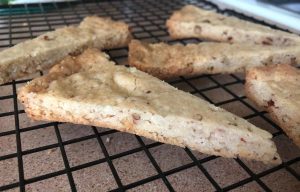
How do you make shortbread even more delicious? Add some toasted pecans and butterscotch flavor and make it butter pecan shortbread.  I sent these tasty treats to North Carolina for my sister-in-law Kristin a few weeks back, and she sent me a photo of the container with a few crumbs remaining, proclaiming them the best I’d ever made.

So what makes this flavor combination so delicious? My money is on the toasted pecans, because toasted nuts taste far more delicious than raw ones. Toasting brings the oils to the nut’s surface, intensifying their flavor and adding crunch. Pecans are one of my favorite nuts for baking, and they’re a huge hit in these easy treats. If you don’t have butterscotch flavor, you can certainly leave it out and just add some vanilla instead. The flavor won’t be quite as intense, but it will still be delicious.

Ingredients

  • 1 cup unsalted butter, slightly softened
  • 1 teaspoon salt
  • 3/4 cup sugar
  • 1/2 teaspoon butterscotch flavor
  • 2 1/3 cups flour
  • 1 cup chopped pecans, toasted and cooled

Preparation

Preheat oven to 300 degrees. Lightly grease two 8-inch round cake pans.

In a mixer fitted with the paddle attachment, cream together butter, sugar, salt, and butterscotch flavor. Add flour and beat to combine completely, then add pecans. You may need to knead the dough a bit with your hands to get the pecans to fully distribute.

Divide dough in half and press into the bottoms of the cake pans, using the palm of your hand to create an even surface. Prick all over with a fork.

Bake for 32-35 minutes, until the edges are golden brown. Remove from oven and gently loosen the sides, then allow to cool in the pans for 5 minutes. Gently flip onto a cutting board and slice each round into 16 wedges, then place wedges on a wire rack to cool completely. Store in an airtight container at room temperature for up to about 5 days.

Makes 32 wedges.