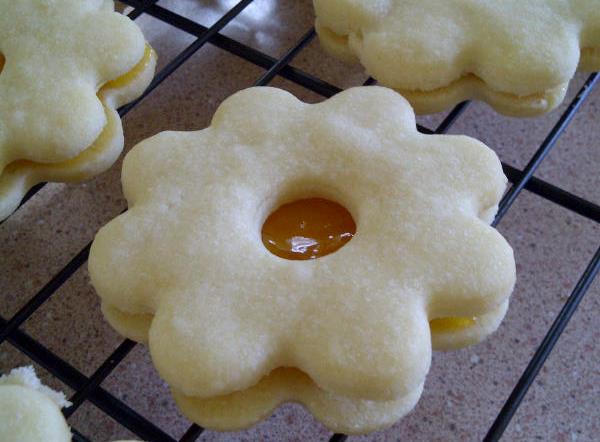
Hamantashen (Raspberry and Apricot)

hamantashen 2


Today marks the Jewish festival of Purim, as well as Mike’s 36th birthday, and I couldn’t let my Jewish husband’s birthday pass without baking this traditional Purim treat.

For our Purim celebration last year, I made poppy seed hamantashen, and that dough, while not as pliable as this recipe, stayed together much better during baking. Mike liked the taste of that dough better as well, so I think I’ll go back to my original recipe next time. It’s amazing how many recipes exist for the same treat; you can scour cookbooks, online recipe hubs, and blogs and probably find dozens of varieties. This is another thing that I love about baking; there are so many possibilities.

Ingredients

  • 1/3cup sugar
  • 2 tablespoons vegetable oil
  • 2 tablespoons orange juice
  • 1 egg
  • 1 teaspoon vanilla
  • 2 1/2 ounces cream cheese, cut into chunks
  • 1 teaspoon baking powder
  • Pinch of salt
  • 1 1/2 cups flour
  • About 3 tablespoons each raspberry jam and apricot preserves

Preparation

Preheat oven to 350 degrees.

Line two baking sheets with parchment paper.

In a mixing bowl, cream together sugar, vegetable oil, orange juice, egg, and vanilla.

Add cream cheese and beat until combined.

Add baking powder, salt, and flour; beat until the dough forms a ball.

Tape a sheet of parchment paper to your counter top and sprinkle very lightly with flour.

Turn dough out onto the parchment and roll to 1/8 inch thick.

Cut into circles and transfer to the baking sheet.

Place about 1/4 teaspoon of filling in the center of each circle—be careful not to over-fill.

Fold each circle into a triangle, sealing the edges well.

Bake for 15-20 minutes, until edges are golden.

Cool on a wire rack.

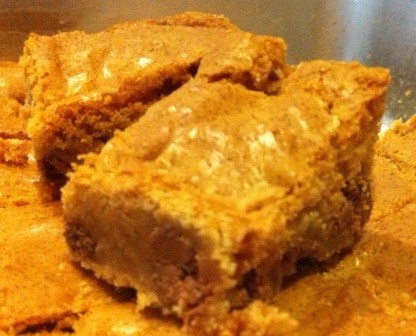
Banana Chocolate Chip Bars

banana chocolate chip bars


Something has gone awry in my homemade vanilla extract. For the past three months I’ve been steeping a vanilla bean in vodka in a well-sealed glass bottle in the dark recesses of one of my kitchen cabinets, a process I learned after buying a few vanilla beans on our honeymoon at Colonial Williamsburg 13 years ago. I’ve made countless batches of homemade extract since then, and they’ve all turned out well. Alas, this bottle had unpleasant globs of some unidentifiable substance floating in the otherwise lovely amber liquid, rendering it unusable.

Finding myself completely out of commercial vanilla (how that happened, I will never know), I resorted to the vanilla beans in my pantry. This is one of the many things I love about baking—that you can improvise. Although most cooks believe baking to be too restrictive, requiring precise measurements of this and that, I find it liberating to substitute vanilla extract with the scraped seeds of a vanilla bean, or to use up my miniature semisweet chocolate chips and mix them in with milk chocolate ones for this recipe. While I intend to scour the internet for various troubleshooting tips for making homemade vanilla, it seems that the bean did just fine.

Ingredients

  • 12 tablespoons butter, softened
  • 2/3 cup sugar
  • 2/3 cup packed light brown sugar
  • 2 teaspoons baking powder
  • 1/2 teaspoon salt
  • 1 egg
  • 1 cup mashed very ripe bananas
  • 1 vanilla bean
  • 2 cups flour
  • 1/4 cup miniature semisweet chocolate chips
  • 3/4 cup milk chocolate chips

Preparation

Preheat oven to 350 degrees.

Grease a 10 x 15 x 1 jelly roll pan; set aside.

In a mixing bowl, beat butter on medium speed for 30 seconds.

Add white and brown sugars, baking powder, and salt; cream together until fluffy.

Split vanilla bean in half and scrape out the seeds; discard the pod.

Add egg, mashed bananas, and vanilla bean seeds; beat until well-blended.

Add flour and beat until combined.

Stir in chocolate chips.

Pour batter into pan and smooth with an offset spatula to even out the top.

Bake for 25 minutes, until the top is totally set and begins to turn golden.

Cool completely in the pan; cut into squares and store in an airtight container between sheets of waxed paper.

Bacon Cheddar Scones

bacon cheddar scones


On Route 108 in Highland, Maryland, sits Boarman’s Meat Market. In times past, every community had a market like Boarman’s; a place where the cashiers knew your name (and likely, your business), the butcher wrapped your freshly-cut meats in thick brown paper, the vegetables were grown in your neighbor’s fields, and the fruits arrived from a nearby orchard.

There is no bacon in the world finer than Boarman’s, which cooks and tastes better than any bacon I’ve ever had. During Clarksville Picnic weekends, Aunt Liz has been known to dispatch Mike or Robb with a crisp $20 and instructions to “run and pick up another pound…or two.” Since last summer’s Clarksville Picnic, which was unfortunately canceled due to the biggest thunderstorm in years, I’ve wanted to bring back some Boarman’s bacon and use it in a scone. Last weekend Mike went to Maryland and returned with a cooler, in which two pounds of Boarman’s bacon sat waiting, wrapped in thick brown paper.

Next time, I’d increase the amount of cheddar in this scone, perhaps by as much as another cup.

Ingredients

  • 4 strips bacon, cooked crispy and cooled, crumbled into pieces
  • 1 1/2 cups flour
  • 1/2 tablespoon baking powder
  • 1/2 tablespoon sugar
  • 3/4 teaspoon salt
  • 4 tablespoons butter, cut into small pieces
  • 1 cup shredded cheddar cheese
  • 1/2 teaspoon pepper
  • 1/2 cups plus about 3 tablespoons heavy cream

Preparation

Preheat oven to 400 degrees.

Line a baking sheet with parchment paper.

In a large mixing bowl, sift together flour, baking powder, sugar, and salt.

Add butter, cheddar cheese, and salt and cut in with a pastry blender, then blend with your hands until lumps form. You want the mixture to be similar to the coarse-crumb stage of pie crust.

Add bacon and 1/2 cup heavy cream and blend with a spoon. Add 1 tablespoon of additional cream at a time, blending the dough with your hands, until a sticky dough forms.

Dust counter top with flour and turn dough out, patting into an 8-inch circle that is about one inch thick.

Cut into wedges and place on baking sheet, at least one inch apart; brush tops with additional heavy cream.

Bake for 23-25 minutes, until golden brown.

Remove from oven and cool for a few minutes before serving.

Shortbread Bars

shortbread bars


You’d think that someone who isn’t eating sweets for four months wouldn’t torture herself by baking flaky, buttery shortbread studded with miniature semisweet chocolate chips. And yet.

This recipe is an adaptation, in both ingredients and process. The original recipe called for dried cranberries instead of chocolate chips, mixing the dough with a spoon, and then, to my great shock, cutting the finished product into heart shapes and discarding the remaining scraps. Since I had some miniature chocolate chips on hand, I easily substituted those for the cranberries, and I found that rubbing the butter into the dry ingredients with my hands was far easier than using a spoon. As for discarding the remaining scraps, well, only someone who isn’t in their right mind would waste perfectly good shortbread.

Just a few tips for this recipe: you want your butter to be at room temperature, but not too soft. The flour and powdered sugar should be sifted before measuring, which is why this isn’t written “3/4 cup powdered sugar, sifted.” And while using your hands will be messy, it will also be infinitely easier than trying to stir the dough together with a spoon.

Ingredients

  • 1 cup butter, at room temperature
  • 3/4 cup sifted powdered sugar
  • 2 cups sifted flour
  • 1 1/4 teaspoons vanilla extract
  • 1/2 teaspoon salt
  • 1/2 cup miniature semisweet chocolate chips

Preparation

Preheat oven to 325 degrees.

In a large bowl, combine butter, powdered sugar, flour, vanilla, and salt.

Using your hands, rub the butter into the dry ingredients until a well-combined and soft dough forms.

Add chocolate chips and, again using your hands, incorporate them into the dough.

Press the dough evenly into an 8 x 8 baking dish.

Bake for 30-35 minutes, until firm and pale golden.

Let cool on a wire rack for about 20 minutes.

Invert pan onto a cutting board and cut into squares.

Allow to cool completely on a wire rack.

Baltimore’s Best

baltimores


There are two conditions under which I, an avid Steeler fan, can cheer for the Baltimore Ravens: any time they play the New England Patriots, and when they play any team other than the Steelers in the playoffs. You may wonder how a Steeler fan could ever cheer for the Ravens, even one who attended college and lived for some time in the Great State of Maryland. There is a single driving force behind my ability to support our arch nemesis, and his name is Robb Mowery.

Robb is my cousin by marriage; he and my cousin Barb are parents to the adorable Maureen, my goddaughter (who, for her first Halloween, dressed as a Ravens cheerleader). Robb is one of my favorite people ever, even if he has sketchy taste in sports teams. He’s genuine, has a great sense of humor, and would do anything for his family. We enjoy taunting one another throughout football season, and today, I’m happy for him because the Ravens have made it to the Super Bowl for the second time. Robb is an extraordinarily devoted fan, so I hope that, for his sake, they win tonight.

The recipe below is an adaptation of the classic Berger cookie, a Baltimore favorite.

Ingredients

Rich Chocolate Icing

  • 2 cups semisweet chocolate chips
  • 1 1/2 tablespoons light corn syrup
  • 1 teaspoon vanilla
  • 3/4 cup heavy cream
  • 1 1/2 cups powdered sugar, sifted

Cookies

  • 5 1/3 tablespoons butter, softened
  • 1/2 teaspoon salt
  • 1 teaspoon vanilla extract
  • 1 teaspoon baking powder
  • 1/2 cups sugar
  • 1 egg
  • 1 1/2 cups flour
  • 1/3 cup milk

Preparation

Begin by making the icing, so it can cool to a warm room temperature as the cookies bake.

Place sifted powdered sugar in a large mixing bowl; set aside.

In a medium saucepan, combine chocolate chips, corn syrup, vanilla, and heavy cream.

Heat until very hot and the cream begins to bubble; remove from heat and stir until smooth.

Pour mixture over powdered sugar and beat with a hand mixer until smooth. Set aside to cool slightly while you prepare the cookies.

Preheat oven to 400 degrees.

Line three baking sheets with parchment paper.

In a mixing bowl, cream together butter, salt, vanilla, and baking powder.

Beat in sugar, followed by the egg.

Add flour and milk alternatively, starting and ending with the flour. Do not over-mix; the lowest mixer setting or a spoon work well.

Using a one-inch cookie scoop, drop dough onto prepared baking sheets, leaving about 2 1/2 inches between each cookie. Lightly wet your fingers and press the cookies into circles.

Bake for 11 minutes, until bottoms are just brown. The tops should not have any color; these cookies are cake-like and should not be over-baked.

Cool on baking sheets for 5 minutes, then cool completely on a wire rack.

When cookies are cool, gently beat the icing to restore a smooth, even texture. Dip the flat bottom of each cookie into the icing, swirling to generously coat. I admit that I dipped half of the cookies on the wrong side, but I’m sure they’ll taste just fine. Once dipped, top the cookies with the remainder of the icing – while it seems like a lot, that’s the point!

Allow icing to set and store cookies in a single layer.


Sand Tarts

sand tarts

In most cookbooks, you’ll find a recipe for pecan sandies, wedding cookies, tea cakes, or sand tarts. These treats are all similar, but can have subtle differences – some use pecans while others use walnuts, some are shaped into balls instead of crescents, and so forth. But the end result is usually an absolutely delicious, buttery, not-to-sweet treat that is sure to please.

These sand tarts actually remind me very much of one of my favorite cookies, the Russian Tea Cake, which Mike calls “nut bombs.” My mom famously tried to make them one Christmas when I was a kid and they turned out like rocks, so she called them “Christmas bombs.” Mine, I’m happy to say, turned out very well.

Ingredients

  • 1 cup butter, softened
  • 1/2 cup powdered sugar
  • 1 teaspoon vanilla
  • 1 3/4 cups flour
  • 1 cup finely chopped pecans

Preparation

Preheat oven to 270 degrees. Line a baking sheet with parchment paper.

In a mixing bowl, cream together the butter and powdered sugar. Add vanilla and beat to combine. With the mixer running on low, gradually add flour. Stir in pecans.

Using floured hands, shape dough into tablespoon-sized balls, then shape into crescents.

Bake for 40-45 minutes; remove from oven and allow to cool for a few minutes, then roll in powdered sugar.

Once cookies are completely cool, roll in powdered sugar again.

ANZAC Biscuits

anzac biscuits


Baking and history are two of my favorite things, so when I find a recipe with a great story behind it, I have to give it a try.

ANZAC biscuits originated in World War I, when the families of troops in the Australia and New Zealand Army Corps (ANZAC) needed a sturdy treat that could make a successful trip from the kitchens of Sydney or Wellington to the Mediterranean, where ANZAC troops were stationed. This is a hearty cookie, and the finished product is definitely one that could stand up to the tests of shipping halfway around the world. I like to imagine the delight of the men who received packages from home, with letters from their wives and tins of these cookies to give them a smile and the smallest sense of normalcy amid chaos.

ANZAC biscuits are baked with Lyle’s Golden Syrup, which would have been a common pantry staple in the British Commonwealth during World War I. Scottish businessman Abram Lyle discovered that after sugar cane was refined it produced a syrup that could be further refined and used as a sweetener in cooking and baking. The syrup became wildly popular and by 1922 was even used by the British royal family. I bought my golden syrup at Soergel Orchards, but for those outside of the Pittsburgh area, it is also available online from King Arthur Flour.

Ingredients

  • 2 cups flour
  • 1 3/4 cups rolled oats
  • 1 1/2 cups sugar
  • 1 cup shredded coconut
  • 12 tablespoons butter
  • 2 tablespoons Lyle’s Golden Syrup
  • 3/4 teaspoon baking soda
  • 6 tablespoons boiling water

Preparation

Preheat oven to 350 degrees.

Line three baking sheets with foil or parchment paper.

In a large mixing bowl, combine flour, oats, sugar, and coconut.

In a small saucepan, melt butter and syrup together.

Place baking soda in a small glass measuring cup and carefully add the boiling water, one tablespoon at a time; stir to combine.

Add the baking soda water to the melted butter and syrup, stirring to combine.

Add the butter mixture to the flour mixture and stir to combine; you may need to use your hands to fully incorporate the ingredients.

Using a two-inch cookie scoop, drop dough onto baking sheets and flatten with your hand.

Bake for about 15 minutes, until cookies are golden brown and firm, but not hard.

Note: the dough begins to harden once the butter cools, so it is best to scoop and place on baking sheets immediately after mixing.


Banana Bread

banana bread


In the 1930s, recipes for banana bread began to appear in American cookbooks. Some culinary historians cite the availability of baking soda and baking powder as the impetus for this treat, while others believe it came simply from the kitchen of an enterprising and thrifty gal who didn’t want her overripe and hard-earned bananas to go to waste. I’d wager that both are the truth, and being a thrifty baker myself, applaud the woman who mashed up her spotty bananas and whipped up the first heavenly-scented loaf of banana bread.

Banana bread is simple, and very easy to make. Being a quick bread, there is no yeast, kneading, or rising time involved; the whole process, from mixing bowl to table, takes about an hour. Banana bread can be served warm but many bakers, myself included, believe that it tastes better after a day or so, when the flavors have had time to settle.

Ingredients

  • 1 1/2 cups flour
  • 1 1/2 teaspoons baking powder
  • 1/4 teaspoon baking soda
  • generous 1/4 teaspoon cinnamon
  • 1 egg
  • 3 medium very ripe bananas, mashed
  • 3/4 cup sugar
  • 1/4 cup vegetable oil

Preparation

Preheat oven to 350 degrees.

Grease an 8x4x2 loaf pan and set aside.

In a medium bowl, combine flour, baking powder, baking soda, and cinnamon.  Make a well in the center and set aside.

In another medium bowl, combine egg, mashed bananas, sugar, and vegetable oil.

Pour into flour mixture and stir until combined.

Pour into loaf pan and bake for about 50 minutes, until a cake tester comes out clean; check the bread at about 40 minutes to make sure the top isn’t browning too quickly; if it is, make a tent of aluminum foil and cover the bread until it is through baking.

Cool completely in the plan.


AVC (Almond Vanilla Caramel) Cupcakes

vanilla caramel cupcakes


Tonight, my mom is having “the kids” over for dinner. The kids” used to mean my brother Andy and me, then morphed into either one of us and our spouses, or all four of us. Add my nephew Roman in and “the kids” range in age from five to 39.

Because there will be a small group of us at dinner and I’m not eating sweets for the next four months (let’s just say my scale and I aren’t friends at the moment and leave it at that for now), I wanted a recipe that would make just one dozen, so I adapted a basic one-dozen recipe to include both almond and vanilla flavors, then added caramel icing because my mom is a caramel fan. Midway through the caramel, I decided to whip up some chocolate drizzle icing to embellish half of the cupcakes for those who are chocolate fans. The end result is a cupcake from my wildest dreams. Too bad I won’t be eating them!

Almond Vanilla Cupcakes

Ingredients

  • 1 1/2 cups flour
  • 1 teaspoon baking powder
  • 1/2 teaspoon salt
  • 8 tablespoons butter, softened
  • 1 cup sugar
  • 3 eggs
  • 1 1/2 teaspoons vanilla extract
  • 3/4 cup milk

Preparation

Preheat the oven to 350 degrees.

Line a cupcake pan with paper liners; set aside.

In a medium bowl, sift together flour, baking powder, and salt.

In a mixing bowl, cream butter and sugar until light and fluffy.

Add eggs, one at a time; scrape down bowl, and beat in vanilla.

Add flour mixture and milk alternatively, beginning and ending with flour mixture.

Divide batter evenly among liners, about three-quarters full each.

Bake until golden and tops spring back to touch, 20-22 minutes.

Transfer pans to wire rack; cool completely before frosting.

Caramel Frosting

Ingredients

  • 3 tablespoons butter
  • 1/2 cup packed brown sugar
  • About 1.5 ounces milk (you need half of 1/3 of a cup of milk)
  • 1-2 teaspoons vanilla extract
  • About 1 1/2 cups powdered sugar

Preparation

Combine butter and brown sugar in a medium saucepan and slowly bring to a boil.

Boil for one minute, remove from heat, and stir in milk.

Return to heat and bring to a boil once again.

Pour mixture into mixing bowl and allow to cool slightly, about 5 minutes.

Beat caramel mixture on medium speed for a few minutes to disperse heat; the mixing bowl should not be too hot for you to touch, but if it remains warm that is fine.

Add one cup powdered sugar and one teaspoon vanilla, beating until smooth.

Slowly add the remaining powdered sugar and vanilla, beating until smooth.

Transfer frosting to a 12-inch piping bag fitted with a large plain tip. Working quickly, pipe frosting onto cupcakes.

Chocolate Drizzle

Ingredients

  • 1 1/2 tablespoons butter
  • 1 tablespoon cocoa powder
  • 1 tablespoon milk
  • 1/2 teaspoon vanilla extract
  • About 1 cup powdered sugar

Preparation

In a small saucepan, melt butter.

Add cocoa powder and stir to combine, then remove from heat.

Add milk, vanilla, and powdered sugar, stirring until smooth. It may be necessary to add additional powdered sugar to ensure that your drizzle isn’t too thin.

Transfer drizzle to an 8-inch piping bag fitted with a medium plain tip. Pipe drizzle over caramel frosting. Alternatively, you could just use a spoon and literally drizzle the drizzle.

Almond Crinkles

almond crinkles


Almond paste and marzipan are both confections made of ground almonds and sugar, with some recipes including egg whites as a stabilizer. Throughout the world, almond paste and marzipan are interchangeable, but here in the US, they’re different products for different purposes.

According to American Almond Products Co., almond paste contains equal parts ground almonds and sugar. It is commonly used in fillings for tarts, pastries, and cakes and can be used to make marzipan, which has a higher sugar to ground almond ratio. The higher quantity of sugar in marzipan makes it more pliable and suitable for molding, which explains why cake decorators use it to fashion tiny fruits, vegetables, animals, and all manner of objects.

I had six ounces of almond paste left over from my Christmas baking and had to scour the internet to find a recipe that called for this amount, fortunately finding the simple cookie below. The end result is a buttery, almondy, sugar-type cookie that would welcome a drizzle of melted chocolate.

Ingredients

  • 8 tablespoons butter, softened
  • 1/2 cup shortening
  • 6 ounces almond paste
  • 1 1/3 cup sugar
  • 1 egg
  • 1 teaspoon baking soda
  • 2 cups flour

Preparation

Preheat oven to 400 degrees.

Line several baking sheets with foil or parchment.

In a mixing bowl, cream together butter, shortening, almond paste, and sugar until very fluffy.

Add egg and beat until combined.

Add baking soda and flour, beating until combined.

Using a one-inch cookie scoop, scoop out dough and roll into balls. Place two inches apart on baking sheets.

Bake for 10-11 minutes, until tops are just golden brown.

Cool on a wire rack.