Vanilla Buttercream


Vanilla buttercream is the little black dress of the baking world.  It goes with everything, from a chocolate birthday cake to a strawberry-filled almond wedding cake.  You cannot go wrong with this smooth, mellow, just-sweet-enough frosting.

Ingredients

  • 1 cup butter, softened
  • 3 to 3 ¼ cups powdered sugar, sifted
  • ¼ teaspoon salt
  • 1 to 2 tablespoons vanilla extract
  • 2 tablespoons milk

Preparation

Place butter in a mixing bowl and beat for a few minutes using the paddle attachment.

Add 3 cups powdered sugar.  With your mixer on low, incorporate the powdered sugar into the butter.  (Hint: I find that placing a kitchen towel over the mixer during this stage prevents a powdered sugar blizzard.)

Increase speed and add 1 tablespoon vanilla, salt, and milk.

Beat for 3 minutes, then taste.  If you’d like a stronger vanilla flavor, add the second tablespoon of vanilla, along with the additional ¼ cup of powdered sugar.  Beat until combined.

For thinner buttercream, add additional milk, one tablespoon at a time, until you reach the desired consistency.

Lemon Vanilla Glaze


Glaze icings pair well with dense cakes, like pound cakes or butter cakes.  They’re very easy to make and embellish; you could use orange juice as an alternative to the lemon juice below, or omit the citrus and stir in some cocoa powder for a chocolate glaze.

The most important part of a glaze icing is its consistency, which needs to be thin enough to drizzle, but thick enough to set.  Remember that you can always add more liquid to make the icing thinner, so start with the smallest amount and gradually stir in more liquid until you’ve reached the desired consistency; if you do add too much liquid, add one additional tablespoon of powdered sugar at a time to thicken it.

Ingredients

  • 3 cups powdered sugar
  • 2 tablespoons lemon juice
  • 1 teaspoon vanilla
  • 2-4 tablespoons water

Preparation

Combine powdered sugar, lemon juice, vanilla, and 2 tablespoons water in a large, 4-cup glass measuring cup.  Continue adding water, 1 tablespoon at a time, until you reach the desired consistency; glaze should be drizzly, but not too thin.  Pour or drizzle over cake, allowing glaze to drip down the sides.

Cream Cheese Frosting


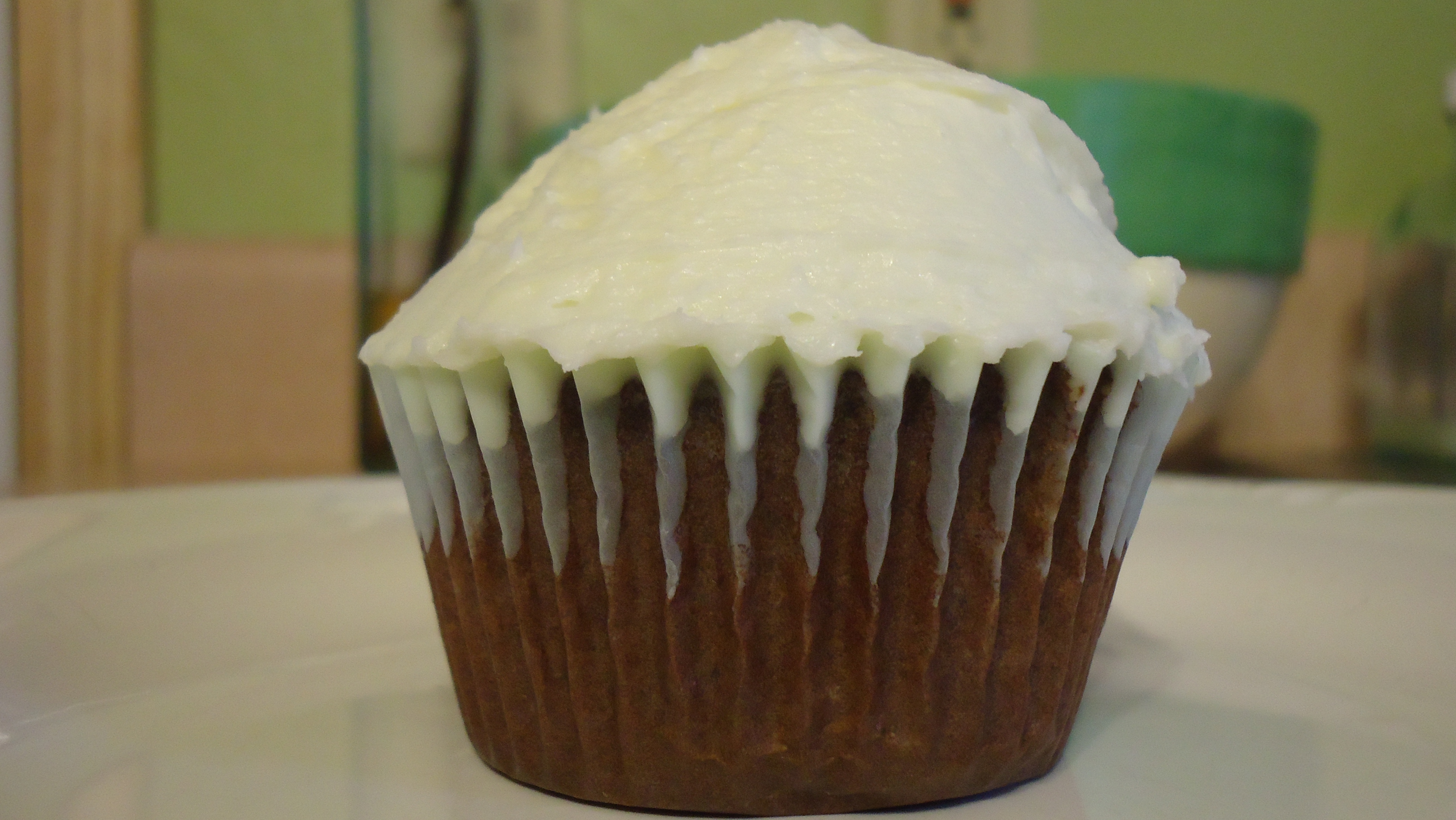
Cream cheese frosting is a classic companion to carrot cake and red velvet cake, but it can certainly be used for a variety of cakes or cupcakes.  I’m not sure who decided that blending cream cheese with powdered sugar, butter, and vanilla extract would be a good idea, but thank goodness they did, eh?

Ingredients

  • 8 ounces cream cheese, softened
  • 1/2 cup butter, softened
  • 4 cups powdered sugar
  • 2 1/4 teaspoons vanilla extract

In a mixing bowl, cream together cream cheese and butter.

Add powdered sugar, one cup at a time, beating after each addition.

Add vanilla and beat well.

Store frosted cake or cupcakes in the refrigerator to be on the safe side.  We are talking about cream cheese, after all.

Nut Roll


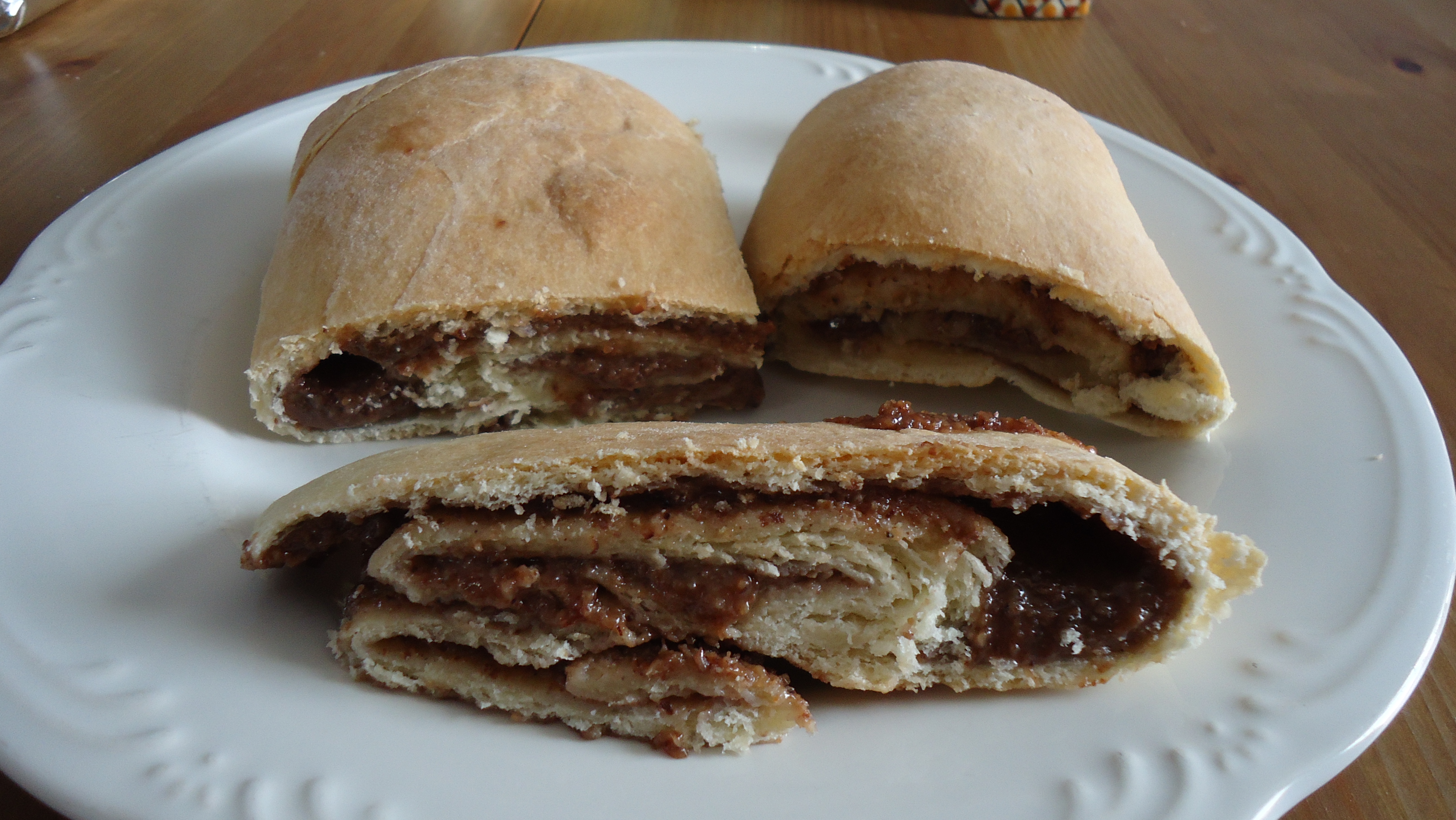
Food is a powerful link to heritage and cultural tradition.  My paternal grandparents, Andy and Zella Kozusko, prepared many Slovak and Hungarian foods at holidays, and while I refused to eat pig’s feet, hrudka (eggs and milk cooked together to make a sort of “cheese”), and hard-boiled eggs soaked in beet juice, I always loved nut roll.  Zella made nut rolls and poppy seed rolls each Christmas and Easter, and I planned to use her recipe, which called for fresh yeast, for this baking adventure.  I did a bit of reading about fresh yeast, and learned the hard way that when the yeast experts say fresh yeast is highly perishable, they really mean it.  The cake I bought went moldy in less than a week, even though it wasn’t anywhere near its expiration date.  Oh well.

Since I had plenty of active dry yeast, I found another recipe online and used jars of nut filling instead of making my own from scratch.  While these turned out to be very tasty, all but one of my four rolls split while baking, oozing filling out the sides.  Next time, I think I’ll make my own filling, not roll the dough as thin, and not spread the filling on as thick.  I also hope to learn the secrets of perfect nut roll preparations from a friend of my mom’s who bakes them each Christmas with his family, which Mike jokingly called my “nut roll internship.”  I can only hope!

Ingredients

  • 6-7 cups flour
  • 3 tablespoons sugar
  • 2 packages active dry yeast (1/4 ounce each)
  • 1 teaspoon salt
  • 8 ounces sour cream
  • 1 cup butter, softened
  • ½ cup water
  • 3 eggs, lightly beaten
  • 3 jars nut filling

Preparation

Grease a large bowl and set aside.

In a mixing bowl, combine two cups flour with the sugar, yeast, and salt.

In a medium saucepan, combine butter, sour cream, and water.  Heat to 120 – 130 degrees, then combine with flour mixture and beat for two minutes.

Add ½ cup flour and eggs.  Beat for two minutes.

Using a wooden spoon, stir in enough flour to make a soft dough, then turn onto a floured surface and knead until smooth and elastic, about 8 minutes.

Place in greased bowl, turning over once to coat, and let rise until doubled in size.

Line two baking sheets with parchment paper.

Punch dough down and divide into four portions; form each portion into a ball, then press it down and roll it into a 12×12 square.

Spread each square with a thin layer of nut filling, leaving an edge of about 1 inch on each side.  Roll up into a log, pinching the seam to seal it and carefully tucking the ends under.  Place seam-side down on the baking sheet.

Cover and let rise in a warm place until doubled in size; I preheat my oven while the dough is rising to help it along.

Bake at 350 degrees for 20-25 minutes, until lightly browned.

Cool on parchment on wire racks.

Sugar Cut-Outs


Several Thanksgivings ago, I delighted my family with an array of pumpkins, acorns, and what my cousins Barb and Robb called anatomically correct turkeys.  In truth, the turkeys weren’t quite anatomically correct, but rather decked out with sprinkles and colored sugar to make them look as festive as real toms do.

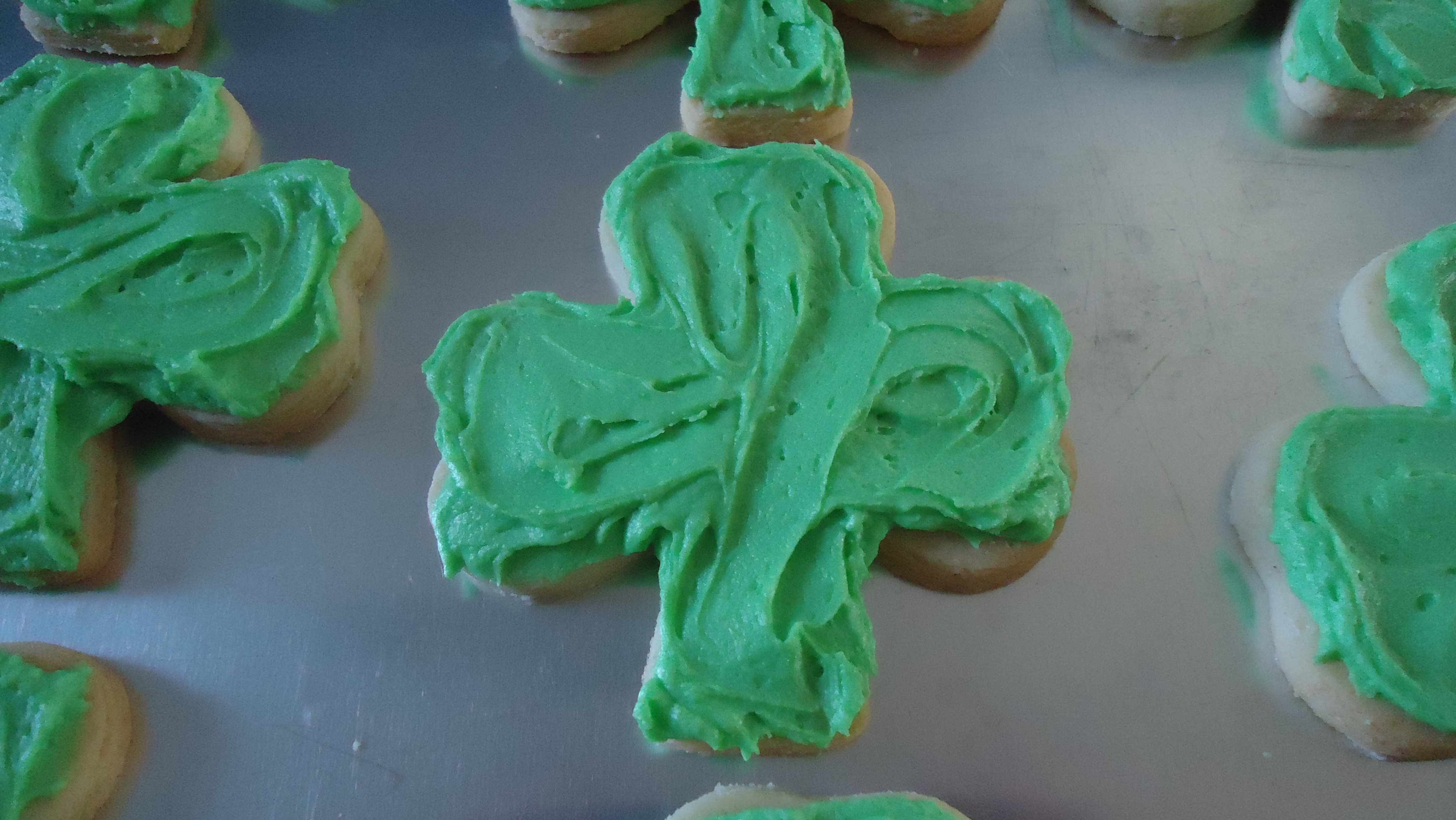
Since St. Patrick’s Day is this Saturday, and I’m baking up a storm for Mike’s Masonic lodge meeting tomorrow night, I decided to do some shamrock cut-outs.  You could easily sprinkle these with green sugar, but I iced them with the almond-vanilla frosting recipe that was passed down to me by my grandmother, Zella.  For the icing recipe, check out Zella’s Icing.

Ingredients

  • ½ cup butter, softened
  • 1 cup sugar
  • 1 egg
  • 2 cups flour
  • 2 teaspoons baking powder
  • ½ teaspoon salt
  • 1 teaspoon vanilla

Preparation

Stir together flour, baking powder, and salt in a medium bowl; set aside.

Cream together butter and sugar until fluffy.

Add egg and beat well.

Add vanilla and about half the flour mixture, beating until combined; beat in remaining flour.

Note: if your dough is too crumbly, you can add just a bit of water or another ¼ teaspoon of vanilla.

Divide dough in half and knead each just slightly until dough sticks together.  Form each half into a disc and wrap in plastic.

Refrigerate until just barely firm, about 20-30 minutes.

Preheat oven to 375 degrees.

Roll dough to 1/8 inch thickness and cut into desired shapes.

Bake for 8-10 minutes, until just golden.

Cool on a wire rack.

Zella’s Icing


This icing frosted my childhood.  My grandmother, Gizella Bodnar Kozusko, used it on each birthday cake and sugar cut-out; it was her frosting of choice for nearly every treat that required, or could simply benefit from, an icing.

Zella was born in Budapest and came to the United States when she was about seven years old; she and my grandpap, Andy, lived conveniently five doors down from my childhood home.  Much of what I learned about baking, I learned from Zella; she was the primary baker in our family, the one who made the birthday cakes, the holiday treats, the desserts for every day.  No visit to their house was complete without a cupcake, cookie, Rice Krispie treat, slice of nut roll, or other confection from her many recipe boxes.

This recipe can be very easily doubled or tripled, when necessary.  It is a sturdy frosting that holds up well for decorating cakes.

Ingredients

  • 1 egg white
  • 3 tablespoons shortening
  • 2 cups powdered sugar
  • Dash of salt
  • 1 teaspoon vanilla extract
  • 1 teaspoon almond extract
  • 1-2 teaspoons water

Preparation

Combine egg white, shortening, salt, and one cup powdered sugar in a mixing bowl.  Beat on low speed until combined, then increase speed to medium, then high, and beat for one minute.

Add additional cup powdered sugar and beat on low speed until combined, then on high speed for one minute.

Add vanilla and almond extracts.  Beat on high speed for one or two minutes, until very well combined.

Check the frosting’s texture; it should be like very, very soft peanut butter and very easily spreadable.  If necessary, add one to two teaspoons of water to thin the frosting and beat well to combine.

Note: when doubling or tripling the recipe, it’s very important to beat the mixture well after each addition of powdered sugar, then for a few minutes after the additions of extract and water.

Chocolate Chip Cookies

Home.  Comfort.  Family.  Love.  The chocolate chip cookie embodies these concepts unlike any other baked good.  Let’s thank Ruth Graves Wakefield, proprietor of the Toll House Inn, for the invention of this iconic treat, a staple in the baking repertoires of moms, grandmas, aunts, godmothers, kind neighbor ladies, and bloggers.

I could bake chocolate chip cookies in my sleep.  They’re Mike’s favorites from my arsenal, always his answer when I ask what I should bake.  The recipe below is based on the Toll House recipe, with a few very minor tweaks.

Ingredients

  • 2 ¼ cups flour
  • 1 teaspoon baking soda
  • 1 teaspoon salt
  • 1 cup butter, softened
  • ¾ cup brown sugar (very generously packed)
  • ¾ cup white sugar
  • 2 eggs
  • 2-3 teaspoons vanilla extract*
  • 1 12-ounce bag milk chocolate chips

*I like a lot of vanilla in my cookies, but you could stick to the standard 1 1/4 teaspoons that the original recipe calls for if you like.

Preparation

Preheat oven to 375 degrees.

In a medium bowl, combine flour, baking soda, and salt; set aside.

In a mixing bowl, cream together butter and sugars until fluffy.

Add eggs, one at a time, beating well after each addition.

Add vanilla, beating well.

Add half the flour mixture and beat; add remaining flour and beat until well-combined.

Stir in chocolate chips.

Using a two-inch cookie scoop, place on cookie sheets about two inches apart; I bake six cookies at a time on each baking sheet.

Bake for 11-12 minutes, until nicely browned.

Cool on a wire rack.

Challah


Shabbat Shalom, my friends!  Let’s continue our adventures in interfaith baking with challah, the traditional braided bread of Shabbat.

This recipe is a labor-intensive, yet rewarding pursuit that yields two challot.  It requires a commitment to several minutes of kneading, then a few hours of patience as the dough rises, rests, and rises again.

Mike is a Reform Jew, and we do not follow kashrut, or dietary laws, which include never mixing meat and dairy in the same meal.  I am no kashrut expert, but those following kashrut would not serve bread made with milk and butter with a meat meal; I have read that this recipe can be converted to pareve, or neutral, by using water and pareve margarine.

Ingredients

  • 4 ½ to 5 cups flour
  • 1 package active dry yeast
  • 1 1/3 cups milk
  • 3 tablespoons butter
  • 3 tablespoons sugar
  • ½ teaspoon salt
  • 2 eggs
  • 1 egg yolk, well-beaten, for brushing on loaves

Preparation

Lightly grease a large bowl; set aside.

In a mixing bowl, combine yeast with two cups flour.

In a medium saucepan, combine milk, butter, sugar, and salt.  Heat until just warm, and butter is almost melted.

Pour milk mixture into flour mixture, then add eggs.

Beat on medium speed for 30 seconds, then scrape the sides of the bowl and beat on high speed for three minutes.

Remove mixing bowl from mixer stand; add two additional cups of flour, one cup at a time, and stir with a wooden spoon until well-combined.

Turn dough onto a lightly floured surface and measure out 1 additional cup of flour to incorporate as you knead the dough.  You may need as little as an additional half-cup, or as much as the whole cup, depending on the texture of your dough.

Knead for 6-8 minutes, until dough is smooth and elastic.

Place dough in greased bowl and turn over to coat both sides.  Let rise in a warm place until doubled in size, about 1 hour.

Punch dough down and turn out onto a lightly floured surface.  Divide into six even portions and let rest for 10 minutes.

Roll each portion of dough into an 18-inch rope and place individual ropes on a baking sheet.  Braid two sets of three ropes together to form two separate loaves; be sure to tuck in the ends so they don’t come apart.  Cover and let rise for 30 minutes.

Preheat oven to 375 degrees.

Brush loaves with egg yolk.

Bake for 25-30 minutes, until the loaves sound hollow when tapped.

Cool on a wire rack.
Cocoa Meringues


What does one do with leftover egg whites from yesterday’s yolk-only hamantaschen?  She makes meringues!

Meringues are simple ingredient-wise, but they definitely take patience.  Whipping egg whites to stiff peaks can take upwards of 10 minutes, depending on your mixer, so this isn’t a recipe you can rush.  The result, though, is a light, airy, fluffy cookie that is definitely worth the time.

Ingredients

  • 2 egg whites
  • 1/2 teaspoon vanilla extract
  • 1/8 teaspoon cream of tartar
  • 2/3 cup sugar
  • 2 tablespoons unsweetened cocoa powder

Preparation

Preheat oven to 300 degrees.

Line a baking sheet with parchment paper.

In a small bowl, combine sugar and cocoa powder; set aside.

In a mixing bowl, beat together egg whites, vanilla, and cream of tartar until soft peaks form.

With the mixer running on medium speed, add sugar/cocoa mix, one tablespoon at a time, until combined, gently scraping the sides of the bowl as necessary.

Continue beating at high speed until stiff peaks form.

Drop by rounded teaspoons, spacing about two inches apart.

Bake for 20-22 minutes, until bottoms are very light brown.

Cool completely on the baking sheet.

Hamantashen (Poppy Seed)


It’s almost Purim!  Time to celebrate the triumph of the Jews over Haman’s plot with some tasty cookies.  In case you’re not familiar with story of Purim, visit http://www.aish.com/h/pur/b/48970736.html.

Anyway…as I’ve mentioned, Mike and I are an interfaith Jewish-Catholic couple, so we have a lot to celebrate.  This was my first experience making hamantashen, and I must say I was thoroughly humbled by the process.  Folding circles of quick-to-tear dough into pinwheels/triangles is much, much more difficult than one may imagine.  Next time, I’ll try a different recipe, but if I were to make these again, I wouldn’t chill the dough for nearly as long so that it would remain as pliable as possible.

Ingredients

  • 1 cup butter, cut into small pieces, softened
  • 2 egg yolks
  • Zest of 1 large orange
  • 1 cup powdered sugar
  • 2 ¼ cups flour
  • 1/8 teaspoon salt
  • 1 10-ounce jar poppy seed filling

Preparation

Combine butter, egg yolks, orange zest, flour, and salt in a food processor.

Pulse until dough forms.

Turn onto a lightly floured surface and knead very gently, just until the dough comes together.  Chill briefly, about 20 minutes, until dough is easy to handle.

Preheat oven to 350 degrees.

Line baking sheets with parchment paper.

Roll out dough to ¼ inch thickness and cut with a round, 2 ½ inch cookie cutter or drinking glass.  Gently press the circles between your palms to make them more pliable if necessary.

Place circles on your cookie sheet, and using the tip of your finger, lightly brush the edge of each circle with water.

Place about 1 teaspoon of filling in the center of each circle.

Fold dough to form a pinwheel/triangle shape; begin with the left side and fold inward, then fold the right side inward, leaving some of the filling exposed.  Fold up the bottom, tucking the right bottom edge under the right side of the triangle, and folding the left bottom edge over the left side of the triangle.

Bake for 15 minutes, until light golden brown.

Cool on a wire rack.