Butter Pecan Cake (& Cupcakes)

butterpecancakeMy mom, Genny, is not really a flowers-on-Mother’s-Day kind of mom. She’s more likely to plant a garden of flowers than to keep them in a vase on her table…and then mow the lawn, mulch the flower bed, and trim the hedges, all before noon. Her energy at the age of 68 far exceeds that of my energy at the age of 37. She is a force of nature, indeed.

Although Genny isn’t a big consumer of sweets, I suspect she’ll have at least a slice of this butter pecan cake, which I’ve made for her to celebrate Mother’s Day. This recipe strikes me as very Southern, or like something you’d find in the pages of Country Woman magazine – which is fitting because Genny grew up in what used to be a fairly rural part of Maryland and is now a much more populous community for commuters to Baltimore and DC.

This recipe makes quite a quantity, turning out one 8-inch round cake and 24 cupcakes. You could certainly make this as a three-layer cake, or as a two-layer cake with a dozen cupcakes, or just three dozen cupcakes. Whatever you decide, I’m sure your results will be tasty. Happy Mother’s Day!

Ingredients

For the butter pecans (make these first – you need them for both your cake and frosting)

  • 2 cups chopped pecans
  • 4 tablespoons salted butter

For the cake (or cupcakes)

  • 3 cups flour
  • 2 teaspoons baking powder
  • 1 cup salted butter, at room temperature
  • 2 cups granulated sugar
  • 1 tablespoons vanilla extract
  • 4 large eggs
  • 1 cup whole milk
  • 1 1/2 cups butter pecans

For the frosting

  • 1 cup unsalted butter, at room temperature
  • pinch of salt
  • 3 – 3 1/2 cups powdered sugar
  • 1 teaspoon vanilla extract
  • 1/2 cup butter pecans, chopped to a finer consistency than what you’re using in the batter

Preparation

For the butter pecans:

Preheat oven to 350 degrees. Line a rimmed baking sheet with foil, extending the foil over all four sides.

Place pecans and butter onto the baking sheet; bake for about 8-9 minutes, stirring frequently, until pecans are toasted and fragrant. Be careful not to burn them – pecans can burn easily after several minutes in the oven.

Remove pecans from the baking sheet and place on a platter to cool completely before using.

For the cake or cupcakes:

If you’re making a cake or cakes: grease and flour your baking pans or spray with baking spray. I lined the bottom of my baking pan with a circle of parchment as well.

If you’re making cupcakes: line cupcake pans with paper liners.

In a large bowl, combine flour and baking powder; set aside.

In a mixing bowl, cream together butter, sugar, and vanilla until light and fluffy. Add eggs, one at a time, beating well after each.

Add flour mixture and milk alternatively in three batches, beginning and ending with the flour. Stir in butter pecans.

Pour batter into prepared pans, or, for cupcakes, fill cupcake wells about 2/3 full.

Bake cakes for 25-30 minutes or cupcakes for 18-20 minutes, until a cake tester comes out clean.

Cool cake or cupcakes completely before frosting.

For the frosting:

In a mixing bowl, beat butter on medium speed for about 1 minute.

Add 3 cups of powdered sugar and beat on low speed until the sugar is completely incorporated into the butter. I cover my mixer with a towel to prevent a sugar storm.

Add vanilla and beat until combined; check your consistency and if it is too thin, add another 1/2 cup of powdered sugar. Stir in butter pecans.

Frost cakes and cupcakes using an offset spatula. I used a 1-inch cookie scoop and dropped scoops of frosting onto each cupcake first, then used all of the leftover frosting on the cake. You wouldn’t want to try to pipe this frosting because of the pecan pieces, but the old-fashioned look of hand-frosted treats suits this recipe very well.

Orange Coffee Cake with Chocolate Streusel

orangeccOrange and chocolate are great friends. Both grow in tropical climates, and as always, I marvel at the creativity of the individual who once thought, “hmm, I like chocolate, and I like oranges…I wonder what would happen it I paired chocolate and orange together?” Brilliance, that’s what.

I adapted the recipe for this coffee cake from one in the Better Homes & Gardens Baking book, using orange zest instead of chopped peel and milk chocolate chips instead of semi-sweet.

The great thing is that once you zest your orange, you can use the juice from it in this recipe as well. You could probably do without the pecans if you wanted to, but they add a nice crunchy texture.

Ingredients

For the chocolate streusel

  • 1/2 cup flour
  • 1/2 cup brown sugar
  • 1 tablespoon cocoa powder
  • 4 tablespoons butter, cut into small pieces
  • 1/2 cup chopped pecans
  • 1/2 cup chocolate chips

For the orange coffee cake

  • 3 3/4 cups flour
  • 1 tablespoon baking soda
  • 1 teaspoon baking powder
  • 3/4 teaspoon salt
  • zest of 1 medium orange
  • 12 tablespoons butter, room temperature
  • 2 cups sugar
  • 2 eggs
  • 8 ounces sour cream
  • 3/4 cup milk
  • 1/4 cup orange juice
  • 1 1/2 teaspoons vanilla

Preparation

Preheat oven to 350 degrees. Grease a 9 x 13 baking pan.

In a medium bowl, combine the 1/2 cup flour, brown sugar, and cocoa powder. Add butter and rub in with your hands until the mixture has a texture like coarse crumbs. Stir in pecans and chocolate chips; set aside.

In a large bowl, combine flour, baking soda, baking powder, salt, and orange zest. Mix well, using your fingers to distribute the zest as evenly as you can.

In a mixing bowl, beat butter and sugar for 2 minutes. Add eggs, 1 at a time, mixing well after each addition. Add sour cream, milk, orange juice, and vanilla and beat until well-combined.

Add flour mixture in several batches, beating until combined as you go. Continue beating for about 2 minutes until the mixture is smooth.

Pour half of the batter into your prepared pan. Top with half the streusel mixture and use the back of a spoon to gently press the streusel into the batter. Repeat with remaining batter and streusel.

Bake for 50-55 minutes, until a cake tester comes out clean. Remove from oven and cool on a wire rack.

This cake can be served warm, or at room temperature.

Roman’s Holy Communion Cake

communioncakeMy nephew Roman made his first Holy Communion yesterday, a huge rite of passage for young Catholic kids. When I was little, I remember “playing communion” with Nilla wafers, and I recall my own first communion very well. I have the dress and veil I wore in a cedar chest in my bedroom, along with other family heirloom garments like my grandmother’s wedding dress and my grandpap’s Navy sailor suit.

Roman requested a chocolate cake with chocolate icing for his communion celebration, and the look on his face when he first saw it was priceless. He got an enormous piece, of course.

I’ve made this cake in cupcake form before, and adapted the recipe for two 8-inch rounds here. This would also make at least 24 cupcakes, or a 9 x 13 sheet cake.

Ingredients

Dark Chocolate Cake

  • 3 cups flour
  • 6 tablespoons cocoa powder
  • 2 cups sugar
  • 2 teaspoons baking soda
  • 1 teaspoon salt
  • 2 tablespoons vinegar
  • 2 teaspoons vanilla
  • 6 tablespoons vegetable oil
  • 2 cups water

Chocolate Buttercream

  • 1 cup butter, at room temperature
  • 1/2 teaspoon salt
  • 3 1/2 cups powdered sugar
  • 1/2 cup cocoa powder
  • 3-4 tablespoons milk
  • 3 teaspoons vanilla extract

Vanilla Buttercream (for accents)

  • 4 tablespoons butter
  • Scant 1 cup powdered sugar
  • About 2 tablespoons milk
  • 1 teaspoon

Preparation

For the cake

Preheat oven to 350 degrees. Spray two 8-inch round cake pans with baking spray. Line the bottom of each pan with a circle of parchment, and spray a second time.

In a large mixing bowl, combine flour, cocoa powder, baking soda, and salt. Make three wells; place vinegar in one, vanilla in the second, and vegetable oil in the third. Add water and stir very well to combine; the batter will bubble up just slightly as the ingredients come together. Your batter will be fairly thin, but should be mostly lump-free.

Divide batter evenly between the pans. Bake for about 30 minutes, until a cake tester comes out clean. Be careful not to over-bake; the sides of these cakes set up pretty quickly and can burn if you let them go too long.

Remove cakes from oven and carefully run a knife around each edge to loosen them from their pans if they’ve stuck at all. Allow to cool for about 5 minutes in the pans, then carefully flip out onto wire racks (removing the parchment for each cake bottom) to cool completely.

For the frostings

To make the chocolate buttercream frosting, in a large bowl, sift together powdered sugar and cocoa powder and set aside.

In a mixing bowl, beat butter on medium speed for about 1 minute; add salt and beat another 30 seconds.

Add powdered sugar and cocoa and beat on low speed to incorporate as much sugar into the butter as you can.  I cover my mixing bowl with a kitchen towel during this step to prevent a sugar storm.

Add three tablespoons milk and two teaspoons vanilla extract; beat for three minutes.

Scrape down the sides of the mixing bowl and add the final teaspoon vanilla extract, then beat for another minute.

To make the vanilla buttercream frosting, in a medium bowl, sift powdered sugar and set aside.

In a mixing bowl, beat butter on medium speed for about 1 minute; add salt and beat another 30 seconds.

Add powdered sugar and beat on low speed to incorporate as much sugar into the butter as you can.

Add 1 tablespoon milk and the vanilla; beat for three minutes. Add remaining milk a half-tablespoon at a time to reach a consistency that can be easily piped.

To assemble and decorate

Flip one cake upside-down onto your cake plate; spread a medium-thin layer of frosting on top. Carefully place your second cake on top of the first layer and frost the top, then the sides.

Fit a piping bag with your desired tip; pipe decorations as you like. I decorated Roman’s cake pretty simply, with his name, a top border that looked a bit like rosary beads, and crosses on the sides.

RomanHCHere, Roman marvels at his cake (and did not lick it). 

Neapolitan Cupcakes

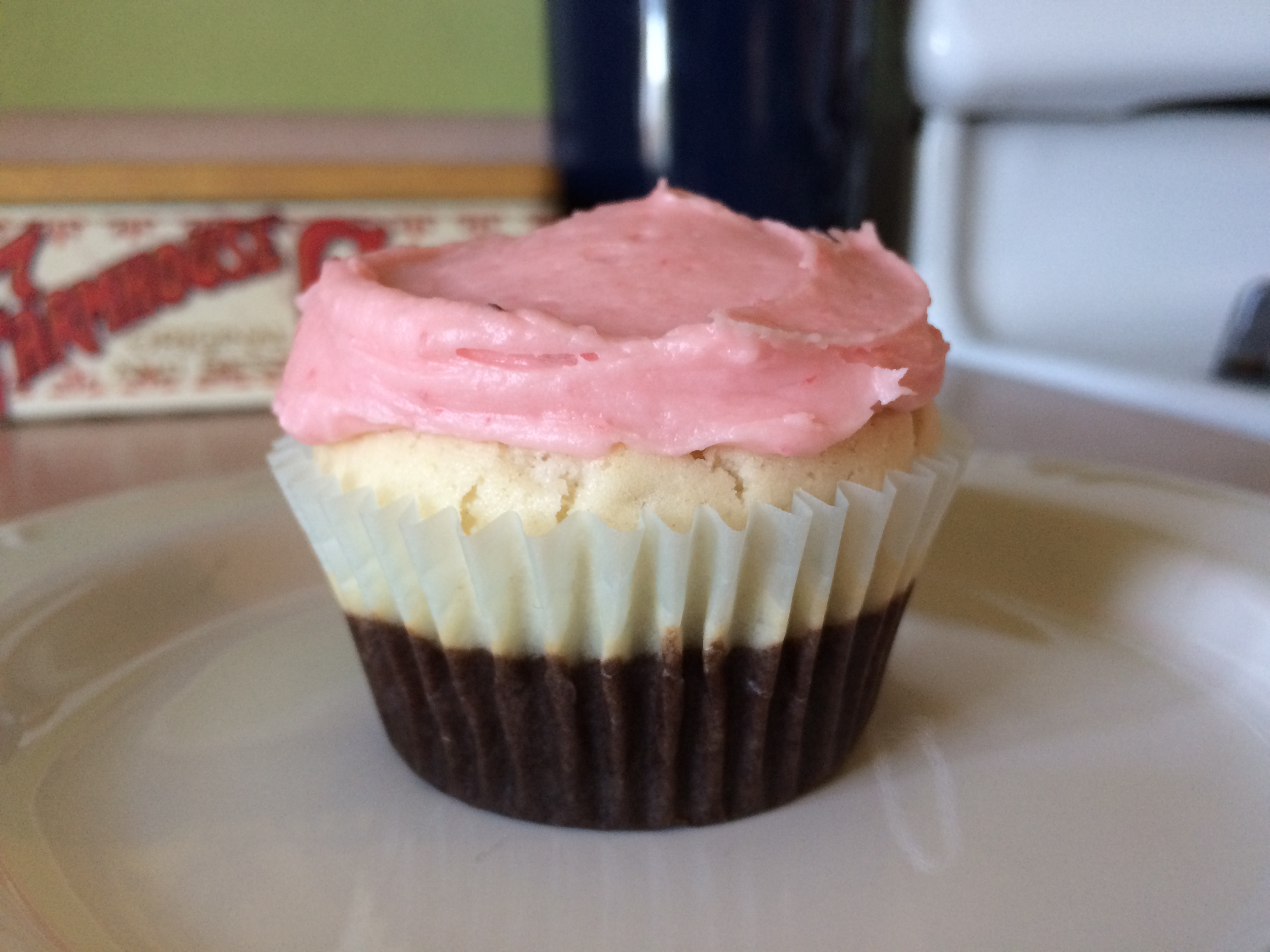
neapolitan cupcakesMeet the most adorable cupcakes I’ve ever baked. I wanted to make something challenging today, and I must say: mission accomplished.

These treats are a many bowl, multi-step endeavor, but they are worth it. I adapted this recipe in both ingredients and process from one I originally saw on another blog called Cooking Classy, using vanilla extract instead of scraped seeds from a vanilla bean and a different recipe for the strawberry frosting altogether.

The two batters have very different textures, and you’ll want to make sure you use the “spread with a toothpick” method to get the vanilla layer to fully cover the chocolate layer as I’ve outlined in the instructions below. While I did have some specs of chocolate pop through the top of my vanilla layer, it’s easy to cover those with frosting.

I’ve also included plenty of tips that saved me time (and dishes, being a baker without a dishwasher) throughout the process. I recommend reading through the recipe a few times to get familiar with it, as well as with your ingredients, before you start. You’ll end up with a few extra egg yolks from this, but you can reserve those for another use (mine are destined for lemon curd).

Ingredients

Vanilla Cupcake Layer

  • 1 1/2 cups cake flour
  • 1 1/2 teaspoons baking powder
  • 1/4 teaspoon salt
  • 7 tablespoons butter, room temperature
  • 3/4 cup sugar
  • 1/2 cup milk (any kind but skim)
  • 1 teaspoon vanilla extract
  • 3 egg whites (reserve one of your yolks for the yolk in the chocolate layer)

Chocolate Cupcake Layer

  • 1/3 cup unsweetened cocoa powder
  • 1/2 teaspoon baking soda
  • 1/2 cup boiling water
  • 4 tablespoons melted butter
  • 2 1/2 tablespoons vegetable oil
  • 3/4 cup granulated sugar
  • 1/4 cup heavy cream
  • 1 teaspoon vanilla extract
  • 1 whole egg
  • 1 egg yolk
  • 1 cup flour

Strawberry Buttercream Frosting

  • 8 tablespoons butter, at room temperature
  • 1/3 cup strawberry puree
  • About 3 cups powdered sugar

Preparation

Preheat oven to 350 degrees. Line two 12-cup cupcake tins with paper liners. Good news: this recipe makes exactly 24 cupcakes.

To make the cupcakes, begin by making the chocolate base for your chocolate batter first, then as it is cooling, make your vanilla batter and finish your chocolate batter once your base is cool. This will save time, believe me!

In a small mixing bowl, combine cocoa powder and baking soda. Add boiling water and whisk until smooth; allow to cool while you prepare the vanilla batter.

Prepare the vanilla batter:

In a small bowl, sift together cake flour, baking powder, and salt; set aside. In a glass measuring cup, combine milk, egg whites, and vanilla extract and whisk together until well-combined.

In a mixing bowl, combine butter and sugar. Cream together until light and fluffy.

Add the flour mixture and milk mixture alternatively in three batches, beginning and ending with the flour mixture. You want to scrape your bowl very, very well and frequently throughout the process. Your vanilla batter will be light and fluffy when it is finished; almost mousse-like. Set vanilla batter aside while you make the chocolate batter.

Prepare the chocolate batter:

In a mixing bowl, combine melted butter, vegetable oil, sugar, and mix until well-combined. Add egg, egg yolk, and vanilla; mix until combined. Add chocolate base, then heavy cream, mixing after each addition. Add flour, beating on low speed until combined.

Using a 2-inch cookie scoop, scoop chocolate batter into each cupcake well. If you don’t have a cookie scoop, you can use 2 tablespoons of batter in each well.

Using the 2-inch cookie scoop again, scoop vanilla batter and carefully layer over the chocolate batter. Use a toothpick to gently spread the vanilla batter, which is much lighter and fluffier than the chocolate batter, over the chocolate layer completely. Your wells should be about three-quarters full.

Bake for 18-20 minutes, until a cake tester comes out clean. Remove from oven, and remove cupcakes from the pans onto wire racks to cool completely.

Prepare the strawberry buttercream:

If you’ve never made strawberry puree, it is very easy. Place strawberries in a food processor (or blender) and puree until smooth. You can pass the puree through a sieve to remove the seeds if you like, but I leave mine in.

In a mixing bowl, beat butter on medium speed for about 1 minute. Add the first 2 cups of powdered sugar about 1/2 cup at a time, mixing until very well-combined.

Add strawberry puree in small batches, mixing well between each addition, then add enough additional powdered sugar – mine took about 1 cup – to make a stable buttercream.

Frost cupcakes using a small offset spatula. You can pipe them if you prefer, but I like the old-fashioned look of a hand-frosted cupcake.
 

Lemon Pound Cake with Poppy Seed Filling

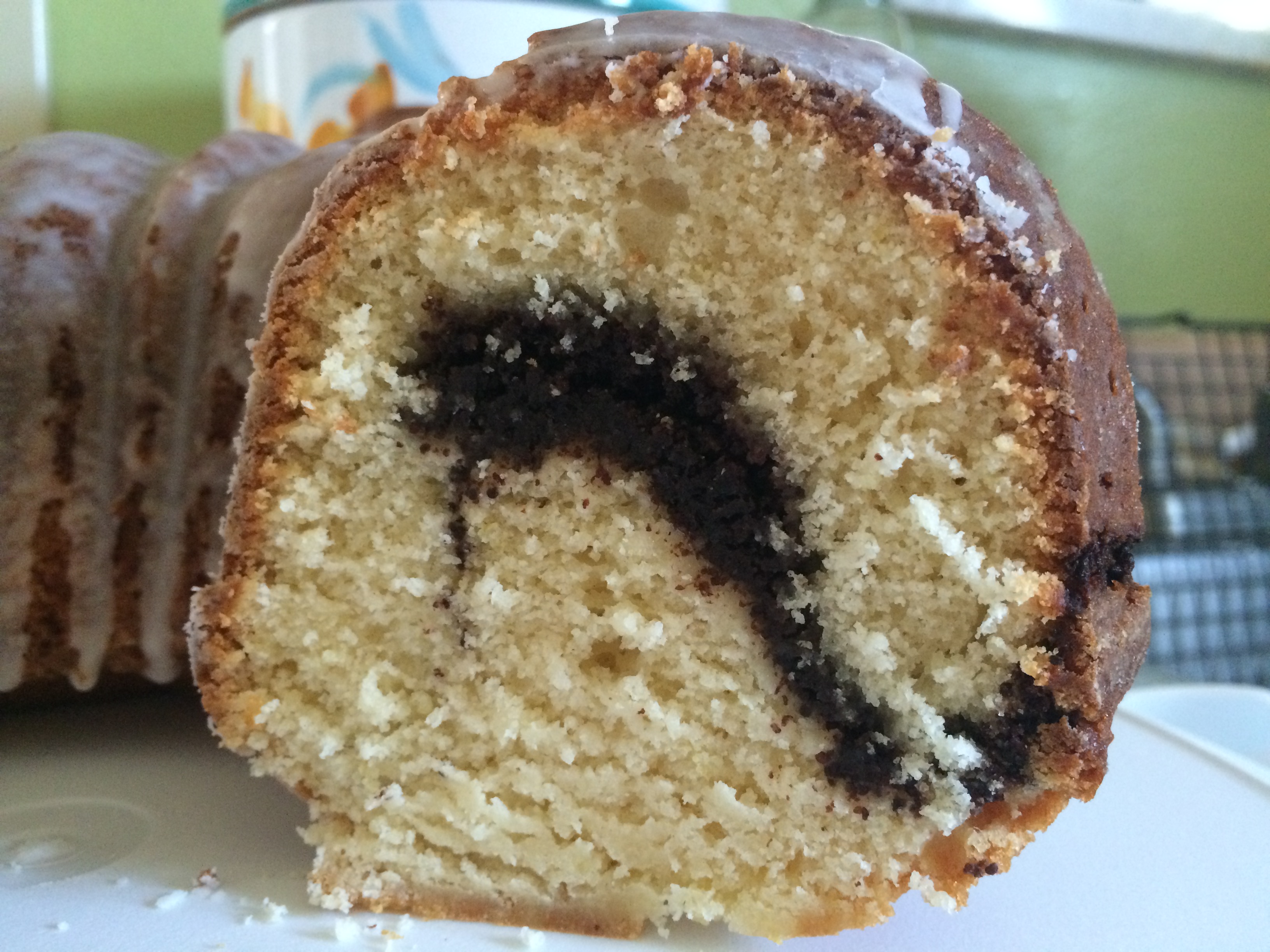
lemonpcwithpoppyYesterday, I wondered: what should I do with a ton of leftover poppy seed filling? I should slather it into a lemon pound cake, that’s what.

This cake calls for lemon extract, and believe me when I tell you that you won’t be able to achieve the necessary level of lemony goodness in it with zest and juice alone. The fine folks at McCormick’s (which Mike always reminds me is a Maryland-based company) make lemon extract that you’ll likely find in the baking aisle at your local grocery store. It is absolutely worth the $5.

If you’d rather not use the poppy seed filling, you can omit it and just serve your cake as-is. I’m a huge fan of poppy seed though, so for me this is pretty close to pound cake heaven. You can serve it warm without glaze, or wait for it to cool and glaze it. Either way, it is delicious.

Ingredients

For the cake

  • 1 1/2 cups poppy seed filling
  • 4 teaspoons lemon juice
  • 3 cups flour
  • 2 teaspoons baking powder
  • 1/2 teaspoon salt
  • 1 cup butter, softened
  • 2 cups sugar
  • 4 eggs
  • 1 1/2 teaspoons vanilla extract
  • 1 1/2 teaspoons lemon extract
  • 1 cup 2% milk
  • zest of 1 medium lemon

For the glaze

  • 2 cups powdered sugar
  • About 2 tablespoons lemon juice

Preparation

Preheat oven to 350 degrees. Grease a bundt pan very well, then dust with flour.

In a small bowl, combine poppy seed filling and 4 teaspoons lemon juice, mixing well; set aside.

In a medium bowl, combine flour, baking powder, and salt; set aside.

In a mixing bowl, beat butter and sugar together until light and fluffy. Add eggs, one at a time, beating well after each. Add vanilla and lemon extracts and mix well.

Add the flour and milk alternatively in three batches, beginning and ending with the flour and mixing until just combined after each addition.

Add lemon zest and beat until just combined.

Pour about half of the batter into your bundt pan, then spoon in poppy seed filling and gently spread to create a ribbon. Top with remaining batter.

Bake for 60 minutes or until a cake tester comes out clean. Remove from oven and allow to cool in the pan for about 20 minutes, then carefully invert the cake onto a wire rack and allow to cool completely.

When the cake is cool, combine powdered sugar and lemon juice, about a teaspoon at a time, in a large glass measuring cup. You want a very drizzly consistency for your glaze so that it can easily drip down the sides of your cake. Pour over cake and allow to set before serving.

Remember: if you want to serve this cake warm – and it is dee-lish-ous warm – you can leave it unglazed.

Italian Sugar Cookies

IMG_4140Pennsylvania Macaroni Company is my favorite shop in Pittsburgh’s Strip District. If you’ve never been, you simply must go and marvel at the bins of almonds, the shelves of pasta and olive oil and sauces, the room with the cheese counter that rivals any I’ve ever seen.

In the room with the bread and fresh pasta, there are boxes of mixed bakery-style cookies, and in those boxes are cookies like these. Tender, vanilla-scented, covered in just the right amount of icing. The kind of cookies your grandmother made, and you never forgot.

I enjoy recipes with lots of ingredients and advanced techniques for the fun challenge they present, but there is also great comfort in baking something simple. These cookies are easy to prepare and could take on any color icing, making them ideal for holidays and celebrations.

Ingredients

For the cookies

  • 3 cups flour
  • 1/8 teaspoon salt
  • 3 teaspoons baking powder
  • 3/4 cup shortening
  • 3/4 cup sugar
  • 3 eggs
  • 1 1/2 teaspoons vanilla extract

For the icing

  • 1/4 cup milk
  • 2 tablespoons butter, melted
  • 1/2 teaspoon vanilla extract
  • 2 1/2 cups powdered sugar
  • food coloring, if desired

Preparation

Preheat oven to 400 degrees. Line several baking sheets with parchment paper.

In a medium bowl, combine flour, baking powder, and salt; set aside.

In a mixing bowl, cream shortening and sugar until light and fluffy.

Beat in eggs and vanilla.

Add flour mixture in three batches, mixing between each. Dough will pull away from the sides of the bowl when it is the right consistency.

Using a 2-inch cookie scoop, scoop dough and roll into balls. (You can use a smaller scoop if you like; next time, I’ll probably use a 1-inch scoop.) Place dough on parchment-lined baking sheets about 1 inch apart.

Bake for 8-10 minutes, until lightly browned. Remove to wire racks to cool before dipping in icing.

To make the icing, in a small bowl, combine milk, butter, vanilla, and powdered sugar until smooth. Tint with food coloring if desired.

Dip the tops of the cookies in icing; place on wire racks and allow excess to drip off. Let stand until set, then store in an airtight container at room temperature.

Orange Almond Cake (gluten-free!)

orange almond cakeWhat exactly is gluten? In simple terms, it is a protein present in wheat, which provides stability to breads, cakes, cookies, and other baked goods. Gluten-free baking relies on other ingredients that can bind together and provide structure, ranging from eggs and nut flours to thickeners like xantham gum.

As a savvy baker, I understand that gluten-free recipes can bring about a number of challenges, and I’ve been sorely disappointed by nut-based, high-egg-volume cake recipes in the past. I baked this as a trial run for our seder, which will take place on the first night of Passover in just a couple of weeks. The recipe came from a food blogger in Australia, hence the use of grams below. The preparation is fascinating, as I think you may agree once you read the directions. I’m happy to say that it turned out very well; my plan for the seder is to add some slices almonds to the top, which will brown nicely during baking.

Ingredients

  • 2 medium oranges
  • 6 eggs, at room temperature
  • 250 grams sugar, processed to super-fine consistency*
  • 250 grams almond meal
  • 1 teaspoon baking powder

*To make regular sugar super-fine, place it in a food processor fitted with a steel blade and pulse several times until you get a consistency like sand.

Preparation

Wash the oranges well. Place them in a large cooking pot with plenty of water and bring them to a boil. Turn down to a simmer, and simmer for 2 hours, checking frequently. Remove oranges from the water and allow to cool completely.

Preheat oven to 375 degrees. Line a 9-inch springform pan with parchment, extending the paper over the sides.

Remove the ends of the oranges, which can be bitter, and place the oranges, skin and all, into a food processor. Pulse to a smooth consistency.

In a large bowl, whisk eggs and sugar together very well. Add orange puree and whisk together.

Add almond meal and baking powder, stirring with a wooden spoon to blend completely.

Pour batter into prepared pan and bake for 50-60 minutes, until a cake tester comes out clean. Be careful not to over-bake; the sides and bottom of the cake will darken considerably and you do not want them to burn.

Remove from oven and cool in pan for about 10 minutes; remove the cake from the pan, leaving it in the parchment, and place it on a wire rack to cool completely. Remove parchment; store at room temperature.

Note: this cake is very moist, and according to the original recipe it becomes even more so after a few days. Be sure to store in an airtight container.


Mint Chocolate Brownies

mintbrowniesMy cousin-in-law Robb recently made a mint chocolate brownie and shared the recipe with me. This is the first time I’ve ever made brownies with chocolate syrup, and it definitely won’t be the last. The brownies themselves are fudgy and cake-like at the same time, a texture I’ve never before achieved.

I can see this recipe getting adapted for raspberry or strawberry buttercream and a semisweet or bittersweet chocolate layer on the top. While the original mint recipe Robb sent to me calls for creme de menthe, I didn’t have any in our liquor cabinet (as I would imagine most people don’t). I did a bit of internet searching and found another recipe that incorporated peppermint instead, so I’ve used that here. I also tweaked the peppermint layer to taste, adding vanilla and milk, to soften the mint flavor slightly. The end result is something like an Andes candy, but way, waaay better.

Ingredients

For the brownie layer

  • 8 tablespoons butter, softened
  • 1 cup sugar
  • 4 eggs, beaten
  • 1 16-ounce can chocolate syrup
  • 1 teaspoon vanilla
  • 1 cup flour

For the mint layer

  • 8 tablespoons butter, softened
  • 2 cups powdered sugar
  • 1 tablespoon peppermint extract
  • 1 1/2 teaspoons vanilla extract
  • 1 1/4 tablespoons milk
  • green liquid food coloring

For the chocolate layer

  • 6 ounces milk chocolate chips
  • 6 tablespoons butter

Preparation

Preheat oven to 350 degrees. Grease a 9 x 13 baking pan or spray with baking spray.

In a mixing bowl, cream butter and sugar together until fluffy. Add eggs, chocolate syrup, and vanilla and beat on low, then medium speed, until combined. Add flour and beat until combined. Batter will be quite thin. Pour into prepared pan.

Bake for 30 minutes; the top will look shiny and wet, but a cake tester should come out clean.

Cool brownies completely in the pan before adding the mint and chocolate layers.

To make the mint layer, beat butter and powdered sugar on low, then medium speed, until fully incorporated. Add peppermint extract, vanilla, and milk; add green food coloring to tint to a light green color.

Spread evenly over brownies.

To make the chocolate layer, melt chocolate chips and butter together on a very low flame. Cool to room temperature, then pour over mint layer, spreading with an offset spatula to cover completely.

Allow chocolate layer to set before serving.


Shortbread Spiral Cookies

shortbread spiralsAlthough I’ve seen many a spiral cookie in my baking travels, I’ve never made them until today. This easy recipe will make a handy addition to my arsenal, as I can see tinting the dough all manner of colors for various holidays or incorporating cocoa into the dough for a chocolate and vanilla spiral.

I’d also love to experiment with shapes, like the amazing baker at Eugenie Kitchen did with this remarkable heart cookie. Perhaps next year for St. Patrick’s Day, I’ll create a clover cookie not unlike the rainbow heart, with different shades of green – but that will take some practice.

These treats are destined for my goddaughter, Maureen, and her family for St. Patrick’s Day.

Ingredients

  • 2 1/2 cups flour
  • 1 teaspoon salt
  • 1/4 teaspoon baking soda
  • 1 cup butter, softened
  • 1 cup powdered sugar
  • 1 egg
  • 1 teaspoon vanilla
  • 1 1/2 teaspoons almond extract
  • green food coloring

Preparation

In a medium bowl, sift together flour, salt, and baking soda; set aside.

In a mixing bowl, beat butter on medium speed for 2-3 minutes, until light and fluffy. Add powdered sugar and beat until fluffy.

Add egg, vanilla, and almond and beat well – your batter will become slightly clumpy, but once you add the flour mixture, the texture will even out.

Add flour mixture in three batches, beating well between each.

Divide dough in half and tint one half green. Wrap each half in plastic wrap and chill for about 1 hour.

Remove dough from refrigerator and allow to sit at room temperature for just a few minutes.

Lightly dust your counter top with flour and roll out the plain half of the dough first; you will want to create a square that is about 8 x 8. Roll out your green dough next, then place it on top of your plain dough. If your dough isn’t completely square, that’s okay; you can cut the edges to make a square and roll the scraps together to make marble cookies*.

Gently press the two layers together by lightly rolling with your rolling pin. Carefully roll up your dough to create a log, pressing gently to tighten the roll as you go. Wrap the log in plastic wrap and chill for about 10-15 minutes.

Preheat oven to 375 degrees. Line three baking sheets with parchment or foil.

Remove the log from the fridge and unwrap. Slice into 1/2 inch cookies, turning the log every few slices to keep it round. Place cookies about 2 inches apart on the baking sheets.

Bake 10-12 minutes, until edges are just beginning to turn golden. Remove from oven and cool on baking sheets for 1-2 minutes, then remove to a wire rack to cool completely.

*If you had to trim your dough to make a square, take your scraps and knead them together gently, creating a marbled ball of dough. Roll into a log, then chill, slice, and bake as above.


Chai Tea Cupcakes

chaiteacupcakesThe Better Homes & Gardens Baking Book – an awesome Christmas gift from Mike – bills these treats at chai tea muffins, but their ingredients and preparation method are much more cupcake-like to me. I debated about calling these “cuffins,” or perhaps “muffcakes,” because I’m still on the fence. And besides, it’s fun to make up words.

So, what’s the difference between a cupcake and a muffin? To me, the simple answer is: the kind of fat you use, and how you mix your ingredients. Cupcakes tend to employ butter and a creaming method, where you blend sugar into the butter, then add your other wet and dry ingredients, sometimes alternatively. Most muffins involve vegetable oil, and a process of combining dry ingredients in one bowl and wet ingredients in another, then mixing the wet into the dry. As you’ll see below, these treats use the creaming method and butter – and are in my opinion more cupcake than muffin.

Regardless of what you call them, these treats smell delicious! Were it not for my current No Sweets for Lent endeavor, I would have eaten one the moment my chai nutmeg drizzle had set.

Ingredients

Cupcakes

  • 1 1/4 cups milk
  • 4 chai tea bags
  • 8 tablespoons butter, softened
  • 1 1/2 cups sugar
  • 1 teaspoon vanilla
  • 2 eggs
  • 11/2 cups flour
  • 1/2 cup whole wheat flour
  • 1 1/2 teaspoons baking soda
  • 1/2 teaspoon ginger
  • 1/4 teaspoon salt

Chai Nutmeg Drizzle

  • 3/4 to 1 cup powdered sugar
  • About 5 teaspoons chai tea
  • Dash of nutmeg

Preparation

Heat milk in a saucepan over medium heat until it simmers. Add chai tea bags and steep for 5 minutes. Remove the bags, pressing to release as much tea as you can. Allow to cool.

Preheat oven to 350. Line 24 muffin cups with paper liners; you will likely need an additional 6 liners, as my batch yielded 30.

Combine flour, whole wheat flour, baking soda, ginger, and salt; set aside.

In a mixing bowl, cream butter, sugar, and vanilla until light and fluffy. Add eggs, one at a time, beating well after each addition.

Add flour mixture and milk mixture alternatively in three batches, beginning and ending with the flour and beating until just combined.

Using a 2-inch cookie scoop, scoop dough into muffin cups, filling about 2/3 full.

Bake for 15-20 minutes, until tops are light golden brown and a cake tester comes out clean.

Cool in muffin pans for about 1 minute, then remove to wire racks to cool completely before drizzling.

To make the chai nutmeg drizzle, prepare a cup of chai tea with water and allow it to cool.

In a small bowl, place 3/4 cup powdered sugar and add tea, 1 teaspoon at a time, mixing until you reach your desired drizzling consistency. Add a dash of nutmeg to taste.

Fit a small pastry bag with a plain tip and pipe over cupcakes. Allow to set before serving.