Witch’s Brew Cupcakes

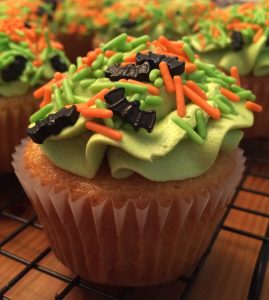
witch-brew-cupcakesAs a person who recently had to give up chocolate because of migraines, I’ve come to sincerely appreciate vanilla. These witch’s brew cupcakes feature a vanilla cupcakes frosted with vanilla buttercream – perfect for those of us who can’t eat chocolate (or simply don’t like it, which I find astonishing).

The bat sprinkles are a Wilton product, which I bought at Target; you can probably find them at your local craft store as well. For a full batch of these cupcakes – which yields 17 – you’ll need two bottles of sprinkles. I mixed up my sprinkles a bit after dipping every few cupcakes to make sure that all of the cupcakes got a few bats.


Ingredients

  • 1 1/4 cups cake flour
  • 1 1/4 teaspoons baking powder
  • 1/2 teaspoon baking soda
  • 1/2 teaspoon salt
  • 2 eggs
  • 3/4 cup sugar
  • 2 tablespoons vanilla extract
  • 1/2 cup canola oil
  • 1/2 cup sour milk*
  • 1 recipe vanilla buttercream
  • Leaf green gel food coloring**
  • Golden yellow gel food coloring**
  • Wilton Bat Sprinkles

*To make sour milk, place 1/2 tablespoon in a glass measuring cup and add enough milk to equal one-half cup total. Stir; let stand for 5 minutes before using. 

**Leaf green and golden yellow gel food coloring are both made by Wilton and should be available to your local craft store. 

Preparation

Preheat oven to 350 degrees. Line cupcake tins with paper liners; this recipe yields 17 cupcakes.

In a medium bowl, whisk together cake flour, baking powder, baking soda, and salt; set aside.

Place eggs in the bowl of a stand mixer fitted with the whisk attachment and beat on medium speed for 30 seconds. Add sugar and continue to beat for another 30 seconds.

Add vanilla and canola oil and beat on medium speed for 1 minute.

Add flour mixture and buttermilk alternatively in three batches, beginning and ending with the flour, scraping the sides of the bowl frequently. Batter will be very thin.

Using a quarter-cup measuring cup, scoop batter into prepared cupcake liners, filling half full.

Bake for 12-13 minutes, until a cake tester comes out clean. Cool on a wire rack before frosting.

Prepare your frosting and use both leaf green and golden yellow gel food coloring to tint to a bright yellow-green.

Fit a 14-inch piping bag with a the Wilton M1 tip and pipe generous swirls of frosting onto each cupcake.

Place bat sprinkles in a bowl and carefully dip frosted cupcakes into the sprinkles.

Store in an airtight container at room temperature for up to three days.

Vampire Delights

vampire-delightsThis weekend I baked for a colleague’s Halloween party, creating what I hope is a spooky yet fun menu. If you’re having a party for grown-ups or older kids (or if your little ones don’t scare easily), these vampire delights – Italian sugar cookies dipped in blood-red icing – would make a great addition to your menu.

To achieve a blood-red color for the icing, I used red gel, red liquid, and black gel food coloring. I mixed a few small test batches first to get the right color and highly recommend doing so. Too much black yields a purple outcome, but if you add the black a few dots at a time, you can keep mixing to the darker shade without bleeding (yes, pun intended) into a different color family altogether. Make sure you give these cookies a few hours to set before you serve them; the icing takes a while to dry.

Ingredients

  • 1 recipe Italian sugar cookies; I used both a 1-inch and 2-inch cookie scoop to create cookies of different sizes
  • Red gel food coloring
  • Red liquid food coloring
  • Black gel food coloring

Preparation

Bake cookies and allow to cool completely before dipping.

Prepare glaze and add red gel food coloring, red liquid food coloring, and black gel food coloring a few dots or drops at a time to reach your desired color.

Dip tops of cookies in icing; allow icing to harden before you store or serve the cookies.

Makes about 30 cookies, depending on how many of each size you make.

Pumpkin Molasses Pie

pumpkin-molasses-pieWhat makes pumpkin pie better? Molasses. But what is molasses, exactly?

Molasses is a syrup that results from sugar production. To make sugar, sugar cane or beets are crushed to extract their juice, which is then boiled down to form sugar crystals. The crystals are taken out, and the remaining juice is molasses, which may be boiled two or three more times to extract more crystals. The most common type of molasses used in baking comes from the first boiling; it is the lightest in color and sweetest in taste. The second boiling results in dark molasses, and the third results in blackstrap molasses, which is the thickest and most bitter-tasting. Blackstrap molasses is said to have health benefits because it contains vitamin B6 and minerals like calcium and magnesium, but it’s usually not recommended for baking. In fact, I’ve read many a recipe that calls for molasses and then indicates “not blackstrap” to ensure a sweet result.

Last week, I took some pumpkin molasses cookies to work and my colleague Linda told me that she had a good recipe for pumpkin molasses pie. Naturally, I had to try it…and it was just as delicious as I expected.

Ingredients

  • 1 single pie crust, unbaked
  • 1 1/2 cups canned pumpkin puree
  • 1 cup firmly packed light brown sugar
  • 1/2 teaspoon salt
  • 2 teaspoons cinnamon
  • 1 teaspoon ginger
  • 2 tablespoons molasses
  • 3 eggs, lightly beaten
  • 1 cup evaporated milk

Preparation

Preheat oven to 425 degrees. Line an 8-inch pie dish with crust, then trim and shape edge as you like. I did a classic crimped edge for this crust.

Place your pie dish on a rimmed baking sheet lined with parchment paper to catch any spills.

In a large mixing bowl, stir together pumpkin puree, light brown sugar, salt, cinnamon, ginger, and molasses. Add eggs and evaporated milk, stirring very well to combine.

Pour filling into pie dish and place a crust shield* around the edge to prevent over-browning. Bake for 30 minutes, then remove the crust shield and continue baking another 10-15 minutes. Pie is done when a toothpick inserted in the center comes out clean; don’t worry about the little hole it will leave, as you can always cover this up with whipped cream before serving.

Remove pie from oven and cool completely before serving. Pie will be very puffy when it first comes out of the oven and will fall as it cools – this is completely fine.

Store pie in the refrigerator for up to 3-4 days.

*You can buy a crust shield at King Arthur Flour and many baking supply stores. If you don’t have one handy, take a 12-inch piece of foil and fold it into quarters. Take scissors and cut out the center, leaving a 2-inch wide ring. Carefully unfold the foil and place the guard on your pie edge. 

Apple Honey Cake

apple-honey-cake

L’shana tovah, friends! Rosh hashanah began tonight at sunset, and we’re celebrating the new Jewish year. Tonight we begin the Days of Awe, also known as the High Holy Days, which end at yom kippur, the Day of Atonement. Although I’m the Catholic one in our interfaith household, I absolutely love this time of year.

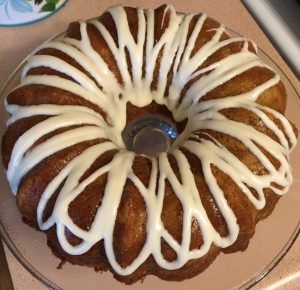
Sweet foods figure heavily in rosh hashanah celebrations, in keeping with wishes for a sweet new year. This apple honey cake combines two traditional rosh hashanah foods, apples and honey, in a delicious treat. The recipe below comes from the fine folks at chabad.org, and I added a thick powdered sugar drizzle icing just to dress it up a bit.

This cake is a dense, almost bread pudding-like treat with great apple, honey, and cinnamon flavor. Next time, I’ll probably add more allspice to the batter, and Mike has requested raisins as well (although I’d rather add something like pecans). Whatever you choose, I hope you have a sweet new year!

Ingredients 

For the cake

  • 2 1/2 cups cake flour
  • 1 teaspoon baking powder
  • 1 teaspoon baking soda
  • 1 teaspoon kosher salt
  • 1 teaspoon cinnamon
  • 1/4 teaspoon allspice
  • 1/2 cup sugar
  • 1/2 cup brown sugar
  • 1 cup unsweetened applesauce
  • 2 eggs
  • 3/4 cup honey
  • 1 teaspoon vanilla extract
  • 4 apples, peeled, cored, and grated (I used 2 Granny Smith and 2 Gala; you want a combination of sweet and tart)

For the drizzle

  • 1 cup powdered sugar
  • 1/4 teaspoon vanilla extract
  • 1 1/2 teaspoons water

Preparation

Preheat oven to 325 degrees. Generously grease a bundt pan (or spray with baking spray).

In a medium bowl, combine flour, baking powder, baking soda, salt, cinnamon, and allspice; set aside.

In a mixing bowl, beat sugars and applesauce to combine. Add eggs, one at a time, beating well after each. Add honey and vanilla and beat to combine.

Add flour mixture and beat to combine. Fold in grated apples.

Pour batter into prepared bundt pan and bake for 45-50 minutes, until a cake tester inserted into the thickest part of the cake comes out clean.

Cool in pan for about 15 minutes, then turn onto a rack or cake plate to cool completely. I cooled my cake on a wire rack, and the bottom did stick to it a bit; this was fine in the end, because after all, you serve a bundt round-side-up anyway.

A few hours before serving, prepare the drizzle. Combine powdered sugar, vanilla, and water in a small bowl until you have a thick drizzling consistency. Pour drizzle into a pastry bag fitted with a plain tip (or use a small zip-top bag with the corner cut off) and drizzle over cake.

Store at room temperature for up to 3 days; the moisture in the cake will make the bottom a bit gooey, but with all of the moisture in this cake, that’s not a surprise.

Blackberry Filling

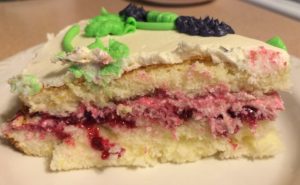
lemon blackberry sliceThis summer I made a delicious lemon blackberry cake to test both my piping and filling-making skills. I used frozen blackberries from last year’s crop – our blackberry plants bloom very late in the season – and it turned out very well. If you’re using frozen berries, just let them thaw first.

As with raspberry filling, blackberry filling requires some serious sieving time to remove the seeds. Blackberry seeds are larger than raspberry seeds, so you’ll want to clean out your sieve a few times during the straining process. I also recommend working in small batches, rather than trying to press your entire mixture through the sieve at once.

While my original recipe made about 1/3 cup, the recipe below would yield around 1 cup.

Ingredients

  • 18 ounces blackberries, mashed
  • 2 1/4 cups powdered sugar
  • 6 teaspoons cornstarch
  • 3 teaspoon lemon juice

Preparation

In a medium saucepan, stir together blackberries, powdered sugar, cornstarch, and lemon juice. Cook over medium-high heat until mixture boils, then allow to boil for 1 minute, stirring well, until the mixture thickens.

Remove from heat and press through a fine sieve to filter out the seeds. Allow to cool before using.

Raspberry Filling

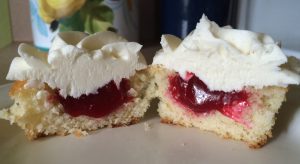
lemon raspberry cupcakes 2Raspberry is a classic cupcake and cake filling, and I always wonder who came up with this idea. Whoever they were, they’re a genius.

Homemade filling does take some time, and the bulk of the work comes in straining your berry mixture through a sieve to remove the seeds. You could leave the seeds in if you want to save time; I’ve certainly done so, but for some treats – like the more delicate lemon raspberry cupcakes pictured in this photo, I think straining is worth it.

If you want to make raspberry filling at a time of year when fresh raspberries aren’t readily available at your local market, you can always use frozen berries. I recommend letting them thaw out first, but you can also pulse them in a food processor to break them down a bit before cooking them.

Ingredients

  • 12 ounces raspberries, mashed
  • 1 1/2 cups powdered sugar
  • 4 teaspoons cornstarch
  • 2 teaspoons lemon juice

Preparation

In a medium saucepan, stir together raspberries, powdered sugar, cornstarch, and lemon juice. Cook over medium heat until the mixture boils, then allow it to boil for 1 minute, stirring well, until the mixture thickens.

Remove from heat and press through a fine sieve to filter out the seeds. Allow to cool before using; makes about 1 cup.

Bryan’s Pumpkin Butterscotch Cookies

bryans-pumpkin-butterscotch-cookiesMy friend Bryan lives in New Mexico, and while I haven’t seen him in person in several years, I’m grateful that social media can keep us in touch. The other evening, he posted that he was baking pumpkin butterscotch cookies, and I simply had to get the recipe.

While pumpkin and butterscotch aren’t flavors that I had ever thought to pair before, their combination is absolutely delicious. Bryan’s recipe is adapted from one on All Recipes; he substituted butter for the shortening in the original, and pumpkin pie spice for the cinnamon alone (which was brilliant, by the way). I make my own pumpkin pie spice, so I’ve included the individual spices that go into it here. You could certainly just use the original if you have it, though.

Thank you for this recipe, Bryan! I miss you!

Ingredients

  • 2 cups flour
  • 1/4 teaspoon salt
  • 1 teaspoon baking soda
  • 1 teaspoon baking powder
  • 1/2 teaspoon cinnamon
  • 1/4 teaspoon ginger
  • 1/4 teaspoon allspice
  • 1/8 teaspoon nutmeg
  • 8 tablespoons butter, slightly softened
  • 1 cup sugar
  • 1 cup pumpkin puree
  • 1 teaspoon vanilla extract
  • 1 1/2 cups butterscotch chips

Preparation

Preheat oven to 350. Line several baking sheets with parchment paper.

In a medium bowl, sift together flour, salt, baking soda, baking powder, cinnamon, ginger, allspice, and nutmeg; set aside.

Cream butter and sugar until light and fluffy, about 3 minutes. Add pumpkin puree and vanilla extract and beat until combined. Batter will be clumpy, but this is normal.

Add flour mixture in two batches and beat until combined, scraping the sides of the bowl a few times. Stir in butterscotch chips.

Using a one-inch cookie scoop, drop scoops of dough onto prepared baking sheets.

Bake 8-10 minutes; cookies may look slightly underdone, but they will continue baking as they cool. Remove from oven and cool on baking sheets for 5 minutes before removing to a wire rack to cool completely.

Makes about 3 dozen.


Almond-Filled Shortbread

almond-filled-shortbreadShortbread filled with almond paste? Yes, it is just as delicious as it sounds.

While experimenting with raspberry-filled shortbread last weekend, I decided to take the advice of the incredibly talented bakers at King Arthur Flour and fill my second shortbread round with almond paste. The result is a sturdier cookie than the jam-filled variety, and now I have to wonder…what would happen if I put both almond paste and jam into the same shortbread round? We’ll save that experiment for another day.

Ingredients

  • 1 cup unsalted butter, slightly softened
  • 1 teaspoon salt
  • 3/4 cup sugar
  • 1 teaspoon vanilla extract
  • 10 ounces flour (about 2 1/3 cups; I used a food scale to measure mine)
  • 1 cup almond paste

Preparation

Preheat oven to 300 degrees.

In a mixing bowl, cream together butter, sugar, salt, and vanilla, then beat in flour.

Divide dough into four pieces, about 6 ounces each (I’d recommend 5.7 or 5.8 ounces each to divide as evenly as possible).

Place an 8-inch round cake pan upside down on your counter top and cover with plastic wrap. Press one portion of dough onto the plastic wrap, covering the bottom of the pan completely – you’ll need to be careful, as the dough can tear as it stretches. Wrap the circle of dough in the plastic wrap and refrigerate while repeating this step with each remaining portion.

Gently knead your almond paste, then divide it into two portions. On a lightly floured surface, roll out your paste into a circle about 7 1/2 inches wide.

Lightly grease two 8-inch round cake pans; remove dough circles from the fridge. Peel plastic wrap off the first circle of dough and press into the bottom of one cake pan; top with almond paste, leaving about 1/2 inch bare border around the edges. Top with another circle of dough and gently press the edges to seal them. Prick all over with a fork all the way through each layer. Repeat with the third and fourth circles of dough in the other pan.

Bake for 45 minutes, until golden brown. Remove from oven and loosen the sides with a knife, then cool in pans for 10 minutes.

Carefully turn the shortbread out onto two cutting boards and allow to cool for 5 minutes, then cut into wedges. I cut mine into 16 wedges each for slimmer slices.

Makes 32 wedges.

Raspberry-Filled Shortbread

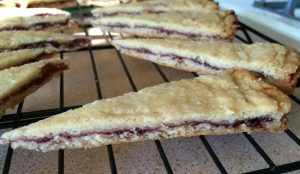
raspberry-filled-shortbreadThe people at King Arthur Flour are baking geniuses. Who else but a genius would come up with delicious buttery shortbread filled with raspberry jam?

This recipe comes from the King Arthur Flour Cookie Companion, my new favorite book. While the preparation does take a bit of time, the end result is totally worth it. You could use any jam with this, and I look forward to making other batches with apricot and strawberry in the future. The recipe below yields two 8-inch rounds of shortbread, so you could use one flavor of jam in one round and a different flavor in the other if you like. When I originally baked this last weekend, I made one round with jam and the other with almond paste; both were tasty, but the jam version was my favorite.

Ingredients

  • 1 cup unsalted butter, slightly softened
  • 1 teaspoon salt
  • 3/4 cup sugar
  • 1 teaspoon vanilla extract
  • 10 ounces flour (about 2 1/3 cups; I used a food scale to measure mine)
  • 6 tablespoons raspberry jam*

*If you’re making one round with raspberry and the other round with a different type of jam or with almond paste, you only need 3 tablespoons of jam.

Preparation

Preheat oven to 300 degrees.

In a mixing bowl, cream together butter, sugar, salt, and vanilla, then beat in flour.

Divide dough into four pieces, about 6 ounces each (I’d recommend 5.7 or 5.8 ounces each to divide as evenly as possible).

Place an 8-inch round cake pan upside down on your counter top and cover with plastic wrap. Press one portion of dough onto the plastic wrap, covering the bottom of the pan completely – you’ll need to be careful, as the dough can tear as it stretches. Wrap the circle of dough in the plastic wrap and refrigerate while repeating this step with each remaining portion.

Lightly grease two 8-inch round cake pans; remove dough circles from the fridge. Peel plastic wrap off the first circle of dough and press into the bottom of one cake pan; top with jam, leaving about 1/2 inch bare border around the edges. Top with another circle of dough and gently press the edges to seal them. Prick all over with a fork all the way through each layer. Repeat with the third and fourth circles of dough in the other pan.

Bake for 45 minutes, until golden brown. Remove from oven and loosen the sides with a knife, then cool in pans for 10 minutes.

Carefully turn the shortbread out onto two cutting boards and allow to cool for 5 minutes, then cut into wedges. I cut mine into 16 wedges each for slimmer slices.

Makes 32 wedges.


Cinnamon Caramel Swirl Shortbread

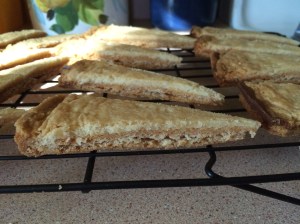
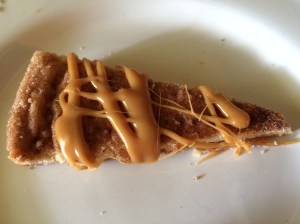
cinnamon-caramel-swirl-shortbreadCinnamon and caramel, together in shortbread? Trust me…it’s delicious. This is my second recipe from the King Arthur Flour Cookie Companion and it is, as promised, a surprisingly tasty result from an unexpected flavor pairing.

Shortbread is easy to make; you just need a few ingredients, and you can dress it up any way you like. In this case, we combine cinnamon and caramel, two flavors that don’t often go together but in this case work perfectly.

Just a few things to note about this recipe: I measured my flour by weight, using a food scale, rather than by volume this time. You’ll need 10 ounces of flour, which comes out to about 2 1/3 cups if you use the method recommended by the King Arthur Flour folks, which involves stirring up your flour to aerate it, then scooping it into your measuring cup with a spoon and leveling it. Also, I recommend drizzling each individual wedge on its own, rather than drizzling your entire cooling rack’s worth of wedges in long sweeps at once. The caramel cools fairly quickly, forming strings between the wedges that you have to cut with a knife to separate.

Ingredients

  • 1 cup sugar, divided
  • 1 tablespoon cinnamon
  • 1 cup butter, slightly softened
  • 1 teaspoon salt
  • 1 teaspoon vanilla extract
  • 10 ounces (about 2 1/3 cups) flour
  • 16 vanilla caramel candies
  • 1 tablespoon heavy cream

Preparation

Preheat oven to 300 degrees. Lightly grease two 9-inch round baking pans.

In a small bowl, combine 1/4 cup sugar and cinnamon; sprinkle the bottom of each pan with 1 tablespoon cinnamon sugar.

In a mixer fitted with the paddle attachment, cream together butter, salt, 3/4 cup sugar, and vanilla extract until fluffy. Add flour and beat to combine.

Divide dough in half and press into prepared pans, smoothing the tops with your fingers or the bottom of a measuring cup to create a smooth surface. Sprinkle the top of each round of dough with remaining cinnamon sugar, then prick the surface with a fork in whatever pattern you like.

Bake for 35-40 minutes, until edges are golden brown. Remove from oven and loosen the sides with a knife, then cool in pans for 5 minutes.

Carefully turn the shortbread out onto a cutting board and cut into wedges; I cut mine into 16 wedges each. Cool wedges completely on a wire rack.

In a small saucepan, combine vanilla caramel candies and heavy cream, stirring until the caramels melt and the mixture is smooth. Drizzle each wedge with caramel; if the caramel becomes too thick to drizzle, return it to the heat briefly to soften it.

Allow caramel to set before storing, and store at room temperature in an airtight container between layers of waxed paper.

Makes 32 wedges.