Pie Crust


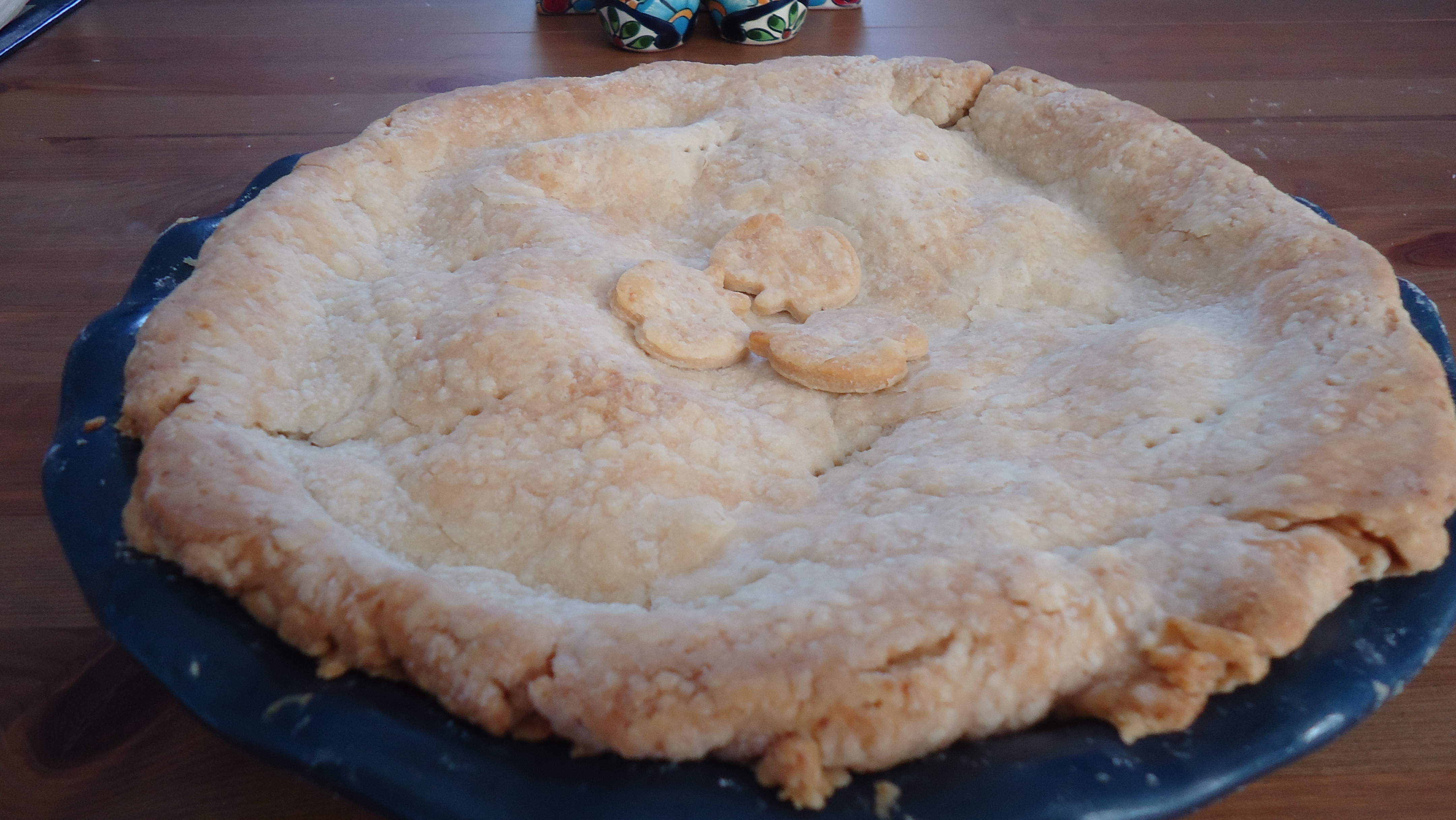
“I can’t make much, but I can make pie crust,” said my mother. A few days ago, as we discussed Thanksgiving plans, I expressed my concern at making a homemade crust for the pies Genny requested. I’ve never found a recipe that worked well, and so for years I’ve resorted to (dramatic pause) store-bought crust. But not this year! One cannot use store-bought crust if she wishes to be taken seriously as a baker. And so, I wrote down Genny’s recipe and hoped for the best.

My mom swears that the vinegar in her recipe makes the crust flaky. During the past week, as I scoured the internet in an attempt to earn a doctorate in pie crust, I learned that the acid in the vinegar breaks down the gluten in the flour just enough to make the dough more pliable. And because flakiness tends to result from bits of fat (butter, shortening, or lard) melting between layers of flour to create pockets, I don’t know if we can credit the vinegar for contributing to flakiness here. Although, more pliable dough means less rolling and easier handling, and we know well that over-handling dough can make it tough. Perhaps the vinegar can take some credit for flakiness.

This recipe is large enough to make three 9-inch pie crusts; you can always freeze what you don’t use.

Ingredients

  • 4 cups flour
  • 1 tablespoon sugar
  • 2 teaspoons salt
  • 1 3/4 cups shortening
  • 1 tablespoon white vinegar
  • 1 egg
  • 1/2 cup cold water

Preparation

In a large bowl, combine flour, sugar, and salt.

Measure out the shortening and break it up into tablespoon-sized lumps; add to the flour mixture and cut in using a pastry blender until the mixture resembles coarse crumbs.

In a small bowl, combine egg, vinegar, and water; whisk together and add to the flour/shortening mix.

Using a fork, blend together until a soft dough forms; gently combine with your hands if necessary.

Divide dough into three even portions and roll into balls, then flatten slightly into discs.

Place each disc in its own large Ziploc bag and roll out to flatten slightly.

Freeze crusts for 20 minutes before baking; crusts can be stored in the fridge or freezer until they are ready to use.

Pie Crust Tips

  • Coarse crumbs are very subjective; you just want to be sure the shortening is well-incorporated, with no large pieces remaining.
  • When cutting in the shortening and later incorporating the egg mixture, use your hands if necessary, but be very, very gentle. Overworked dough = tough dough.
  • I use ice water when working with pastry; just fill a large measuring cup with ice and water, then pour it into a smaller measuring cup when you need to combine it with the egg.
  • Make sure your egg is cold, too. Pastry likes cold.
Chocolate Chip Scones


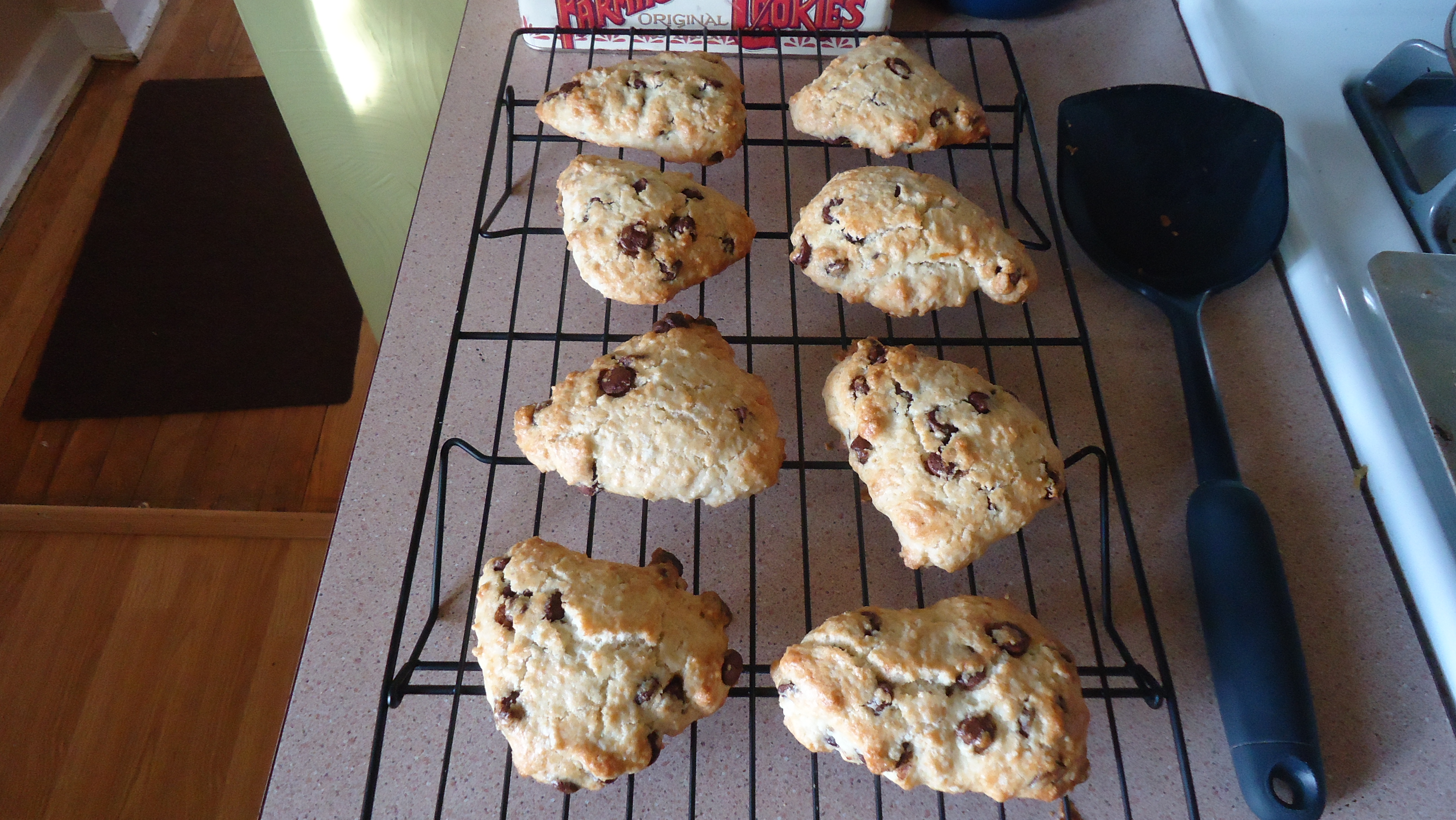
Someday I hope to visit Scotland, home of shortbread and scones. How such simple ingredients–essentially butter, flour, and sugar–can yield such marvelous treats is a wonder.

These scones are certainly Americanized, not much like traditional Scottish scones, but they are light and flaky and pair very well with a good cup of tea. This recipe requires you to literally get your hands into the mix, rubbing the butter into the flour mixture, which can take a few minutes and requires great subjectivity. My mixture looked like a bowl of cake crumbs, with some smaller and larger pieces, before I added the chocolate chips and wet ingredients. And, take note that the dough will be wet and sticky when you turn it out onto the parchment-lined baking sheet; it will not be dry like biscuit dough.

Next time, I plan to add some sanding sugar to the tops for a bit of crunch.

Ingredients

  • 1 cup flour
  • 1/4 teaspoon salt
  • 1 teaspoon baking powder
  • 2 tablespoons sugar
  • 8 tablespoons cold butter, cut into cubes
  • 3/4 cup milk chocolate chips
  • 1 egg
  • 2 tablespoons milk

Preparation

Preheat oven to 425 degrees.

Line a baking sheet with parchment paper.

In a medium bowl, combine flour, salt, baking powder, and sugar.

In a small bowl, whisk together egg and milk; set aside.

Add butter to the flour mixture. Using your hands, rub in the butter until the mixture looks like cake crumbs.

Stir in chocolate chips.

Add egg and milk mixture and stir together, using a fork, until the dough just comes together.

Turn out onto parchment-lined sheet and flatten to about one-inch thickness.

Cut into eight wedges and, using a small offset spatula, pull the wedges apart so they are not touching.

Bake for 15-18 minutes, until tops are golden brown.

Serve warm or allow to cool.

Chocolate Sugar Cookies


Happy Veteran’s Day! As I baked these treats, which taste like an amazing combination of a sugar cookie and a dark chocolate brownie, I thought about the care packages that members of the US military receive from their families. Then, I thought about all of the veterans I’ve known—men, mostly, in my family and among my friends—and how profoundly grateful I am to have known them.

One of my favorite veterans was Francis Kruhm, our landlord in Sunshine, MD. Mike and I lived there before our move into DC while he was on active duty with the Maryland Army National Guard. Mr. Kruhm served in the Army during World War II, and was part of the invasion at Anzio, Italy in 1944.  The Kruhms were friends of my Aunt Liz’s in-laws, the Brighams, and they had a tiny apartment on the side of their house that they rented to us for an extraordinarily low rate.

About a week after we moved in, Mr. Kruhm gave me a service banner to hang in the front window. He had a full-sized flagpole in the front yard and raised the stars and stripes every single day. Mr. Kruhm was an active member of the VFW and an impressive gardener; I would often come home to find bags of corn, tomatoes, and zucchini on my porch. Even after we moved to DC and later, back to Pittsburgh, I sent Mr. Kruhm a Christmas card every year, and he sent us one in return. He passed away not long ago, another member of the Greatest Generation who surely made it into heaven.

I wish to sincerely thank all of the member of the US military, as well as their families, for their bravery and sacrifice. I am truly grateful to be a citizen of this amazing nation, and to the men and women who fought for our freedoms.

Ingredients

  • 1 1/2 cups flour
  • 1/2 cup Dutch-process cocoa
  • 1 teaspoon baking soda
  • 1/2 teaspoon salt
  • 1 1/2 cups sugar
  • 1/2 cup butter, softened
  • 1/2 cup shortening, melted and cooled
  • 1 egg
  • 1 1/2 teaspoons vanilla extract

Preparation

Preheat oven to 375 degrees.

Line several baking sheets with parchment paper.

In a medium bowl, whisk together flour, cocoa, baking soda, and salt; set aside.

In a mixing bowl, combine sugar and butter; beat until fluffy.

Add shortening and beat well.

Add egg and vanilla and beat until creamy.

Add flour mixture in two batches, beating until combined after each.

Using a two-inch cookie scoop, drop onto baking sheets about two inches apart.

Bake for 18 minutes.

Cool on a wire rack.


Caramel Frosting


Many amateur bakers are intimidated by caramel, but this recipe is very simple; it just requires paying close attention to the butter, brown sugar, and milk, and exhibiting some patience in waiting for the caramel mixture to cool slightly before the incorporation of the powdered sugar. It is an excellent choice for chocolate cake, but also pairs nicely with white cake or almond cake. This recipe yields enough for 24 cupcakes or one bundt cake; I have not tried to frost two-layer or sheet cakes with it yet.

Ingredients

  • 6 tablespoons butter
  • 1 cup packed light brown sugar
  • 1/3 cup milk
  • 2 teaspoons vanilla extract
  • 2 1/2 cups powdered sugar

Preparation

Combine butter and brown sugar in a medium saucepan and slowly bring to a boil.

Boil for one minute, remove from heat, and stir in milk.

Return to heat and bring to a boil once again.

Pour mixture into mixing bowl and allow to cool slightly, about 5 minutes.

Beat caramel mixture on medium speed for a few minutes to disperse heat; the mixing bowl should not be too hot for you to touch, but if it remains warm that is fine.

Add one cup powdered sugar and one teaspoon vanilla, beating until smooth.

Slowly add the remaining powdered sugar and vanilla, beating until smooth.

Frost cake or cupcakes quickly, as this will set very quickly.

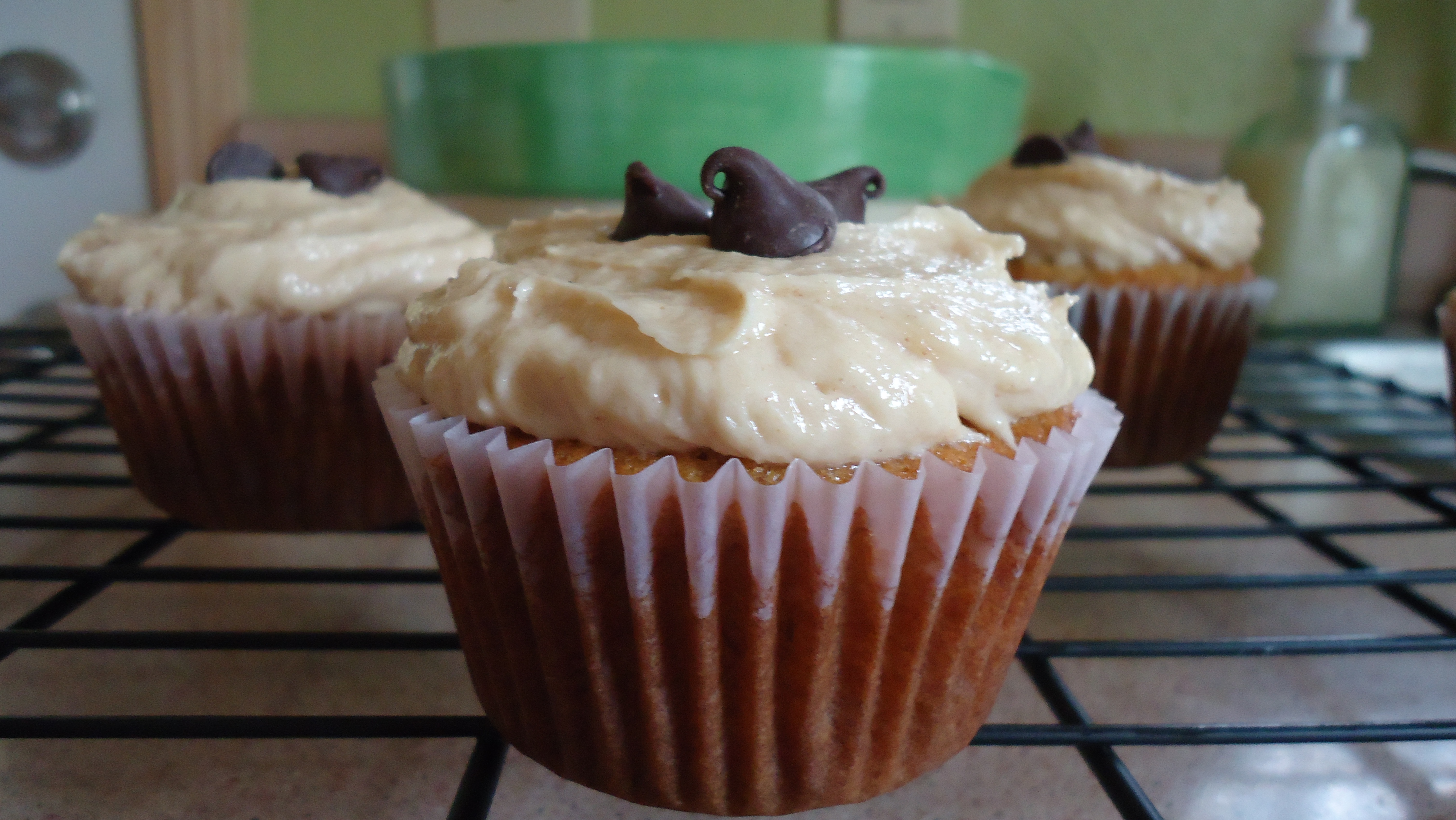
Peanut Butter Cream Cheese Frosting


According to Wikipedia (truly an informational authority), peanut butter-type pastes have been around since the Aztecs. Peanut butter as we know it today was pioneered separately by Canadian Marcellus Gilmore Edson, who experimented with milling roasted peanuts between two heated surfaces until they became semi-liquid, and by Dr. John Harvey Kellogg, the Michigan physician and cereal magnate.

However it came to be, peanut butter is possibly my favorite food. I’m a Jif loyalist, too, so you’ll never find a jar of Skippy or Peter Pan anywhere in my kitchen. Peanut butter is an amazing ingredient for baking, and when combined with cream cheese, powdered sugar, and a bit of vanilla, it creates a smooth, creamy frosting that pairs well with many cakes. This recipe yields enough for 24 cupcakes.

Ingredients

  • 8 ounces cream cheese, softened
  • 1/2 cup creamy peanut butter
  • 3 to 3 1/2 cups powdered sugar, sifted
  • 1 teaspoon vanilla extract

Preparation

In a mixing bowl, cream together peanut butter and cream cheese.

Gradually add powdered sugar and beat until smooth.

Beat in vanilla until incorporated.

Lemon Cream Cheese Frosting


This tart-but-sweet frosting incorporates some excellent ingredients, like cream cheese and lemon curd. I plan to bake strawberry cupcakes to pair with this sometime, or perhaps raspberry or blackberry, but it went very well with the lemon cupcakes in the photo above. This recipe yields more than enough for 24 cupcakes.

Ingredients

  • 4 cups powdered sugar
  • 1/4 teaspoon salt
  • 4 tablespoons butter, softened
  • 4 ounces cream cheese, softened
  • 4 tablespoons shortening
  • 1/2 teaspoon vanilla extract
  • 1 tablespoon lemon juice
  • 2 tablespoons lemon curd
  • yellow food coloring

Preparation

In a large bowl, sift powdered sugar and salt together; set aside.

In a mixing bowl, cream together butter, cream cheese, shortening, and vanilla.

Add powdered sugar in four batches, beating well after each addition.

Add lemon juice and lemon curd and beat well.

Add several drops of yellow food coloring and beat well.

Chocolate Buttercream


Sometimes people tell me they don’t like frosting, that they really like the cake better. I’ve never understood this. I mean, what is cake if not a vehicle for frosting? Why would someone choose plain cake, without the accompanying combination of butter or shortening and powdered sugar and flavorings?

Because I prefer opposites in baking–in that yellow or white cake is, to my palate, most pleasing when paired with chocolate frosting–I believe this chocolate buttercream to be an excellent companion for yellow, white, or almond cakes or cupcakes. Chocolate fans will enjoy it with chocolate cake, too. This recipe yields more than enough for 24 cupcakes.

Ingredients

  • 1 cup butter
  • 3 1/2 cups powdered sugar
  • 1/2 cup cocoa powder
  • 1/2 teaspoon salt
  • 3-4 tablespoons milk
  • 3 teaspoons vanilla extract

Preparation

In a large bowl, sift together powdered sugar and cocoa powder; set aside.

In a mixing bowl, cream butter for about one minute. Add salt and beat for another 30 seconds.

Add powdered sugar and cocoa and beat on low speed to incorporate as much sugar into the butter as you can.  I cover my mixing bowl with a kitchen towel during this step to prevent a sugar storm.

Add three tablespoons milk and two teaspoons vanilla extract; beat for three minutes.

Scrape down the sides of the mixing bowl and add the final teaspoon vanilla extract, then beat for another minute.

Pumpkin Roll


I love that scene in “Julie & Julia” when Julie Powell kneels before her coffee table, preparing to follow along with the episode of “The French Chef” in which Julia Child de-bones a duck. With that scary chef’s knife in her hand, Julie nods to the television and says, as if hoping to convince herself, “No fear, Julia.”

I thought about this scene while contemplating pumpkin roll over the past few weeks. The concept of the pumpkin roll has long intimidated me. Roll the piping hot cake in a tea towel? What if it cracks? What if it sticks to the towel? What if it’s a total disaster?

Well, if Julie Powell could de-bone a duck, then surely I could make a pumpkin roll.

I summoned as much bravery as possible, mixed my ingredients, and baked my cake. There was a precarious, breath-holding moment when I flipped the cake out of the pan onto a cooling rack, peeled back the waxed paper, then immediately slid it onto the sugar-coated towel. With hope, I rolled the cake in the towel and set it on a cooling rack.

A few hours later, with the filling prepared, I stood before my towel-wrapped cake. Carefully peeling back the towel, I discovered that it was not only intact, but crack-free. After slathering on the filling I re-rolled the cake, secured it in plastic wrap, and with a profound sense of satisfaction, placed it in the fridge to chill.

No fear, bakers.

Ingredients

For the cake:

  • 3/4 cup flour
  • 1/2 teaspoon baking powder
  • 1/2 teaspoon baking soda
  • 1/2 teaspoon cinnamon
  • 1/2 teaspoon cloves
  • 1/4 teaspoon salt
  • 3 eggs
  • 1 cup sugar
  • 2/3 cup pumpkin

For the filling:

  • 8 ounces cream cheese, room temperature
  • 6 tablespoons butter, room temperature
  • 1 cup powdered sugar, sifted
  • 1 teaspoon vanilla extract

Preparation

For the cake:

Preheat oven to 375 degrees.

Grease a 10 x 15 jelly roll pan, then line with waxed paper and grease and flour the paper.

Place a clean tea towel (linen or flour sack, nothing too textured) on the counter top and sprinkle it generously with powdered sugar.

In a small bowl, combine flour, baking powder, baking soda, cinnamon, cloves, and salt; set aside.

In a mixing bowl, combine eggs and sugar. Beat until thickened, about three to five minutes.

Add pumpkin and beat well.

Stir in flour mixture.

Pour batter into prepared pan and smooth out the top.

Bake for 13 minutes; the top should be just golden-brown and spring back slightly when pressed.

Working quickly and carefully, invert the pan onto a cooling rack, peel off the waxed paper, and slide or flip the cake onto the tea towel.

Roll up the cake and allow to cool on a wire rack completely before filling.

For the filling:

In a mixing bowl, combine cream cheese and butter; beat until smooth.

Add powdered sugar and vanilla and beat until very well combined.

Carefully un-roll the cake from the tea towel.

Spread filling in an even layer, leaving about a half-inch border at the long edges.

Re-roll the cake and wrap in plastic wrap; refrigerate at least one hour before serving.

Great Pumpkin Sugar Cut-Outs


One of my favorite things about Halloween is “It’s the Great Pumpkin, Charlie Brown!” I admire Linus for his dedication, waiting all night in the pumpkin patch, even if all that came was a beagle.

The Great Pumpkin inspired me to bake these rather large sugar cut-outs, and that’s one of the things that I love about sugar cookies–the endless creative possibilities. Pick your cutter, whip up your icing, and you’re making edible art.

To make these cookies, you will need:

  • 1 recipe sugar cut-outs
  • 1 recipe Zella’s icing
  • Yellow, red, and green liquid food coloring (or orange and green gel food coloring)
  • 1 large pumpkin cookie cutter (mine is 3 3/4 inches)

Preparation

Bake and cool sugar cut-outs.

Prepare icing; reserve a small portion of icing to tint green for pumpkin stems.

Combine yellow and red food coloring until you reach the desired orange tint.

Frost with orange first, using a small offset spatula or butter knife and a back-and-forth vertical swirling motion to create the pumpkin ridges.

Frost stems, using a small dab of green frosting.

Allow frosting to harden before storing; store at room temperature in an airtight container between layers of waxed paper for up to four days.

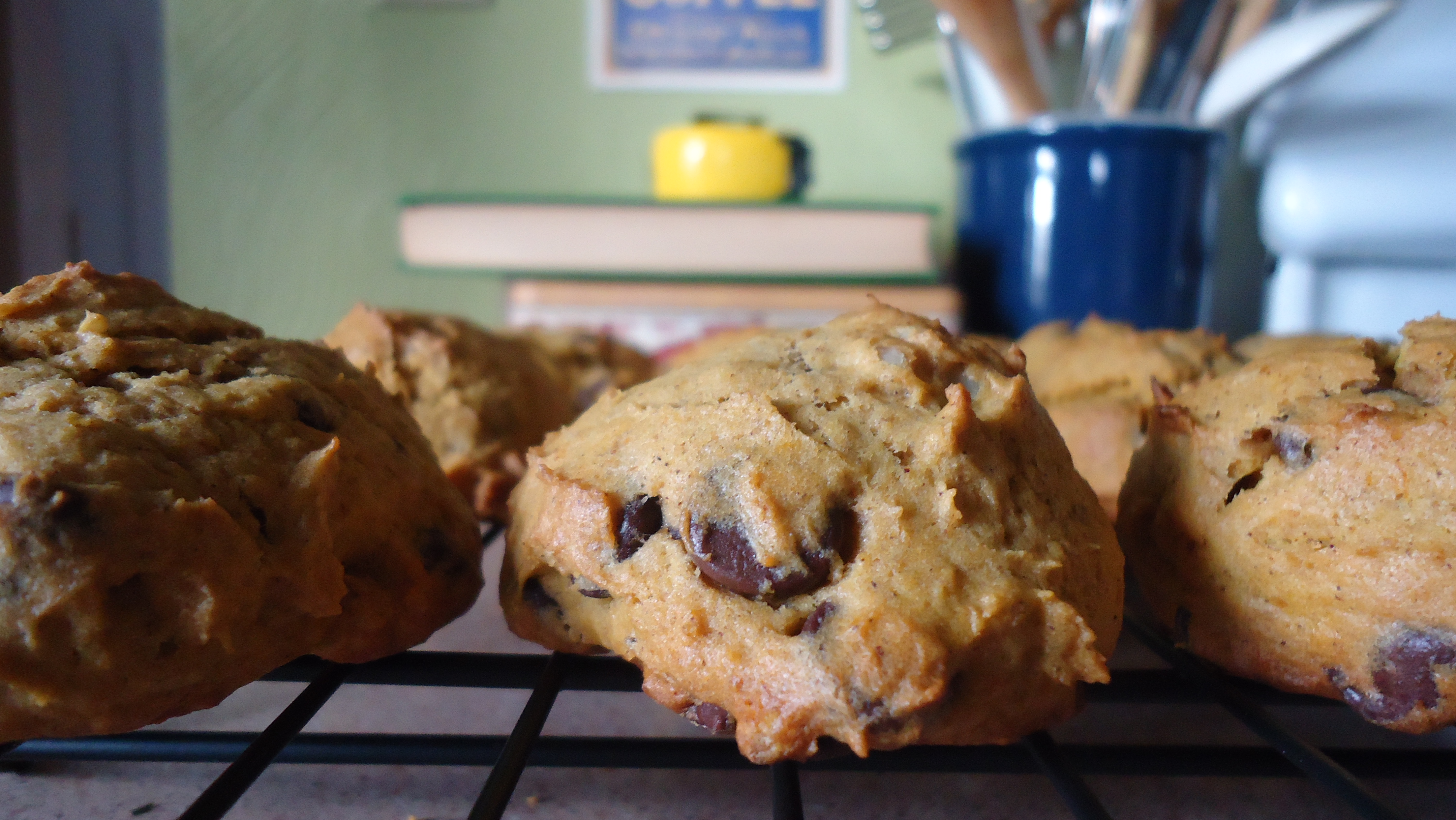
Pumpkin Chocolate Chip Cookies I

This time of year, I wonder about the first colonial woman who, at a loss for traditional British baking ingredients, thought to cut up a pumpkin, roast it, scrape out its flesh, and mix it with sugar and spices for pumpkin pie. Whoever she was, I applaud her ingenuity. Without her, we might not have canned pumpkin. And without canned pumpkin, we probably wouldn’t have pumpkin chocolate chip cookies.

As these baked, I told Mike that someone should make a pumpkin chocolate chip cookie-scented candle, because they filled our house with a sweet, spicy aroma that was not unlike something you’d inhale at the Yankee Candle shop. Fortunately, these cookies taste as good as they smell.

Ingredients

  • 2 1/4 cups flour
  • 1 teaspoon baking powder
  • 1/2 teaspoon baking soda
  • 1/2 teaspoon salt
  • 1 1/2 teaspoons cinnamon
  • 1/2 teaspoon ginger
  • 1 cup butter, softened
  • 1/2 cup sugar
  • 1/2 cup brown sugar
  • 15 ounces pumpkin
  • 2 eggs
  • 1 teaspoon vanilla extract
  • 2 cups semisweet chocolate chips
  • 1 cup chopped walnuts

Preparation

Preheat oven to 375 degrees.

Line several baking sheets with parchment paper.

In a medium bowl, combine flour, baking powder, baking soda, salt, cinnamon, and ginger; set aside.

In a mixing bowl, cream together butter and sugars.

Add pumpkin, eggs, and vanilla; mix well.

Slowly add flour mixture and beat until well combined.

Stir in chocolate chips and walnuts.

Using a two-inch cookie scoop, drop scoops of dough about two inches apart on the baking sheet.

Bake 18 minutes, until edges are lightly browned.

Cool for 5 minutes on baking sheet, then cool completely on a wire rack.