Toffee Chocolate Matzoh

matzoh brittleMost people call this “matzoh crack” for its highly addictive quality. Some call it matzoh brittle, or just chocolate-covered matzoh. Apparently, whatever you call it, it’s delicious, and enough to make a sugar-fasting gal break her fast (although I haven’t done so).

This treat is incredibly easy to make; I’ve seen it with regular saltine crackers as well as matzah, and I wonder how graham crackers would fare. My Aunt Liz makes a wonderful cracker/toffee/pecan creation at Christmas that I would swear uses graham crackers, so I’d like to give that a try.

Like many other treats, you can dress this one up as much as you like, or leave it plain and simple. Some recipes call for chopped walnuts or pecans to be sprinkled on after the chocolate chips melt, while others encourage a sprinkling of sea salt. Mike requested this plain version and declared it very tasty.

Ingredients

  • 4-6 sheets matzoh (the Passover kind, not regular)
  • 1 cup butter
  • 1 cup packed light brown sugar
  • 1/2 teaspoon vanilla extract
  • pinch of salt
  • 1 1/2 cups semisweet chocolate chips

Preparation

Preheat oven to 350 degrees. Line an 11 x 17 rimmed baking sheet with foil, extending well over and completely covering each side. Line the bottom of the sheet with parchment paper, cutting the parchment to fit.

Place matzoh in a single layer in the bottom of the baking sheet; you’ll need to break some of the matzoh into pieces to fit in one single layer.

In a medium saucepan, combine butter and brown sugar and cook until bubbly, stirring frequently. Once the mixture begins to boil, continue boiling for three minutes, stirring well; the mixture will thicken slightly as it cooks.

Remove from heat and stir in vanilla extract and salt, then immediately pour over matzoh. Use an offset spatula to spread toffee evenly over the crackers, as it will begin to set quickly.

Bake for 15 minutes, checking frequently to make sure the toffee doesn’t begin to burn. Remove from the oven and cover with chocolate chips; allow the chips to melt for a few minutes, then spread the melted chips in an even layer over the matzoh.

Allow to cool completely, then break into pieces. Store in an airtight container; we put ours in the fridge to keep the chocolate from re-melting.
Bird’s Nest Cupcakes

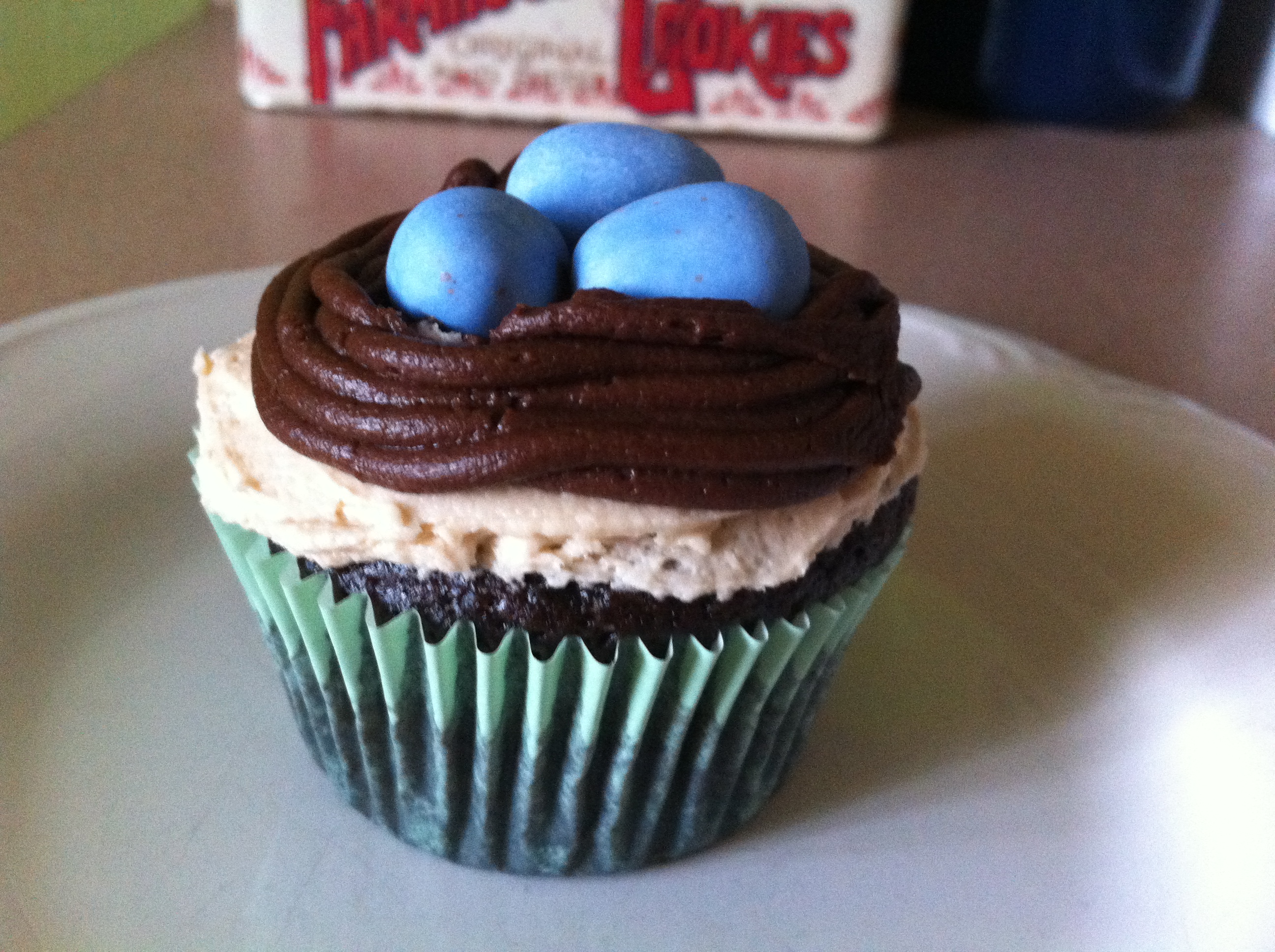
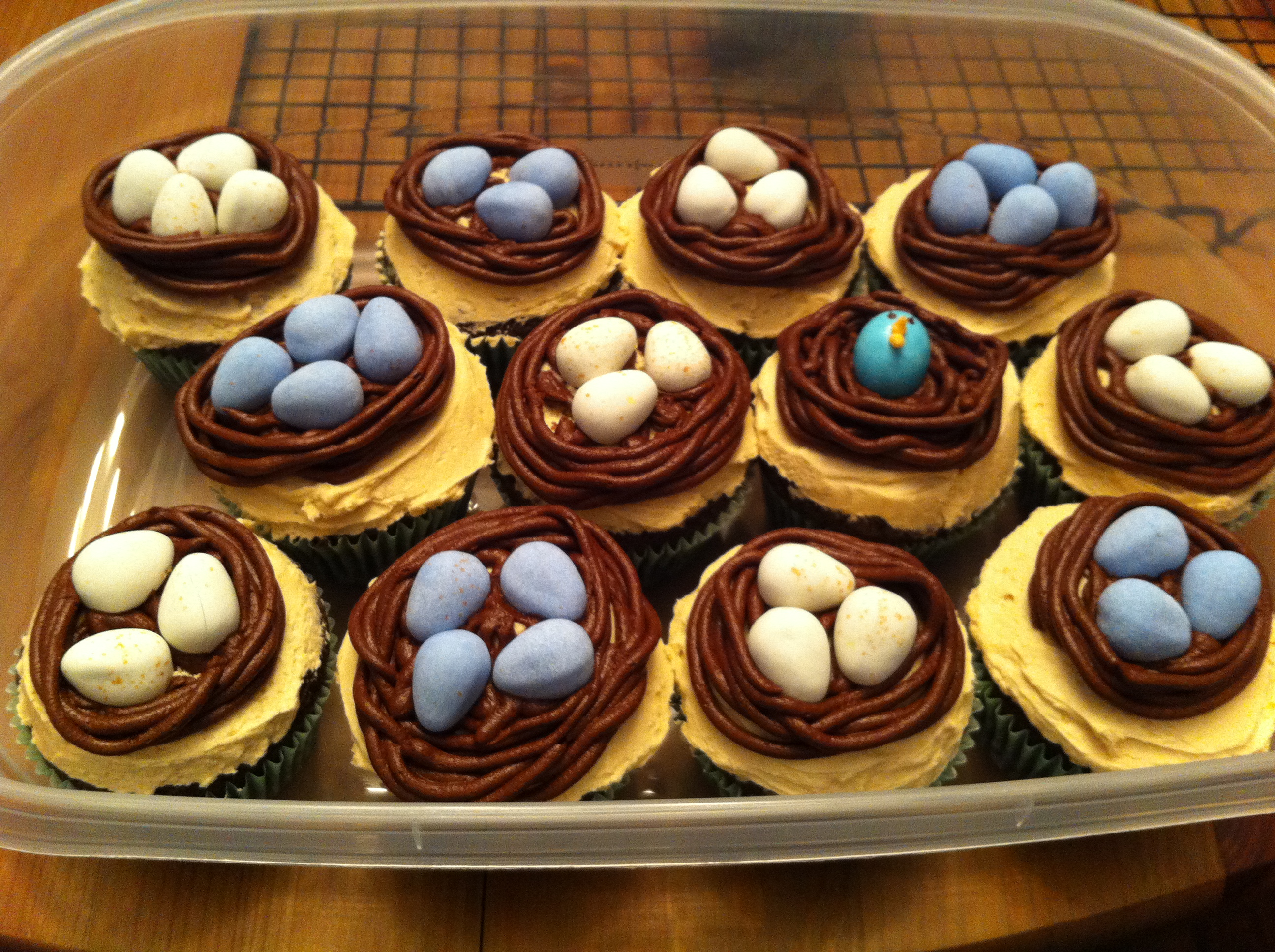
birds nest closeupSpring is here! It’s 70-something in Pittsburgh today and appears for the moment that the long, hard, polar vortex extravaganza of winter is over. Having grown up in the fickle weather patterns of Western PA, I realize that tomorrow could be 40, and that snow is a possibility through early May. For now though, I’ll take a beautiful day whenever I can get one.

These bird’s nest cupcakes would be great for any spring-related event; an Easter dinner, Mother’s Day brunch, or in this case, a bird-themed baby shower. One of my colleagues hosted just such an event today and I was happy to provide these, which may look complicated but are actually very easy to prepare especially given the abundance of egg-shaped candies right now. If you can’t find egg-shaped candies for the nests, I suspect that peanut M&Ms would work well too.

Ingredients

Preparation

Bake cupcakes and allow to cool completely before frosting.

Prepare vanilla almond buttercream. Using a one-inch cookie scoop, scoop frosting onto each cupcake and spread with an offset spatula in an even layer.

Prepare cocoa frosting. Fit a piping bag with a medium plain tip, such as Wilton #5. Pipe nests, creating the outer edges first and filling in with a few squiggles of frosting for the nest bottoms.

Place mini egg candies in each nest; most will fit three eggs, but a few of mine fit four. Store in an airtight container at room temperature for up to two days.

Note: one of the cupcakes in this batch featured a hatched baby bird, similar to a cupcake I’d seen in the Martha Stewart Cupcakes book, as the cupcake for the mom-to-be. To create this, I used one blue Hershey’s candy-coated egg, melted a few chocolate chips, and dabbed the chocolate on for eyes, then made a batch of Zella’s icing, tinted it orange, and piped on a small beak using the smallest plain tip I have. You can see the hatched bird in the photo below, and you can reserve the batch of icing from the beak for another time; it refrigerates very well.

birds nest all

Vanilla Almond Buttercream

caramel cupcakes

Buttercream frosting is a go-to resource for bakers. It’s easy to make and adapt for different flavor combinations. The key to successful buttercream, in my opinion, is to soften your butter just enough; you don’t want it to be too soft, because you risk a runny consistency, or too hard, which will prevent the powdered sugar from incorporating properly. I once read that the proper consistency of softened butter for buttercream is like ice cream; you can indent it with your finger, but not smash it altogether.

This buttercream was inspired by a vanilla caramel candy and would pair well with almost any cupcake or cake, from caramel to chocolate. As you’re preparing it, taste as you go to make sure that the vanilla and almond flavors are well-balanced.

Vanilla Almond Buttercream

Ingredients

  • 8 tablespoons butter, at room temperature
  • 1/8 teaspoon salt
  • 2 cups powdered sugar, sifted
  • 1 to 1 1/2 tablespoons vanilla extract
  • 1/2 to 3/4 tablespoon almond extract

Preparation

In a mixing bowl, beat butter for about 1 minute, then add salt and beat another minute.

Add powdered sugar and beat on low speed until all of the sugar is fully incorporated into the butter; this will take a few minutes.

Add vanilla extract and almond extract, beating well to combine. Taste; add more extract if desired.

Frost cake or cupcakes and store at room temperature

Caramel Cupcakes with Vanilla Almond Buttercream

caramel cupcakesIn this age of fancy-looking cupcakes, when many a blogger can present the kind of artistic creations that were once reserved for food magazines, I find myself incapable of successfully piping buttercream icing onto regular-sized cupcakes.

While cream cheese frosting flows freely from my piping bag in elegant swirls, buttercream reduces me to the amateur of amateurs. Miniature cupcakes are easier; with such little surface area, you really just need a blob to cover them. But regular-sized cupcakes are another matter entirely, and I simply can’t manage to produce the kind of effect I’d like. We all have our shortcomings, I suppose.

After attempting to pipe this frosting and discovering that my skills were once again lacking, I took hold of my trusty offset spatula. One advantage to frosting cupcakes by hand is that they take on a lovely old-fashioned look, befitting a classic flavor like the caramel of these cupcakes. This recipe was adapted from a few others I’ve seen online to incorporate much more vanilla, and I chose to frost them with a vanilla almond buttercream, rather than a salted caramel or other trendy flavor, to create a more classic treat. Caramel and vanilla are good flavor friends, and according to Mike the almond adds another dimension, which is exactly what I’d hoped to create. If only I weren’t fasting from sugar right now, I’d probably have already eaten a few myself!

Caramel Cupcakes

Ingredients

  • 1 1/2 cups flour
  • 1 teaspoon baking powder
  • 1/4 teaspoon salt
  • 8 tablespoons butter, at room temperature
  • 1 cup plus 2 tablespoons light brown sugar
  • 2 eggs, at room temperature
  • 4 teaspoons vanilla extract
  • 1/2 cup plus 2 tablespoons buttermilk

Preparation

Preheat oven to 325 degrees. Line cupcake tins with paper liners; this recipe yields about 18 cupcakes.

In a small bowl, combine flour, baking powder, and salt; set aside.

In a mixing bowl, cream together butter and brown sugar until very light and fluffy.

Add eggs, one at a time, beating well after each addition. Add vanilla and beat on medium speed until combined.

Add flour mixture and buttermilk in alternate batches, starting and ending with the flour and scraping the sides of the bowl frequently. Batter will be fluffy.

Using a 2-inch cookie scoop, scoop batter into prepared pans, filling about half-full.

Bake for 20-25 minutes, until a cake tester comes out clean. Mine baked for 21 minutes.

Remove from oven and cool in pans for just a minute, then remove to a wire rack to cool completely before frosting.

Vanilla Almond Buttercream

Ingredients

  • 8 tablespoons butter, at room temperature
  • 1/8 teaspoon salt
  • 2 cups powdered sugar, sifted
  • 1 to 1 1/2 tablespoons vanilla extract
  • 1/2 to 3/4 tablespoon almond extract

Preparation

In a mixing bowl, beat butter for about 1 minute, then add salt and beat another minute.

Add powdered sugar and beat on low speed until all of the sugar is fully incorporated into the butter; this will take a few minutes.

Add vanilla extract and almond extract, beating well to combine. Taste; add more extract if desired.

Frost cupcakes using an offset spatula.


Nutella-Swirled Banana Muffins

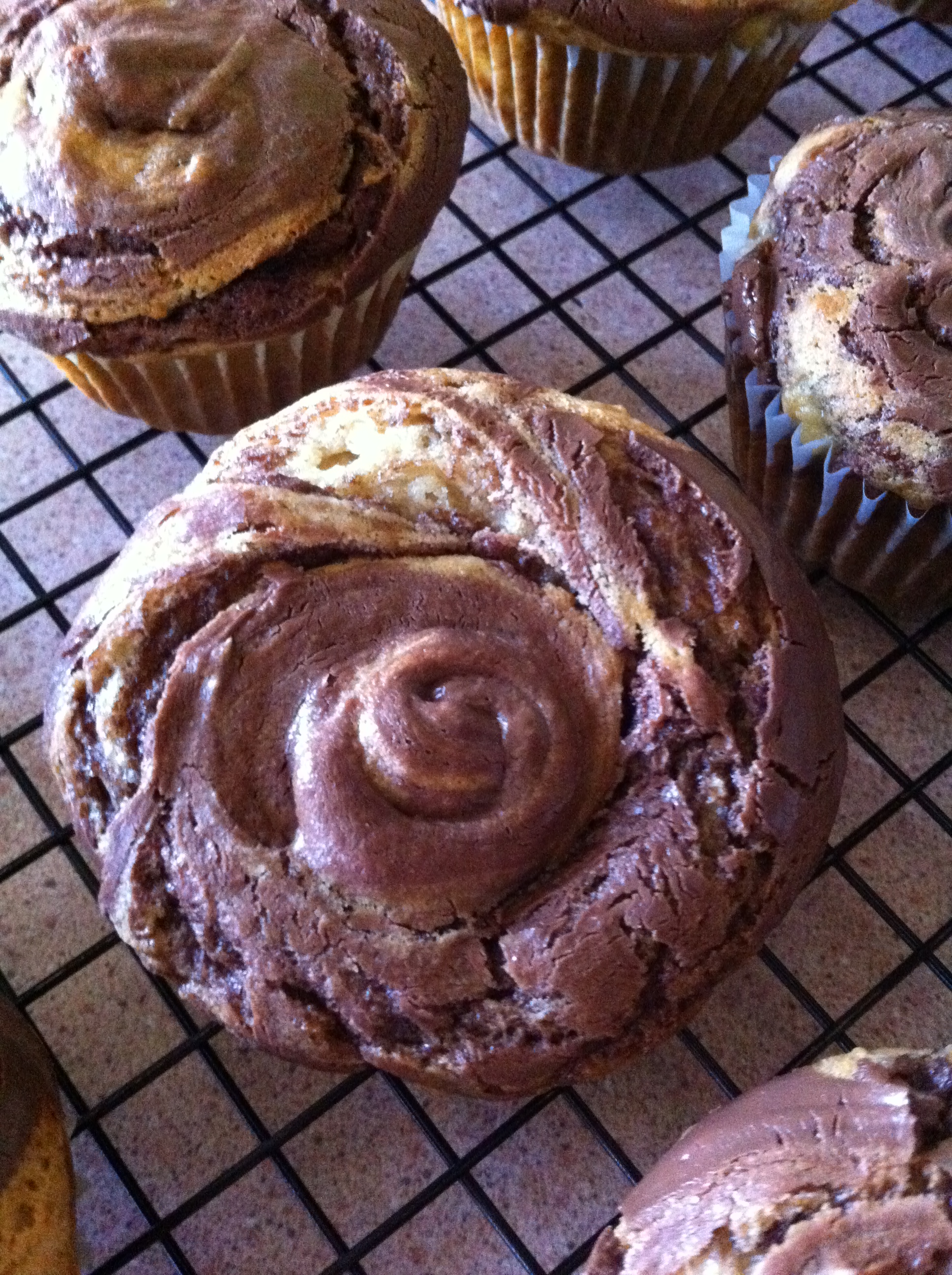
nutella swirl muffinsMmm, Nutella. This delicious hazelnut spread isn’t something I eat very often, but I’ve become very interested in baking with it recently and have pinned many a Nutella-based recipe on my Pinterest baking board. Pinterest is quite a playground for food bloggers, and I found this recipe there from fellow blogger Maya at Alaska from Scratch; I just tweaked very slightly (including a bit more vanilla and Nutella) in the recipe below.

Banana muffins are a great base for many additions, including nuts or chocolate chips (or both). This Nutella-swirled version looks amazing when finished, and I imagine that serving them with Nutella for spreading would be a great idea. I also think this could make a wonderful quick bread and would like to experiment with baking it on loaf form sometime in the future, perhaps with some nuts mixed into the batter.

Since I’m still fasting from sugar (and baked goods in particular) for Lent, it’s quite a challenge for me to not crack open one of these, slather it with some Nutella, and chow down. I will refrain for a few more weeks though, and will have to rely on Mike’s assessment of these muffins to learn whether they’re tasty or not. Sometime tells me they’ll be delicious!

Ingredients

  • 2 cups flour
  • 1 teaspoon baking soda
  • 1 teaspoon baking powder
  • 1/2 teaspoon salt
  • 4 very ripe bananas, mashed
  • 1/2 cup sugar
  • 1/2 cup packed brown sugar
  • 1/4 cup vegetable oil
  • 1/4 cup buttermilk
  • 1 egg
  • 3 teaspoons vanilla extract
  • heaping 1/2 cup Nutella

Preparation

Preheat oven to 350 degrees. Line two muffin tins with paper liners; my batch yielded 20 muffins.

In a large bowl, combine flour, baking soda, baking powder, and salt; set aside.

In another large bowl, combine mashed bananas, sugar, brown sugar, vegetable oil, buttermilk, egg, and vanilla extract. Stir together to combine, then add all at once to the flour mixture and stir to combine. Batter will be lumpy.

In a microwave-safe bowl, microwave Nutella in 15-second intervals until thinned and easy to stir. Using a tablespoon from your flatware, drop dollops of Nutella onto the top of each muffin and swirl with a toothpick to spread; I used about 1 tablespoon on each.

Bake for 15-18 minutes, until a cake tester comes out clean. Cool in pans for about 5 minutes, then remove and cool completely on wire racks.


Lemonies

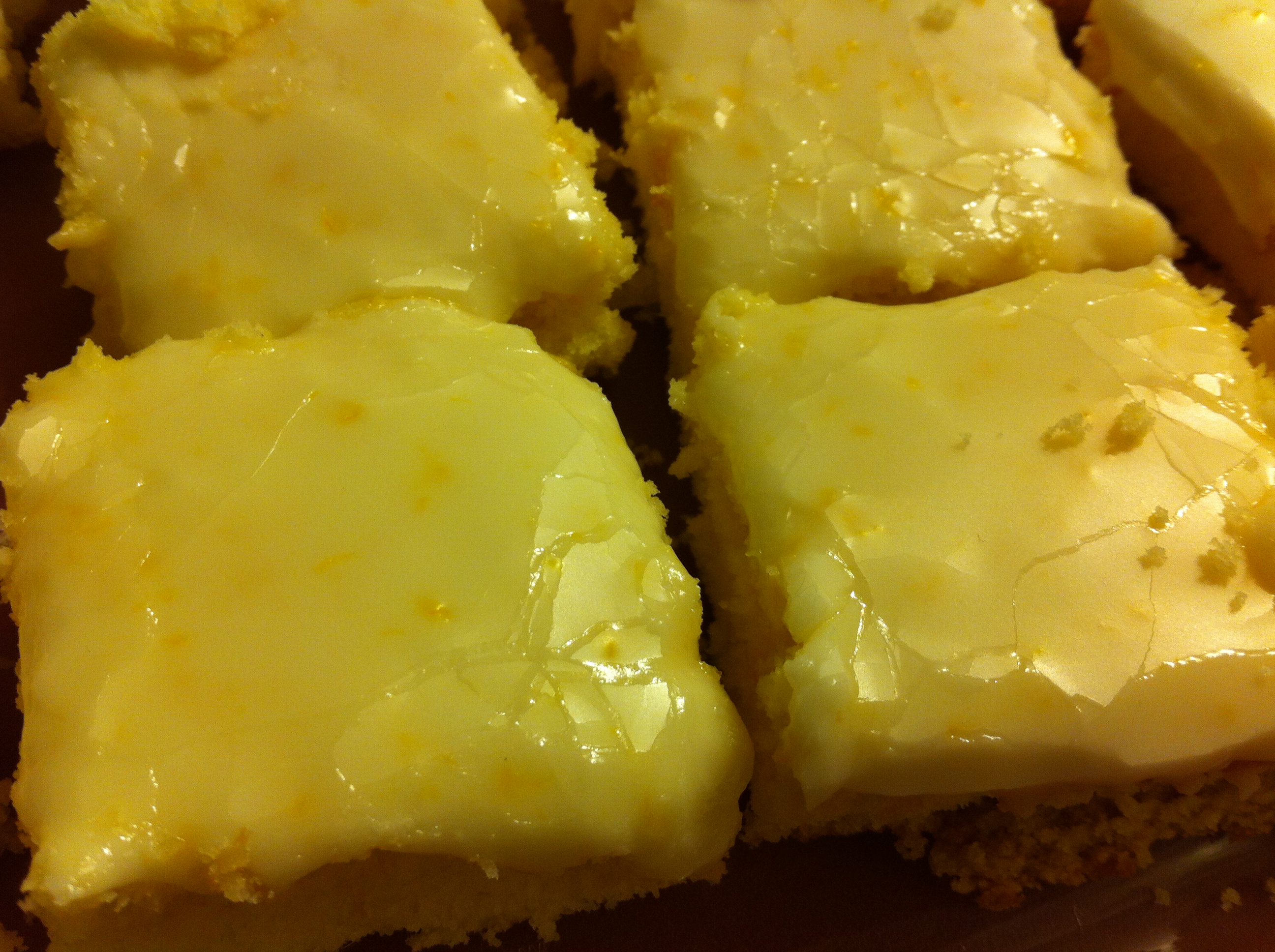
lemoniesI refuse to call a lemon treat baked like a brownie a “lemon brownie.” It’s just not right! Brownies are, first of all, brown. And chocolate-based, be they studded with nuts or swirled with cream cheese or frosted with fudge. These treats aren’t exactly blondies, either, which tend to contain brown sugar and are more like cookies than anything else.

So, what to call these delightfully sunny yellow treats? Not lemon bars, although that would be close…but really a lemon bar has a buttery crust with a gooey, lemon meringue pie-like center and a dusting of powdered sugar on top. I have to credit another food blogger, Christina of Sweet Pea’s Kitchen, for calling them “lemonies,” as I feel that this is the most appropriate title.

My coworkers enjoyed these treats, and I look forward to making another batch when my sugar fast is over. This recipe used Meyer lemons, but regular ones would surely work just as well.

Ingredients

  • 8 tablespoons butter, softened
  • 3/4 cup sugar
  • 3/4 cup flour
  • 1/4 teaspoon salt
  • 2 eggs
  • 6 tablespoons lemon juice
  • zest of 3 small/medium lemons
  • 1 to 1 1/2 cups powdered sugar

Preparation

Preheat oven to 350 degrees.

Spray an 8 x 8 baking dish with baking spray.

In a mixing bowl, combine butter, sugar, flour, and salt; beat on low to medium speed with the paddle attachment until well-combined.

In a small bowl, whisk together eggs, 2 tablespoons lemon juice, and zest from 2 of the 3 lemons. Add to flour mixture and beat on medium speed for 2 minutes, until very fluffy and light in color. Scrap the sides of the bowl as necessary.

Pour batter into prepared dish and bake for 20-25 minutes, until edges are just golden and a cake tester inserted in the center comes out clean. Do not overbake, as these can turn out dry! Mine baked for about 21 minutes.

Allow to cool completely before glazing.

To make lemon glaze, place 1 cup powdered sugar and zest of the third lemon in a small bowl. Add remaining lemon juice, 1/2 tablespoon at a time, until you reach a drizzly consistency. I added another half-cup of powdered sugar to reach a slightly thicker drizzle.

Spread glaze over top and allow to harden, then cut into squares. Store at room temperature for 2-3 days.


Lemon Curd II

meyer lemon tartletsAs I’ve mentioned before, making lemon curd makes me feel like a superwoman. A few months ago, I learned how to temper eggs, and ever since I’ve felt a profound sense of accomplishment. First, I conquered vanilla cream pie, my first successful egg-tempering endeavor. Then came my first try at lemon curd, which used only egg yolks and yielded a lovely, tangy, brilliant yellow concoction that I then served with lemon poppy seed scones. This most recent attempt went into tartlets, as pictured at left.

This lemon curd is different than my first attempt, in that it uses whole eggs and not just yolks. The end result of this curd is a lighter, creamier curd in both color and flavor. You can certainly use regular lemons if you choose, but I had some Meyers around, so that’s what I used here. I look forward to experimenting with lime and orange curds someday as well.

What can you do with lemon curd? So, so much. You can put it in tartlets or use it as a filling for cakes and cupcakes, serve it with scones, sandwich it between cookies, layer it in trifles, plop it into graham cracker crust and top it with whipped cream for a pie, eat it with a spoon…the list goes on. Whatever you do, just be sure you follow the recipe, particularly with regard to the straining of the eggs before and the second straining of the curd once it’s been cooked; this ensures that you get a smooth, clump-free result.

Ingredients

  • 4 eggs
  • 3/4 cup sugar
  • 4 teaspoons cornstarch
  • 1/2 cup lemon juice (I used 4 small/medium-sized Meyer lemons)
  • zest of 4 lemons
  • 8 tablespoons butter

Preparation

Lightly beat eggs and pass them through a fine sieve to remove the albumin. Set aside in a medium bowl (or a large, 4-cup glass measuring cup for easy pouring) close to the stove for easy access; thoroughly wash your sieve and place it nearby for a second straining once the curd has cooked.

In a medium saucepan, whisk together cornstarch, sugar, lemon juice, and lemon zest until completely combined. Add butter and cook on medium heat until thickened and bubbly.

Working quickly, pour about half of the hot lemon mixture into the eggs, whisking constantly to temper. Pour egg mixture back into the pan and cook and stir for 2 minutes more.

Pour mixture through your sieve to remove the zest; press waxed paper (or plastic wrap) onto the surface to prevent a skin from forming. Once curd is completely cooled, place in an airtight container. According to various food safety websites and other food blogs, lemon curd should last in the refrigerator for a few weeks.

Pie Crust Rolls

piecrust rollsWhen I was a kid, my mom occasionally made a treat from pie crust, butter, cinnamon, and sugar. This usually happened when she’d made an apple pie around the holidays and needed to use up the third crust from her recipe, which is an exercise in both creativity and thrift-two things I sincerely admire.

Last week, I used one store-bought crust for the remainder of my Meyer lemon tartlets, so I had one crust left over. I don’t usually use store-bought crust anymore now that I’ve mastered my mom’s recipe, but it’s very convenient if you’re trying out new recipes and you’re short on time.

My recipe below uses a slightly different process than the one my mom used to make, so I’ve outlined both ways in case you’d like to try her way too. Next time, I’ll give her process a try!

Ingredients

  • 1 pie crust
  • 2 tablespoons butter, melted
  • Sugar
  • Cinnamon

Note: the sugar and cinnamon quantities will vary according to your preference. You can also mix them together before you sprinkle them on the crust if you like.

Preparation: Amy’s Version

Preheat oven to 350 degrees. Line a baking sheet with foil.

Unroll pie crust and brush with melted butter. Sprinkle with sugar, then cinnamon, then more sugar.

Roll up to create a log; gently press down the top of the log to flatten slightly.

Slice into half-inch slices and place on the prepared baking sheet. Brush tops with remaining melted butter.

Bake for 30 minutes, until golden brown. Cool on a wire rack.

Preparation: Genny’s Version

Preheat oven to 350 degrees. Line a baking sheet with foil.

Brush pie crust with melted butter. Sprinkle with sugar, then cinnamon, then more sugar.

Roll up to create a log; gently press down the top of the log to flatten slightly.

Place the entire log on the prepared baking sheet. Brush top with remaining melted butter.

Bake for 30 minutes, until golden brown. Cool on a wire rack, then slice into half-inch portions.


Meyer Lemon Tartlets

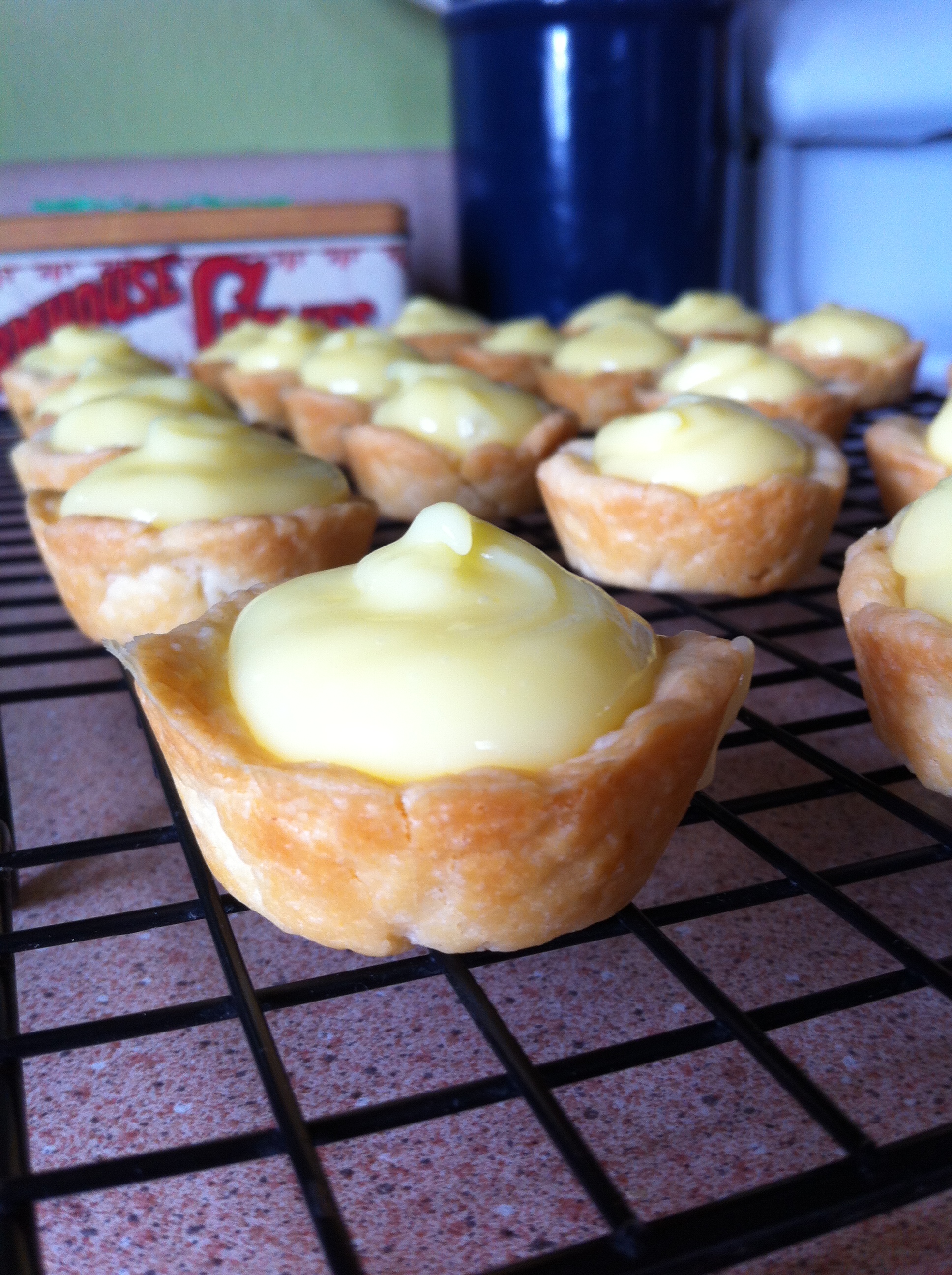
meyer lemon tartletsToday is one of the days I wish I wasn’t fasting from sugar. I can avoid sweets when I put my mind to it, passing up all manner of cookies, cupcakes, and other treats out of the sheer determination to do so. I usually give up sweets for Lent, missing out on Cadbury Eggs, jelly beans, and Reese’s peanut butter eggs until Easter Sunday. But right now, as I’m looking at the photo of the adorable little lemon tartlets in this post, I sincerely wish I could eat one.

Last week I made some Meyer lemon curd, and tartlets are a natural fit for such a treat. I’ve never made them before, and I’ll definitely employ some different techniques next time. Full disclosure: I made my second batch using store-bought pie crust to experiment with the thickness of the tartlet shells, and I think they came out better than the cream cheese dough I used for the first batch. Although the instructions in my recipe recommended scooping balls of dough, then pressing them into the wells in the pan, I’d recommend rolling out your dough and cutting it with a cookie cutter instead.

I also just realized, when reviewing my curd recipe, that I used whole eggs and not just egg yolks this time. The end result was a creamier, lighter-colored curd than I’ve made in the past (and according to Mike, it is delicious regardless). The curd recipe here yields 2 cups; you’ll have enough for about 40 tartlets, so if you’re using the cream cheese tartlet shell recipe below you’ll want to double it to have enough.

Meyer Lemon Curd

Ingredients

  • 4 eggs
  • 3/4 cup sugar
  • 4 teaspoons cornstarch
  • 1/2 cup lemon juice (I used 4 small/medium-sized Meyer lemons)
  • zest of 4 lemons
  • 8 tablespoons butter

Preparation

Lightly beat eggs and pass them through a fine sieve to remove the albumin. Set aside in a medium bowl (or a large, 4-cup glass measuring cup for easy pouring) close to the stove for easy access; thoroughly wash your sieve and place it nearby for a second straining once the curd has cooked.

In a medium saucepan, whisk together cornstarch, sugar, lemon juice, and lemon zest until completely combined. Add butter and cook on medium heat until thickened and bubbly.

Working quickly, pour about half of the hot lemon mixture into the eggs, whisking constantly to temper. Pour egg mixture back into the pan and cook and stir for 2 minutes more.

Pour mixture through your sieve to remove the zest; press waxed paper (or plastic wrap) onto the surface to prevent a skin from forming. Once curd is completely cooled, place in an airtight container. According to various food safety websites and other food blogs, lemon curd should last in the refrigerator for a few weeks.

Cream Cheese Tartlet Shells

Ingredients

  • 3 ounces cream cheese, softened
  • 8 tablespoons butter, softened
  • 1 cup flour

Preparation

Preheat oven to 350 degrees.

In a mixing bowl, beat cream cheese and butter until well-combined and almost fluffy. Add flour and beat until a soft dough forms, scraping the sides of the bowl as necessary. Form dough into a ball and refrigerate at least 15 minutes.

Scoop 1-inch balls of dough into the wells of a mini cupcake pan. Press down to fill each well; I found it helpful to turn the pan several times to distribute the dough as evenly as I could.

Bake for about 15 minutes, until shells are golden brown. Remove from oven and allow to cool in pan for several minutes; remove from pan and place on a wire rack to cool completely before filling.

To fill: place about 1 teaspoon of lemon curd into each shell. Store in an airtight container in the refrigerator.

Pie Crust Alternative

Use a store-bought pie crust for tartlet shells; unroll the crust and cut using a 2 1/2 inch round or fluted cookie cutter. You’ll have about 16 rounds if you re-roll the scraps two or three times to use as much dough as you can.

Press circles of dough into the wells of a mini cupcake pan; bake for about 15 minutes, until shells are golden brown. Cool in pans for several minutes; remove from pan and place on a wire rack to cool completely before filling.

Orange Cream Mini Cupcakes

orange cream cupcakeI’ve just completed a mammoth baking endeavor: 23 dozen miniature cupcakes, of varying flavors. This is the largest single-client baking project I’ve ever completed, and it went very well (as far as I know; the aforementioned cupcakes are likely being consumed right now at a fundraising event). It also left me with two dozen miniature vanilla cupcakes that needed frosting, so I asked Mike to choose a frosting flavor to complement them. He chose orange, for an orange cream-like result.

Rising to the challenge, I did a quick online search for orange frosting. There are many to choose from, ranging from orange cream cheese to orange buttercream to orange drizzle. Because drizzle would have been too glaze-like and cream cheese would have added a tang I didn’t quite want, I chose an orange buttercream and adapted it to my liking, using orange extract, vanilla extract, and orange juice to achieve a delicate orange-vanilla balance. If you don’t have orange extract handy, you can substitute with more orange juice. Mike was very pleased with the outcome, proclaiming the end result “very orange-creamy.”

The recipes below yield 24 miniature cupcakes and 1 cup of frosting, which covered my cupcakes perfectly.

Very Vanilla Cupcakes

Ingredients

  • 1/4 cup plus 3 tablespoons cake flour
  • 1/2 plus 1/8 teaspoons baking soda
  • 1/4 teaspoon salt
  • 1 egg
  • 1/4 plus 2 tablespoons sugar
  • 1 tablespoon vanilla extract
  • 1/4 cup canola oil
  • 1/4 cup buttermilk

Note: to double this recipe for 4 dozen miniature or 2 dozen regular-sized cupcakes, use the quantities in St. Patrick’s Day Cupcakes.

Preparation

Preheat oven to 350 degrees. Line one 24-cup mini cupcake pan with paper liners.

In a small bowl, whisk together cake flour, baking soda, and salt; set aside.

Place egg in the bowl of a stand mixer fitted with the whisk attachment and beat on medium speed for 30 seconds. Add sugar and continue beating for another 30 seconds.

Add vanilla and canola oil and beat on medium speed for 1 minute.

Add flour mixture and buttermilk alternatively in three batches, beginning and ending with the flour, scraping the sides of the bowl frequently. Batter will be very thin.

Using a teaspoon measuring spoon, scoop batter into prepared pan.

Bake for 8-10 minutes, until a cake tester comes out clean. Cool in pan for about 1 minute, then remove to a wire rack and cool completely before frosting.

Orange Cream Frosting

Ingredients

  • 4 tablespoons butter, softened
  • 2 cups powdered sugar
  • 1/2 teaspoon orange extract*
  • 3/4 teaspoon vanilla extract
  • About 3 tablespoons orange juice
  • Yellow liquid food coloring
  • Red liquid food coloring

*Substitute orange juice if you don’t have orange extract. And, this recipe would be very easily doubled if you wanted to make enough to cover 4 dozen miniature or 2 dozen regular-sized cupcakes.

Preparation

In a mixing bowl, beat butter on low speed for about 1 minute. Add 1 cup powdered sugar, orange extract, and vanilla; beat on low speed until well-combined. Add second cup powdered sugar and 1 tablespoon orange juice and beat until well-combined. Add additional orange juice, 1/2 tablespoon at a time, to reach a smooth (but not runny) consistency.

With your mixer running on low, add about 3-4 drops of yellow liquid food coloring, followed by 1 drop of red. Beat on medium speed until color is well-distributed, scraping the sides of the bowl as necessary, to achieve a pale orange color.

Fit a piping bag with a large plain tip and pipe frosting onto cupcakes. Store in an airtight container for 2-3 days.